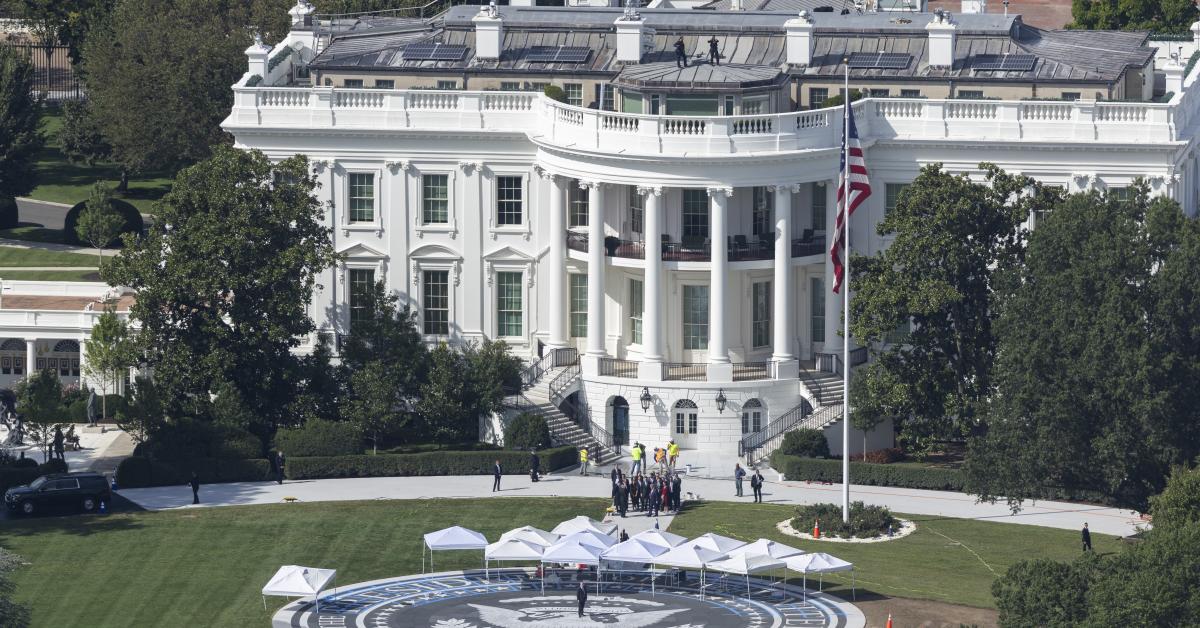
The White House on Thursday night released the guest list for President Trump’s state dinner with Chinese President Xi Jinping and his wife — and the names reveal a who’s-who of American power, from Silicon Valley CEOs to Supreme Court justices to Trump family members.
State dinners represent the highest form of diplomatic pageantry in American governance, traditionally reserved for the nation’s most significant bilateral relationships. The careful curation of attendees serves multiple purposes: signaling which domestic constituencies matter most to the administration, demonstrating to foreign leaders the breadth of American influence they’re engaging with, and creating networking opportunities that can advance policy goals long after the toasts conclude.
Notable attendees include House Speaker Mike Johnson, Tesla and SpaceX CEO Elon Musk, Trump daughters Tiffany and Ivanka Trump, and Fox News hosts Bret Baier, Jesse Watters, and Laura Ingraham.
The tech world dominated the guest list. Nvidia CEO Jensen Huang, Meta’s Mark Zuckerberg, Apple Chairman Tim Cook, Amazon’s Jeff Bezos, Microsoft’s Satya Nadella, Google’s Sundar Pichai, and OpenAI’s Sam Altman all made the cut.
This concentration of technology leadership reflects the central role that U.S.-China tech competition has played in recent years, touching everything from artificial intelligence development to semiconductor manufacturing to social media platforms. These companies collectively represent trillions in market capitalization and employ hundreds of thousands of workers whose livelihoods depend on stable, predictable trade relationships with Beijing.
The dinner signals Trump’s full-court press on China diplomacy — bringing together tech giants who depend on Chinese manufacturing, Wall Street titans who trade with Beijing, and conservative media who’ve called out China’s abuses.
Financial heavyweights on the list: JPMorgan CEO Jamie Dimon, Goldman Sachs CEO David Solomon, Blackstone’s Stephen Schwarzman, and Blackrock’s Larry Fink. Defense contractors showed up too — Lockheed Martin Chairman Jim Taiclet and Boeing CEO Kelly Ortberg both attended.
The presence of both Wall Street executives and defense industry leaders underscores the complexity of the U.S.-China relationship, which encompasses both deep economic interdependence and genuine strategic rivalry. These competing dynamics have made China policy one of the most challenging issues facing American leadership, requiring delicate balancing between engagement and confrontation.
From the Supreme Court: Chief Justice John Roberts, Justice Amy Coney Barrett, and Justice Brett Kavanaugh. From Trump’s cabinet: Secretary of State Marco Rubio, Treasury Secretary Scott Bessent, Secretary of War Pete Hegseth, Commerce Secretary Howard Lutnick, CIA Director John Ratcliffe, Attorney General Todd Blanche, HHS Secretary Robert F. Kennedy Jr., and Interior Secretary Doug Burgum.
The Supreme Court’s representation at a state dinner is relatively rare and signals the constitutional weight both sides attach to this diplomatic moment. Meanwhile, the cabinet presence spans the full spectrum of agencies involved in China relations, from traditional diplomatic and economic portfolios to intelligence, defense, and even health policy — reflecting how comprehensively Chinese affairs touch American governance.
Vice President JD Vance and Second Lady Usha Vance joined Trump and Melania at the head table. Trump’s extended family represented in force: Eric Trump, Lara Trump, Tiffany Trump, Michael Boulos, Viktor Knavs (Melania’s father), and Trump’s granddaughter Arabella Kushner.
The Chinese delegation included top Communist Party officials: Cai Qi (CPC Political Bureau Standing Committee Member and Chief of Staff to Xi), Wang Yi (CPC Political Bureau Central Committee Member), and He Lifeng (Vice Premier of State Council). China’s Finance Minister Lan Fo’an and Commerce Minister Wang Wentao also attended.
The composition of Xi’s delegation reveals China’s priorities for the summit, with heavy representation from economic ministries and the party apparatus that actually runs Chinese policy. The Standing Committee member’s presence indicates the seriousness with which Beijing views this engagement.
The dinner caps a historic summit week between Trump and Xi — the two leaders seeking a reset after years of escalating U.S.-China tensions over trade, technology, Taiwan, and military posturing in the Pacific. Trump has signaled interest in a grand bargain on energy and trade; Xi faces domestic economic headwinds and wants access to American tech and markets.
Both leaders come to the table with significant domestic pressures driving their diplomatic calculations. For Trump, delivering wins on trade and manufacturing jobs remains central to his political brand. For Xi, reviving economic growth and maintaining technological competitiveness are essential to the Communist Party’s legitimacy and his own standing within the Chinese system.
Other names on the list: Federal Reserve Chairman Kevin Warsh, Goldman Sachs EVP John F.W. Rogers, New York Stock Exchange President Lynn Martin, New York University President Linda Mills, Zoom CEO Eric Yuan, Dell CEO Michael Dell, General Motors CEO Mary Barra, ExxonMobil CEO Darren Woods, Pfizer CEO Albert Bourla, Visa CEO Ryan McInerney, Mastercard CEO Michael Miebach, and LVMH CEO Bernard Arnault with his son Alexandre.
The breadth of industries represented — from energy and automotive to pharmaceuticals and luxury goods — illustrates how thoroughly integrated the American and Chinese economies have become over the past three decades, despite growing political tensions. Each sector represented has billions of dollars riding on the outcome of renewed diplomatic engagement.
The White House released the list hours before the dinner began Thursday evening.