
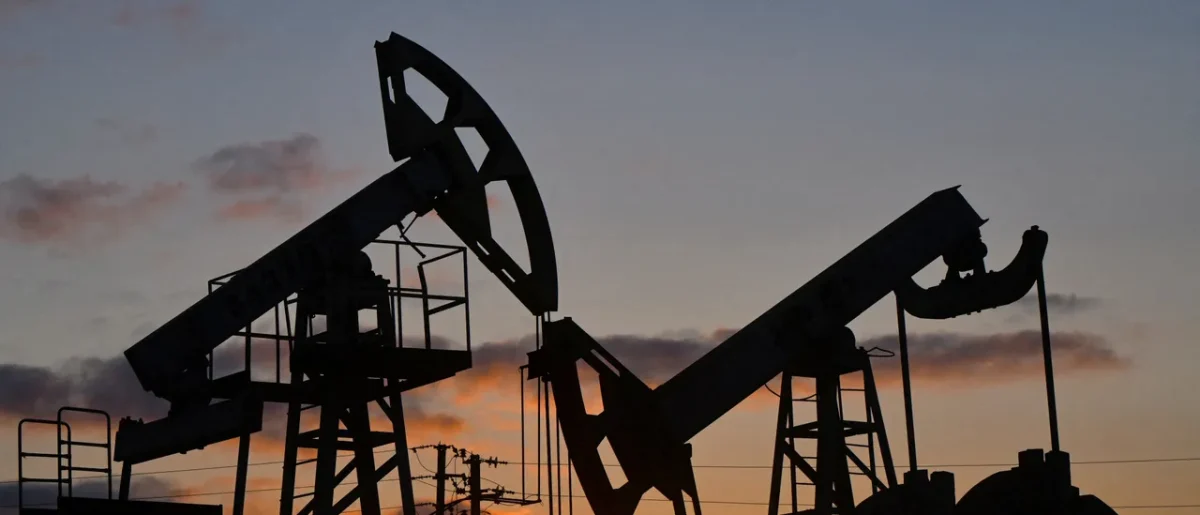
Oil prices topped $100 per barrel Wednesday for the first time since July after American forces destroyed five Iranian tankers in strikes targeting the regime’s shadow oil network.
The surge marks a dramatic reversal in global energy markets that had seen relative stability through the fall and winter months. Analysts had predicted oil would remain range-bound below $90 per barrel through the first quarter, but the escalating military confrontation in the Middle East has upended those forecasts and raised fears of a prolonged supply disruption from one of the world’s most critical oil-producing regions.
Brent crude rose 2.7% to $100.57 a barrel Wednesday morning — the first time it crossed $100 since July 24, according to ABC News. West Texas Intermediate climbed 2% to about $95 a barrel.
The psychological threshold of $100 per barrel is significant for global markets, often triggering concerns about inflation and economic growth across major economies. The last time Brent sustained prices above $100 for an extended period was during the energy crisis of 2022, when Russia’s invasion of Ukraine sent shockwaves through commodity markets worldwide.
The national average price of regular gasoline hit $4.22 a gallon Wednesday, up from $2.98 just two days before the Iran war began Feb. 28, according to American Automobile Association data.
That represents a staggering 41% increase in just over a week, putting immediate pressure on American households and businesses. The rapid price escalation recalls the volatility seen during previous Middle East crises, when supply fears drove sharp spikes at the pump that rippled through the broader economy, affecting everything from grocery prices to airline tickets.
U.S. Central Command said its forces destroyed four Iranian crude carriers in the Gulf of Oman and a fifth near Kharg Island on Tuesday after Iran fired ballistic missiles at a U.S. Navy warship twice in two days.
10 Iranian tankers destroyed in the past week — part of a “multibillion-dollar shadow network” funding the Islamic Revolutionary Guard Corps, CENTCOM said.
The shadow fleet has long been a target of U.S. sanctions enforcement efforts. These vessels typically operate with spoofed transponders, frequent flag changes, and opaque ownership structures designed to evade international sanctions. Iran has relied heavily on this clandestine maritime network to export oil to buyers willing to circumvent Western restrictions, generating crucial revenue for the regime despite years of economic pressure.
The strikes came as Iran escalated attacks across the region. The regime fired 20 ballistic missiles toward Jordan overnight, the Jordan Armed Forces said Wednesday. Jordanian air defenses destroyed 18 of them; two fell in unpopulated areas with no casualties.
Jordan’s involvement highlights how the conflict is drawing in neighboring states that have traditionally sought to maintain distance from direct confrontation with Iran. The kingdom hosts U.S. military facilities and has been a key regional partner in countering Iranian influence, making it a natural target for Tehran’s retaliation as the crisis deepens.
Iranian state-aligned media falsely claimed the IRGC struck two U.S. Navy destroyers. CENTCOM called the claim “completely FALSE” in a Wednesday morning X post, confirming no U.S. warship has been hit.
🚫 CLAIM: Iran’s Islamic Revolutionary Guard Corps (IRGC) forces have claimed they struck two U.S. Navy destroyers operating in the Middle East. This is completely FALSE.
✅ FACT: No U.S. Navy warship has been struck; all IRGC attempted attacks failed. Meanwhile, U.S. forces… pic.twitter.com/yfC4OcwZ1f
— U.S. Central Command (@CENTCOM) September 9, 2026
The disinformation campaign reflects Iran’s strategy of projecting strength domestically while its military capabilities face setbacks. Tehran has historically used state media to shape narratives for domestic consumption, often exaggerating military successes to bolster public morale and regime legitimacy during times of international crisis.
Iran’s Foreign Ministry claimed Wednesday that its strikes on U.S. targets in Jordan were “defensive” and called the tanker attacks “a dangerous escalation of tensions in the region,” according to ABC News.
The regime’s proxies are spreading the chaos. Iran-backed Houthi rebels attacked southwestern Saudi Arabia early Tuesday, wounding at least 73 people and striking oil infrastructure, CNN reported. Saudi Arabia has routed most of its crude exports through the Red Sea port of Yanbu since Iran effectively shut the Strait of Hormuz.
The Strait of Hormuz, through which roughly 21% of global petroleum passes, has long been considered a critical chokepoint in world energy markets. Iran’s ability to threaten or close the strait gives Tehran significant leverage in any regional conflict, forcing neighboring oil exporters to seek alternative routes that are often more expensive and logistically complex.
Ship traffic through the strait has fallen to its lowest level since May, according to Fox News. Iranian Parliament Speaker Mohammad Baqer Qalibaf, the country’s top negotiator, wrote on X Monday that American oil and gas facilities in the region are “sprawling, accessible, and exposed,” Reuters reported.
The economic pressure is mounting on Tehran. Iran raised the gasoline price for its heaviest users Tuesday — its second such increase since December, according to The Associated Press. Treasury Secretary Scott Bessent told Fox News that China has “probably only about 30 million barrels” of Iranian crude left to buy.
China has been Iran’s largest oil customer, providing a crucial economic lifeline as Western sanctions tightened. The potential depletion of Chinese stockpiles of Iranian crude could leave Tehran with even fewer buyers for its oil, compounding the financial stress on a regime already struggling with domestic unrest and international isolation.
The national average diesel price hit a record $5.94 a gallon Wednesday, according to AAA data.