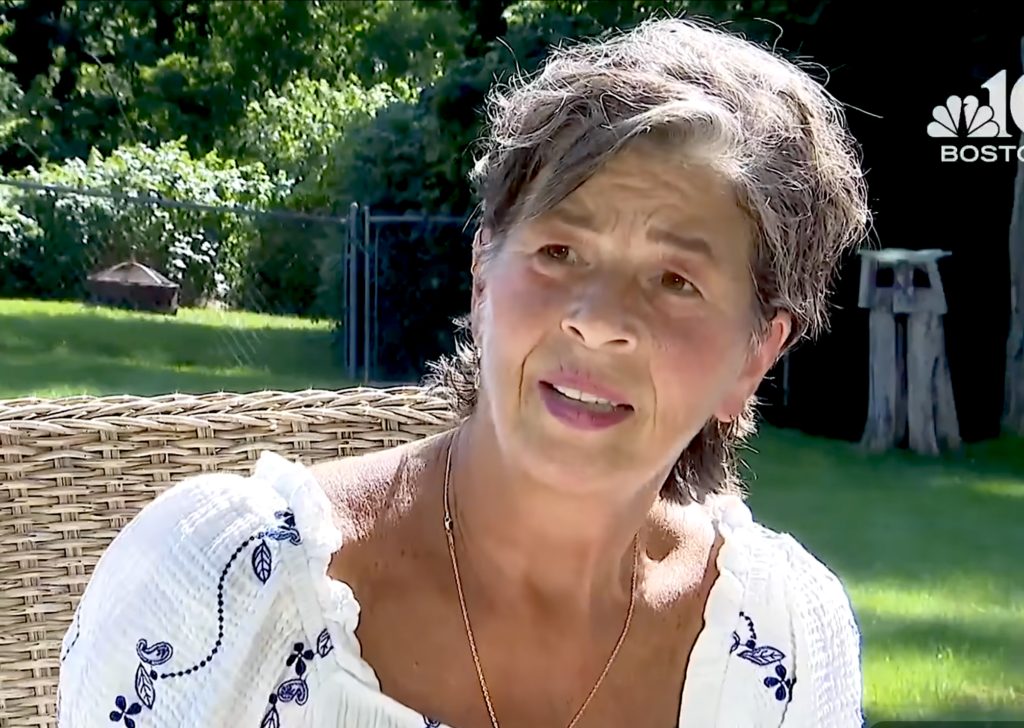
Three jurors from the Lindsay Clancy case gave a TV interview this week that raised serious questions about how the jury reached its verdict. The interview has drawn widespread attention and criticism for what many observers see as a troubling window into the jury deliberation process and the priorities that shaped the final outcome. In the NBC10 Boston interview, juror Kellie Farina said the lone holdout juror “had the hardest time getting over the fact that Lindsay viciously killed her children.”
That was one of only two times the jurors mentioned the three children Clancy admits to strangling.
The rest of the interview focused on how they felt about the prosecutors (“I just found her to be harsh. Very, very harsh,” Farina said), how they felt about Clancy’s defense attorney (juror Roni Carlson called him entertaining; Paula Devlin praised his “compassion” for Clancy as “amazing”), and their frustration with the holdout juror, whom Devlin called “very arrogant.”
“He had the hardest time getting over the fact that Lindsay viciously killed her children.”
The jurors treated the fact that a mother used rubber exercise bands to choke her three children as a minor detail. The more important matter, in their telling, was how they felt about the personalities in the courtroom and whether the holdout juror could “get over” the inconvenient victims so they could let the accused off the hook.
This apparent shift in focus from the central facts of the case to the demeanor and likability of the legal professionals involved represents a concerning trend in high-profile criminal trials. Jurors are instructed to weigh evidence objectively and set aside personal feelings about attorneys or their presentation styles. The emphasis these three jurors placed on their emotional responses to courtroom personalities suggests those instructions may have been overshadowed by subjective reactions.
That mentality is all over TikTok and other social media, where women — almost exclusively white — are able to “get over” the children and instead focus on Clancy’s plight, their suspicions about her now ex-husband, and the medical providers who allegedly “failed” the woman with postpartum depression.
The social media response has created echo chambers where certain narratives about maternal mental health and systemic failures have dominated discussion, often at the expense of acknowledging the loss of three young lives. This online discourse appears to have mirrored and possibly influenced the mindset revealed in the juror interviews, raising questions about how pervasive media coverage and social media sentiment may impact jury deliberations even when jurors are instructed to avoid outside information.
Every time these defenders speak publicly about the trial, they raise doubts among the broader public — especially men — about the capacity for some women to understand basic concepts of right from wrong, regardless of medical history.
Clancy’s defense wasn’t that she didn’t know right from wrong before or after the incident. It’s only that she didn’t know it when she plotted for her husband to leave the house for take-out and then used that time to grip each of her children around the neck until they were gone.
The legal standard for insanity defenses typically requires proving that a defendant could not distinguish right from wrong at the precise moment of the crime. The narrow window of claimed incapacity in this case—bounded by apparent lucidity both before and after the incident—represents a test of how far juries are willing to extend such defenses. The jurors’ willingness to accept this limited timeframe of impairment, despite evidence of premeditation in arranging to be alone with the children, has sparked debate among legal experts about whether the standards for such defenses are being applied consistently.
If that’s an excuse these women are willing to entertain, they’re revealing themselves to be every bit as potentially dangerous as the woman they’re defending.
The case has sparked a broader cultural divide, with male commenters overwhelmingly rejecting the defense arguments while female supporters continue to frame Clancy as a victim of postpartum depression and medical negligence.
This gender divide in public reaction has been documented across multiple platforms and comment sections, revealing deep disagreements about accountability, mental health, and justice. The split suggests fundamentally different frameworks for understanding extreme acts committed by mothers, with implications that extend far beyond this single case. How society reconciles genuine mental health crises with the need for accountability when innocent lives are lost remains an unresolved tension that this case has brought into sharp focus.
The charges remain allegations. The case has not been proven in court.