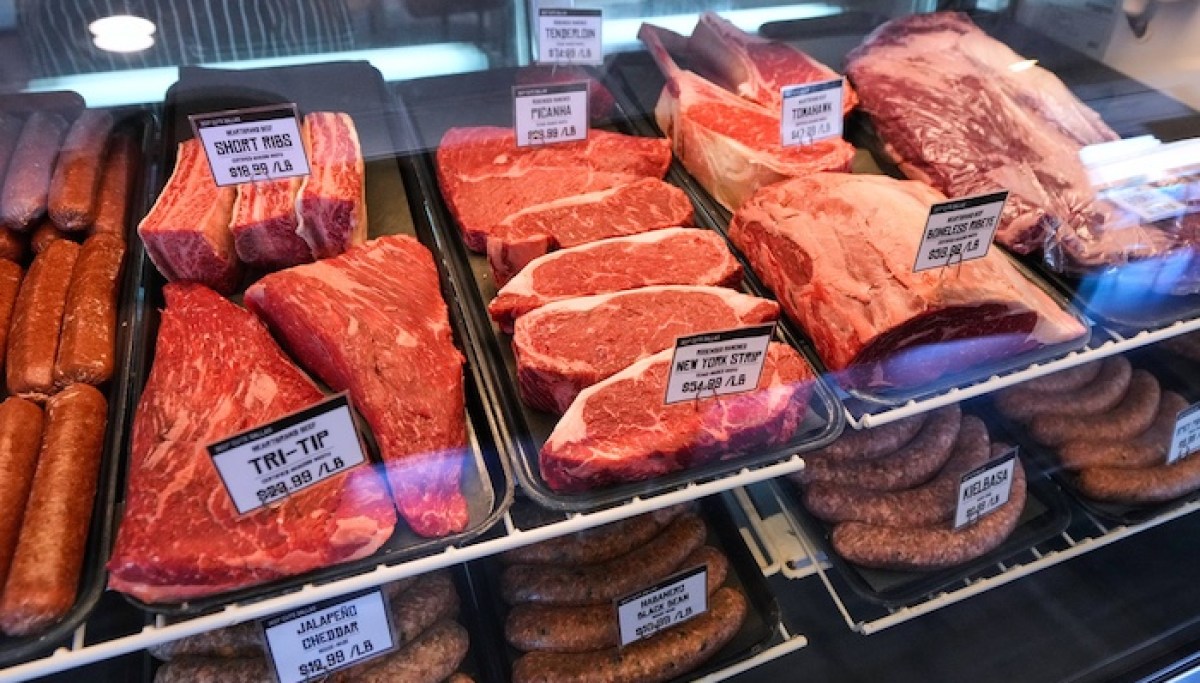
President Donald Trump just delivered something American families have been begging for: cheaper beef at the grocery store.
Trump announced last week that he’s eliminating the import tariff on foreign beef — a move that immediately increases supply and drives down the sticker price on every steak, roast, and ground-beef pack Americans put in their carts. For families who’ve watched grocery bills climb steadily over the past two years, this is exactly the kind of relief they’ve been asking Washington to deliver.
Why This Cut Actually Lowers Prices
The economics are straightforward. When Washington slaps an import tariff on foreign beef, that tax gets passed straight through to consumers at checkout. Domestic ranchers, no longer facing cheaper foreign competition, quietly raise their prices too. The Federal Reserve confirmed this pattern throughout 2025 — retail prices climbed as tariffs stacked up.
Trump removed the pressure. Foreign beef can now compete on price. Domestic producers have to compete on price. Consumers win. That’s the point.
The Anti-Trump Republicans Are Melting Down
Predictably, one of Trump’s loudest congressional critics couldn’t help himself. Rep. Thomas Massie (R-KY) — a Kentucky Republican whose loudest brand has become opposing whatever Trump does — called the tariff cut a “slap in the face to American cattlemen and consumers” and, remarkably, “worse than socialism.”
Read that carefully. Massie is calling a tariff CUT worse than socialism. A Republican, from the party of free markets, arguing that removing a government-imposed price penalty is somehow the more socialist option.
It doesn’t add up. And here’s the tell: Massie has spent years opposing tariffs on principle. He voted against Trump’s Canada tariffs. He’s given floor speeches attacking trade restrictions as government overreach. His entire brand until now has been the libertarian who wanted less government interference in markets.
Then Trump cut a tariff — and Massie flipped overnight into a pro-tariff protectionist. The only variable that changed was Trump’s involvement.
Trump Derangement Syndrome From the Right
What Massie is showing here has a name. It’s the same reflexive opposition the media has spent nine years running against Trump — just wearing a Republican jersey.
The pattern: Trump takes any position → the reflexive opponent takes the exact opposite position, even if they held the opposite view yesterday. Massie was against tariffs when Trump imposed them. Now that Trump cut one, Massie is FOR tariffs. The consistent thread isn’t policy. It’s opposition to Trump personally.
Patriots have watched this play out on the left for a decade. Watching a Republican do it isn’t refreshing — it’s just as tribal, just as intellectually dishonest, and just as bad for the country.
The Bottom Line
Trump just made beef cheaper for every American family that walks into a grocery store. That is unambiguously good news. The president used his authority to remove a price-inflating government tax, and the result is more affordable food for millions of Americans.
Patriots should back this play, publicly and loudly. Encourage the White House to keep looking for tariffs where the math no longer works. And when a Republican congressman decides that opposing Trump is more important than the actual policy outcome — call it what it is.
Trump got this one right. Beef just got cheaper. That’s a win. Everything else is noise.