The Trump administration filed an emergency appeal with the Supreme Court on Sunday to enforce strict new mail-ballot rules — as election officials in North Carolina and other states have already begun mailing ballots for the November midterms.
The filing asks the high court to stay a preliminary injunction issued Friday by U.S. District Judge Indira Talwani, who blocked the U.S. Postal Service from enforcing several requirements for ballot mail ahead of the November elections. The injunction represents the latest judicial setback for the administration’s efforts to implement the regulations, which have faced resistance from state election officials and voting rights advocates since they were first proposed.
Solicitor General John Sauer warned that the clock is ticking, emphasizing the urgency created by states’ existing election timelines and the operational realities of the mail system.
“Ballots have already begun to be mailed in North Carolina, and more States will begin the mailing process as the injunction remains in place — including Alabama on September 9 and at least five States the week of September 13.”
“Once those ballot envelopes enter the mailstream, there is no retrieving them,” Sauer added. The point underscores a central tension in the case: the challenge of implementing new federal requirements when states operate on fixed election calendars with deadlines set months in advance.
The administration argues that allowing the injunction to stand risks “sowing confusion and chaos” as states scramble to comply with voluntary — rather than mandatory — preparations. Without the Supreme Court’s intervention, ballot envelopes that don’t meet federal standards will flood the mail system, the filing warns. This framing reflects the administration’s position that uniform, enforceable standards are necessary to prevent a patchwork system that could undermine ballot delivery and public confidence in election results.
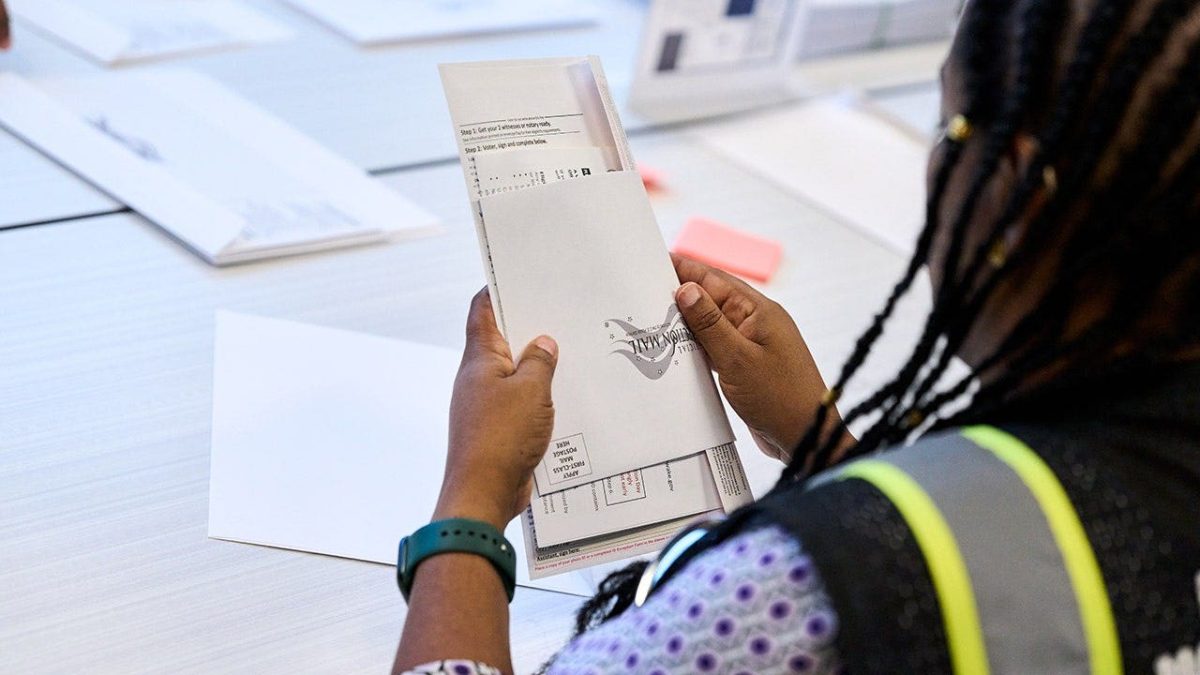
The contested rule requires federal election ballots sent through the mail to use envelopes that include the official Election Mail logo, meet automation requirements, and carry unique barcodes. State election officials would also have to submit envelope designs for Postal Service review and provide the agency with information about intended ballot recipients. These technical specifications represent a significant departure from the decentralized approach that has historically governed ballot design, which has traditionally been left largely to state and local discretion.
The administration says the requirements are intended to improve the handling and delivery of ballot mail and protect the mail system from being used to facilitate voter fraud. Officials have characterized the rules as commonsense measures that leverage existing Postal Service infrastructure and expertise to enhance the reliability of ballot transmission.
The rule would not give the Postal Service authority to determine who is eligible to vote by mail or whether ballots should be counted — responsibilities that remain with state and local election officials. This distinction is central to the administration’s argument that the requirements do not infringe on states’ constitutional authority over elections, but rather regulate only the federal mail system through which some ballots travel.
Democratic-led states and voting rights groups challenging the restrictions contend the changes are unconstitutional. Election officials in multiple states have argued there’s not enough time to revise their systems to comply before November. The practical concerns include the cost of redesigning and reprinting millions of ballot envelopes, updating voter education materials, and modifying ballot-tracking systems that have already been configured for the current election cycle.
The administration disputes those arguments, saying Congress gave the Postal Service broad authority to regulate the handling and delivery of mail. The rule does not dictate ballot content, determine voter eligibility, establish election deadlines, or govern how ballots are counted, according to the filing. The government’s legal theory rests on a distinction between regulating the mail delivery process and regulating elections themselves — a line that opponents argue is too blurred to be meaningful when the subject is election materials.
This marks the third time the administration has asked the Supreme Court to intervene in the dispute. The high court previously allowed the administration’s plan to move forward but has not ruled on whether the restrictions themselves are legal. The repeated emergency requests reflect the compressed timeline facing all parties as election day approaches.
The battle could have major ramifications for the November elections, when control of Congress is at stake. Nearly one-third of U.S. voters cast ballots by mail. The outcome will likely influence not only this election cycle but also establish precedents for federal authority over election mail handling in future contests, potentially reshaping the balance of power between federal postal regulations and state election administration.