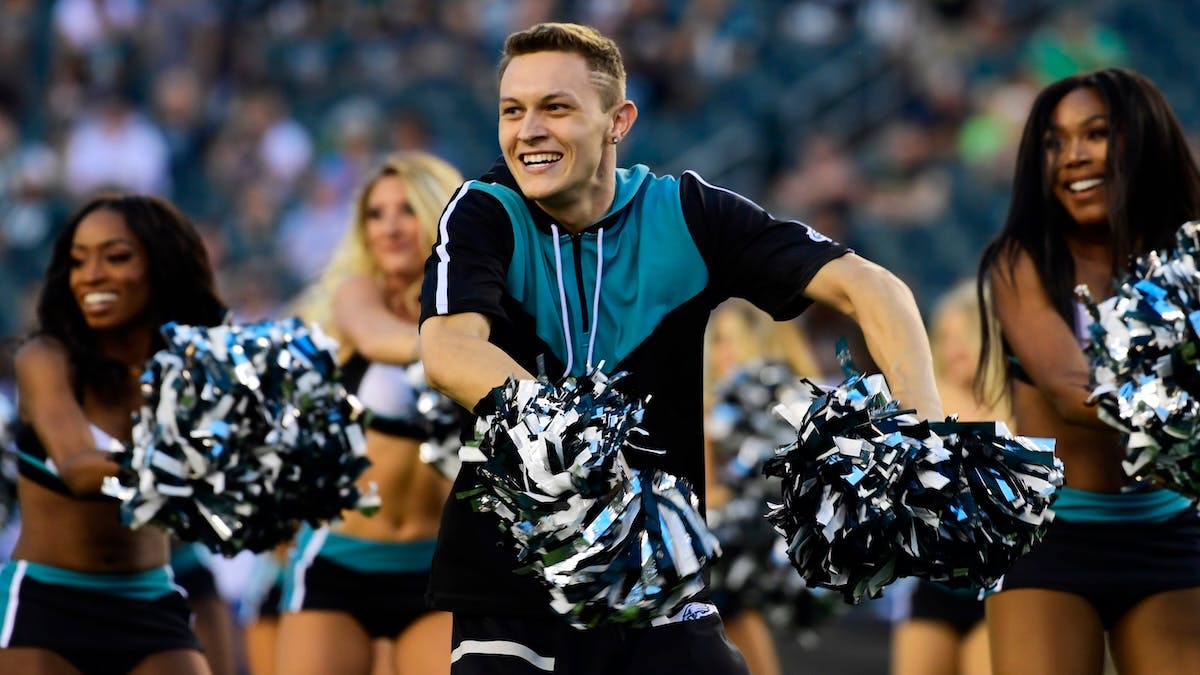
NFL fans are threatening to cancel their season tickets over viral footage of male cheerleaders performing what critics describe as sexually suggestive feminine routines on the field — the latest flash point in the league’s years-long woke transformation.
Clips of a male Eagles cheerleader sashaying across the field and a flamboyant Patriots cheerleader shaking pom-poms have ignited backlash from longtime fans who say the league is catering to a tiny activist minority while alienating millions of viewers.
The videos, which have accumulated millions of views across social media platforms over the past week, show the cheerleaders performing solo routines during game breaks typically reserved for dance performances. The footage has sparked heated debate about whether the NFL is prioritizing progressive visibility initiatives over the preferences of its core audience — a tension that has simmered throughout the league for nearly a decade.
Fox News host Laura Ingraham called the footage “an SNL skit from the 80s.”
Conservative commentator Robby Starbuck argued no actual football fans want this.
“Maybe a dozen or so people want it and they’re nightmare customers you don’t want. At the same time it also turns off millions of fans while some are neutral but don’t enjoy it. So why do they do it? Because they know there’s no competitor league so they can shove it down your throat, fully comfortable that not enough people will cancel their season tickets.”
The controversy isn’t about male cheerleaders themselves — men dominated the activity when it started in the late 19th century, and traditionally served as bases for complex stunts requiring strength and athleticism.
Those early male cheerleaders, who were fixtures at collegiate sporting events well into the mid-20th century, performed leadership and crowd-coordination roles that emphasized vocal projection and physical power. Cheerleading only became predominantly female in the 1960s and 1970s, when the aesthetic shifted toward dance-focused entertainment routines performed during game breaks rather than crowd participation activities.
The backlash targets men performing femininity for crowds that came to watch football.
This distinction matters to critics who argue the issue isn’t about gender integration but about the style and presentation of the performances. The concern, they say, centers on whether entertainment programming during football games should feature what they view as sexually performative displays that have no connection to the sport itself — regardless of who is performing them.
Male figure skaters — many of whom are gay — perform traditionally masculine routines on the ice and draw no similar criticism. Their sexuality isn’t the point of the performance, so fans don’t register it as relevant.
The comparison highlights what critics see as the core issue: athletic performance versus what they characterize as ideological messaging through entertainment choices. Figure skating judges reward technical execution, artistry, and athleticism in ways that connect directly to competitive outcomes. Football halftime and timeout entertainment, by contrast, serves no competitive purpose and exists purely as spectacle — giving the league full discretion over what messages and imagery it chooses to present.
The NFL added men to the Rams’ and Saints’ squads in 2018. As of 2026, 11 NFL teams include male cheerleaders: the Ravens, Rams, Vikings, Patriots, Saints, Eagles, 49ers, Seahawks, Buccaneers, Titans, and Commanders.
That expansion represents roughly one-third of the league’s 32 teams adopting the practice in just eight years — a rapid transformation that critics argue was implemented without input from paying fans or consideration of market research about viewer preferences.
In 2022, the Carolina Panthers added a biological male identifying as transgender to their TopCats cheerleading squad. The cheerleading director claimed Justine Simone Lindsay’s “talent,” not the cheerleader’s “history-making” status, earned the roster spot.
The announcement generated significant media coverage celebrating the milestone, which critics point to as evidence that progressive visibility goals, rather than pure entertainment value, drive some roster decisions.
Critics argue the male-cheerleader phenomenon fits a broader pattern of the NFL ignoring its actual fan base. The league has stenciled “End Racism” in end zones, allowed players to display social justice messages on helmets, and enabled activism dating back to Colin Kaepernick’s infamous 2016 kneel.
Each of these initiatives generated controversy among segments of the league’s viewership, with some fans arguing they came to watch football as an escape from political and social debates rather than as a venue for activist messaging. Television ratings declined notably during the 2016 and 2017 seasons, though the league attributed the drop to multiple factors including cord-cutting and competition from streaming services.
Self-described season ticket holders say they’ve had enough. Some are threatening to cancel; others are already demanding refunds. Patriots on social media are asking the same question: Who is the NFL actually catering to?
It isn’t the football fans. And the league knows it.
It looks like an SNL skit from the 80s. https://t.co/82lmHYVWUi
— Laura Ingraham (@IngrahamAngle) September 1, 2026
This has been going on for a while but understand this: There’s no demographic that attends football games that wants this. Maybe a dozen or so people want it and they’re nightmare customers you don’t want. At the same time it also turns off millions of fans while some are… https://t.co/gVqt5UKRvO
— Robby Starbuck (@robbystarbuck) September 1, 2026