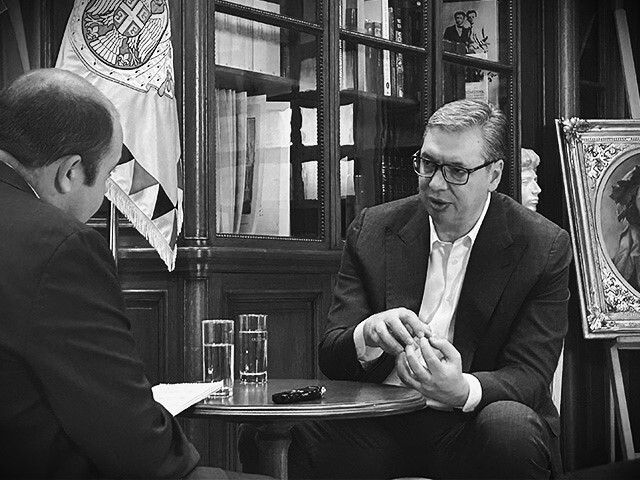
Serbian President Aleksandar Vucic told Breitbart News that finalizing the Washington Agreement between Serbia and Kosovo after Trump wraps up his Iran deal would be a “big, big, big deal.”
“If we’ll be able to reach a compromise, compromising solution, that would be a big, big, big deal,” Vucic said in a lengthy interview in his Belgrade office. “Yeah.”
Trump is currently focused on finishing the war with Iran and securing a deal that ensures Tehran will never obtain a nuclear weapon. But when that’s done, Trump will be looking for major foreign policy wins—and finalizing the Serbia-Kosovo agreement that leaders of both countries inked in Trump’s first term would be a natural next target.
“NINETY PERCENT OF THOSE FINANCIAL INVESTORS WERE COMING FROM THE UNITED STATES OF AMERICA.”
The original Washington Agreement was signed by Vucic and then-Kosovo Prime Minister Avdullah Hoti at the White House in September 2020 during Trump’s first presidency. Then-little-known Hague prosecutor Jack Smith—who would later become Special Counsel targeting Trump under Biden—indicted and arrested Kosovo President Hashim Thaci right as the deal was being finalized.
Now, with Trump back in office, American investment in Serbia is poised to dwarf Chinese and Russian capital. Vucic detailed $20 billion in pending U.S.-backed projects—in a country of just 7 million people.
“Speaking about something on the horizon, it’s big,” Vucic said. “It’s very big with United States.”
The projects include: an American company finishing Serbia’s main motorway highway corridor, a massive hydropower plant at Iron Gate on the Danube near the Romanian border, solar panel fields, and a proposed LNG port in Montenegro with railway and pipeline to Belgrade to supply data centers along the route.
“All together if you count it it’s around $20 billion, which is big, big, big,” Vucic said.
Serbia has already begun discussions with the U.S. Export-Import Bank and the Development Finance Corporation. When Serbia issued Euro bonds recently, 90 percent of financial investors came from the United States—a sign of surging American interest.
“The economy of the United States is doing well, is doing much better than expected,” Vucic said, recalling a conversation with former European Commission Vice President Kristalina Georgieva. “She was saying the American economy is better prepared for everything, you have better buffers, and it’s because President Trump was taking care of America’s interests.”
Vucic said Serbia’s EU accession has stalled for five years over two issues: Kosovo and Serbia’s refusal to impose sanctions on Russia. He emphasized that Serbia fulfilled its Brussels Agreement obligations from 2013—dismantling police in the north—while Kosovo “didn’t make a single step” to form an association of Serb municipalities as required.
“I CANNOT SAY THIS BECAUSE I SAW VERY DILIGENT PEOPLE… THEY WERE LISTENING TO US FOR TWO HOURS.”
Energy has become a “predominant issue” for the Trump administration, Vucic said. Serbia fits into the broader American-Greek vision for a vertical corridor to take U.S. natural gas from Greece into Eastern Europe. “America’s interest, no doubt, is the following: We have to be dominant in at least regions where we believe that we should be dominant,” Vucic said.
The Serbian president recalled his visit to Washington in September 2020 to sign the original Washington Agreement. Trump’s team—including Richard Grenell, National Security Advisor Robert O’Brien, and Jared Kushner—listened to Serbian officials for two hours on a Friday evening.
“They didn’t need to do it, but they were doing so,” Vucic said. “These are not people that are just acting in front of the cameras—these are people that are working hard.”
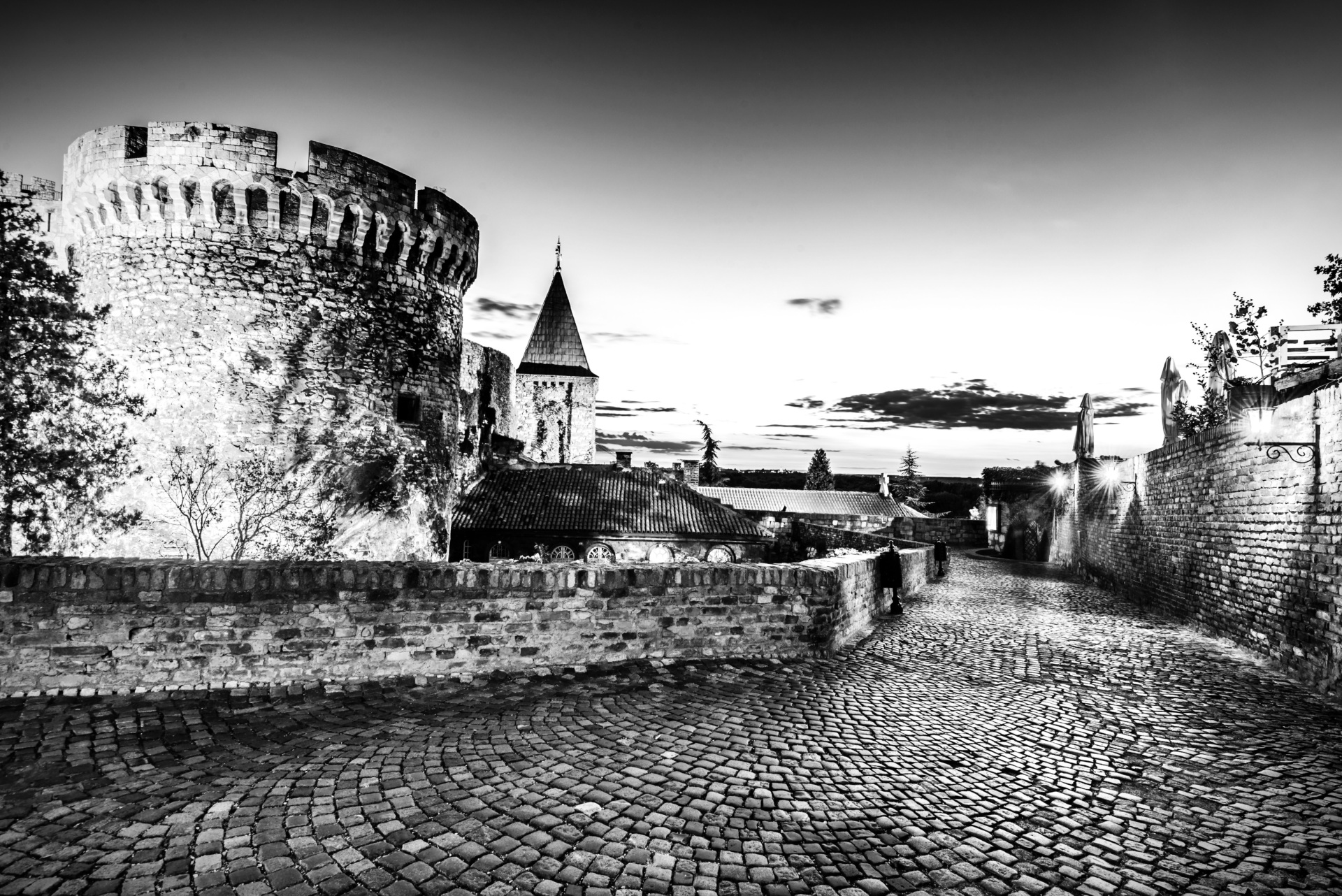
Serbia-U.S. relations soured in the late 1990s when President Bill Clinton led a NATO bombing campaign against Yugoslavia—without UN Security Council approval—to separate Kosovo from Serbia. “Clinton and Europe did the first violation of UN Charter, attacking Serbia,” Vucic said. Belgrade was bombed for 78 days by 19 NATO countries.
“People say that there is no other city in Europe that was bombed that many times as Belgrade,” he said. “But we were always like a phoenix rising from the ash.”
Trump’s first-term approach focused on economic ties between Serbia and Kosovo—open flights, railroads, highways, free trade. Grenell conveyed that message daily, Vucic said. Now, with Trump’s return, there’s hope for a prosperous future.
“I believe that President Trump can understand that message,” Vucic said. “We will always be very open for discussing all the issues, very open in attempting to find a deal, but it is not going to be easy.”