
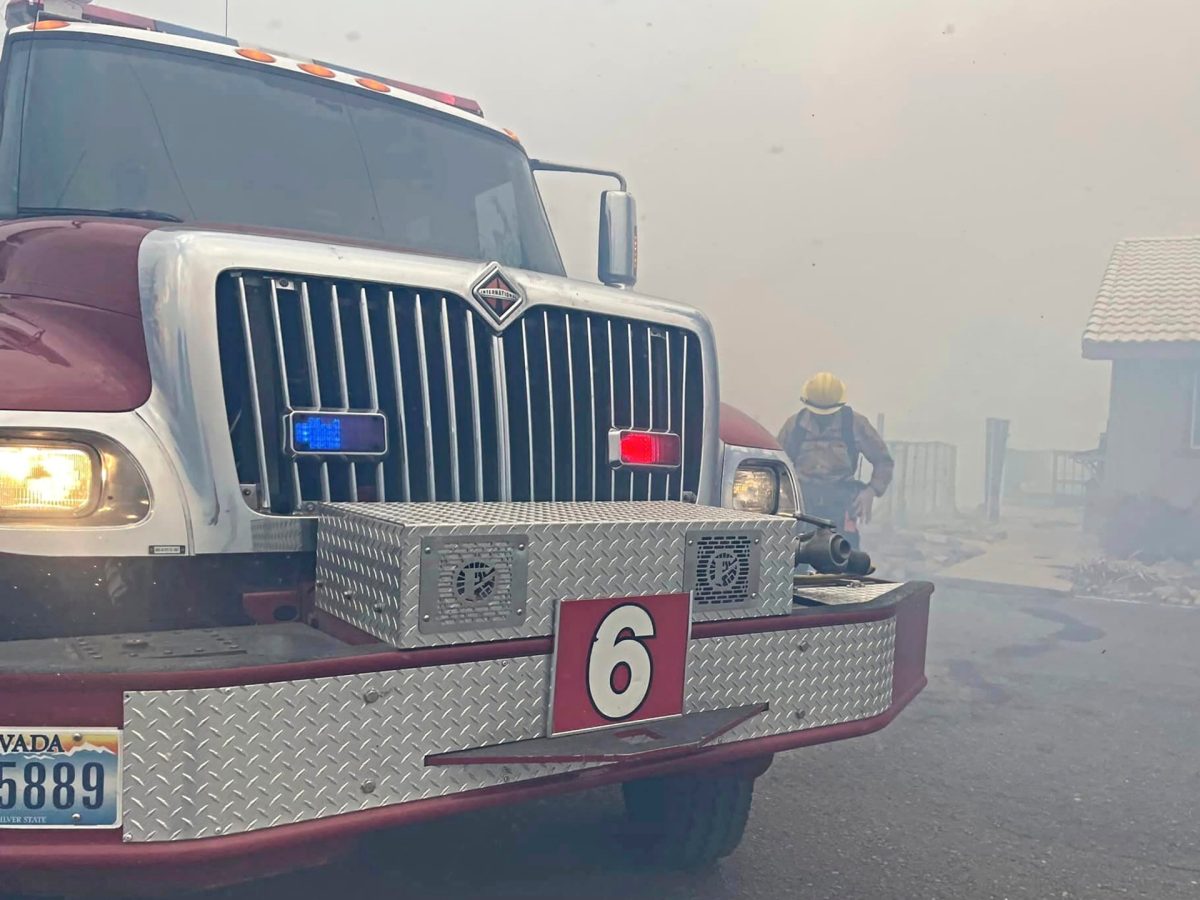
A fast-moving wildfire erupted outside Reno, Nevada, this weekend, forcing evacuations and consuming nearly 11,000 acres by Saturday evening as firefighters battle wind-driven flames threatening residential neighborhoods. The blaze underscores the ongoing vulnerability of communities across the American West, where the wildland-urban interface—the zone where development meets undeveloped land—continues to expand, placing more homes and residents in harm’s way during fire season.
Nevada Gov. Joe Lombardo declared a state of emergency in Washoe County for the Hawk Fire, warning it “is spreading quickly and threatening homes and structures.” The emergency declaration allows the state to mobilize additional resources and seek federal assistance if conditions warrant, a common first step in major wildfire response efforts that enables coordination between local, state, and federal agencies.
“This is an active and rapidly evolving situation, and I urge everyone in the affected areas to remain vigilant.”
The inferno has grown to more than 10,500 acres, according to the fire mapping platform Perimeter Map. Wind-driven flames have complicated containment efforts as the blaze races toward neighborhoods. The size of the fire—more than 16 square miles—demonstrates how quickly conditions can deteriorate when weather conditions align with dry fuels, a scenario that has become increasingly common in recent years across the region.
“The Hawk Fire is a very dynamic incident for us as it’s being driven by the winds,” Richard Edwards, chief of Truckee Meadows Fire & Rescue in Washoe County, said in a video posted to social media.
“The wind-driven fires move very rapidly into our residential areas, creating a lot of challenges for our firefighters to save homes and protect lives,” he added. These conditions present particular difficulties for firefighting crews, who must balance aggressive suppression tactics with crew safety when fires are moving unpredictably.
Time-lapse video from an Alert California camera operated by UC San Diego showed the fire rapidly advancing down a slope toward illuminated Reno neighborhoods late Saturday before gradually fading from view. The footage provided a stark visual reminder of how quickly fire can travel through terrain and vegetation, often outpacing evacuation efforts and forcing split-second decisions by emergency responders.
Some 400 firefighters have been battling the blaze, aided by helicopters flying overnight. But high winds, low humidity, and dry brush have fueled the fire’s rapid growth throughout the day. The deployment of aerial resources during nighttime hours reflects the severity of the threat, as helicopter operations in darkness carry significant risk and are typically reserved for the most critical situations where structures and lives are immediately endangered.
By Saturday evening, residents of some 1,000 homes were instructed to prepare for evacuation. Fire maps showed multiple residential areas now under “go now” orders. The evacuation notices affect thousands of residents in a region that has seen substantial growth in recent decades, with development pushing further into areas historically prone to wildfire.
Reno Mayor Hillary Schieve posted a warning on X: “Structures have already been burned in this fire and your life is more important than a building.” The mayor’s message reflects a common challenge faced by emergency officials during fast-moving fires, as some residents are reluctant to leave their homes and possessions behind.
Casinos in Reno offered discounted rooms for those forced to evacuate, according to reports on social media. The gesture highlights how major emergencies often prompt community response, with businesses stepping in to provide temporary shelter and services for displaced residents.
The cause of the fire has yet to be determined. Investigators will conduct a thorough origin and cause analysis once the fire is controlled, examining potential ignition sources ranging from equipment malfunctions to human activity.
The Hawk Fire marks another chapter in a long, hot, and fiery summer across the American West, where wildfires have consumed thousands of acres and forced widespread evacuations. The pattern reflects broader trends of longer fire seasons and more intense wildfire behavior that fire scientists have documented across the region in recent years, driven by drought conditions, fuel accumulation, and development pressures.
What happens when fire jumps a highway, trapping thousands?
The Hawk Fire jumped Highway 395 north of Reno, causing total gridlock and mandatory evacuations. Red Flag Warnings persist, with national forest lands facing severe threat.#HawkFire #Reno #Nevada #Wildfire #Enviro… pic.twitter.com/yZFe3fX7vu
— JQJO USA Environment English (@Jqjoenviroment) August 23, 2026
I have declared a state of emergency in Washoe County as we respond to the Hawk Fire. Please stay safe and follow the direction of local officials. pic.twitter.com/kJF4XuwtC7
— Governor Joe Lombardo (@JosephMLombardo) August 23, 2026