
Democrats are laying the groundwork to impeach three of President Trump’s top officials — and they’re not hiding it.
The push for impeachment proceedings represents a significant escalation in Democratic efforts to hold the Trump administration accountable following their midterm election victories. With control of both the House and Senate now in Democratic hands, party leaders appear emboldened to pursue aggressive oversight measures that were previously impossible under Republican majorities. The strategy marks a return to the impeachment tool that Democrats previously wielded against Trump himself during his first term, though this time the focus has shifted toward his cabinet appointees and key officials.
Rep.-elect Brad Lander (D-NY) told reporters he wants to impeach Secretary of War Pete Hegseth, Health and Human Services Secretary Robert F. Kennedy Jr., and FBI Director Kash Patel. According to Lander, all three officials have allegedly “betrayed their requirements of their office.”
Lander’s ambitious impeachment agenda reflects growing frustration among progressives with what they view as the administration’s controversial personnel choices and policy directions. The targeting of these three specific officials is notable given their high-profile roles and the controversies that have surrounded their tenures. Hegseth has faced scrutiny over military policy decisions, Kennedy over public health positions that have alarmed mainstream medical experts, and Patel over concerns about the politicization of federal law enforcement. The constitutional threshold for impeachment—”high crimes and misdemeanors”—has historically been subject to interpretation, and Democrats appear ready to test those boundaries with cabinet-level officials.
“I’d like to impeach Hegseth, I’d like to see us impeach Kash Patel. I’d like to see us impeach RFK Jr. All of whom look to me like they have betrayed their requirements of their office.”
When a reporter pressed Lander on whether there was “an appetite for impeachment proceedings” against either Hegseth or Trump, Lander made clear he wanted the Senate to vote on impeachments for all three officials.
The congressman’s emphasis on forcing Senate votes underscores a political calculation beyond merely removing officials from office. Even if impeachment efforts ultimately fail in the Senate, Democrats appear interested in putting Republicans on the record with votes that could prove politically damaging in future elections. This strategy echoes previous impeachment battles where the process itself became as significant as the outcome, shaping public perception and creating electoral vulnerabilities for those forced to defend controversial figures.
“And, I would love to put that before the Senate, and let’s see how Senators vote on those impeachments,” Lander said.
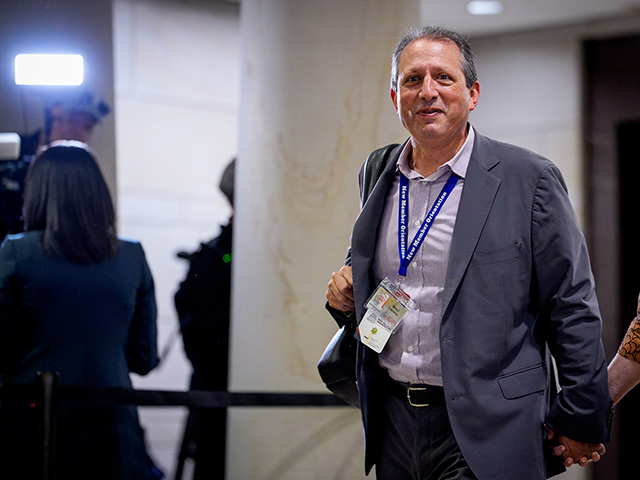
Asked about impeaching Trump himself, Lander dodged — saying he has “listed a big agenda” that includes restoring healthcare cuts, ending the war, ending tariffs, and getting “money out of politics.”
Lander’s reluctance to explicitly address presidential impeachment may reflect a strategic choice to avoid appearing overly focused on confrontation at the expense of a legislative agenda. By framing his priorities around policy goals rather than purely punitive measures against the president, Lander appears to be threading a needle between satisfying the Democratic base’s desire for accountability and appealing to moderate voters who may be wary of endless political warfare. This approach also allows Democrats to argue they are focused on substantive governance while simultaneously pursuing oversight of administration officials.
Lander continued, stating he wanted “accountability” for individuals such as Alex Pretti and Renee Good, and wants Democrats to investigate “what ICE is doing” and scrutinize Elon Musk’s Department of Government Efficiency cuts.
The breadth of Lander’s oversight agenda signals that impeachment efforts may be just one component of a comprehensive Democratic strategy to challenge Trump administration policies across multiple fronts. Immigration enforcement, government restructuring, and personnel decisions all appear to be under the microscope as Democrats leverage their newly acquired investigative powers.
WATCH the interview here:
Lander’s comments come as Democrats have openly expressed interest in impeaching Trump cabinet officials.
The coordinated nature of these statements from multiple Democratic leaders suggests this is not merely individual members speaking out of turn, but rather a deliberate messaging strategy that has gained traction within the party’s leadership structure. The willingness to publicly telegraph impeachment intentions represents a departure from the more cautious approach that typically characterizes congressional oversight, indicating Democrats believe they have both the political mandate and public support to pursue aggressive accountability measures.
During a CNN interview, Rep. Madeleine Dean (D-PA) argued that Trump should not be the first impeachment target. Instead, she suggested Democrats focus on what she called “the softer targets” — Trump’s cabinet members.
“I don’t think the first target ought to be the president. People know what this president has been responsible for. But what we will begin, I hope… is we will go around to what I would call the softer targets.”
Dean’s candid use of the term “softer targets” reveals a tactical approach to impeachment that prioritizes achievability and political impact over any specific hierarchy of alleged wrongdoing. Cabinet officials may lack the constitutional protections and political support that shield presidents, making them more vulnerable to successful impeachment and removal proceedings. This strategy also allows Democrats to build momentum and establish precedents before potentially moving to more consequential targets.
House Minority Leader Hakeem Jeffries (D-NY) went further during an ABC News interview, declaring himself a “hard yes” on impeaching Hegseth.
Jeffries’ unequivocal position is particularly significant given his leadership role and typically measured public statements. For the top House Democrat to commit so definitively to impeachment signals that this is not merely progressive wishcasting but a serious legislative priority that will likely advance through committee proceedings and potentially to floor votes.
“I’m a hard yes on the Hegseth resolution,” Jeffries said. “The so-called secretary of defense has allegedly abused his power, undermined our national security, and engineered this allegedly reckless and costly war of choice in Iran, which has reportedly skyrocketed prices on the American people and made the country less safe.”
WATCH:
Democrats now control both chambers following the midterm elections. The question is whether Senate Republicans will hold the line — or whether some will fold under pressure.
The political dynamics in the Senate will ultimately determine whether these impeachment efforts result in actual removals from office or merely symbolic rebukes. With Democrats controlling the chamber but potentially lacking the two-thirds majority required for conviction, the outcome may hinge on whether any Republicans can be persuaded to cross party lines—a scenario that would require either overwhelming evidence of wrongdoing or significant political cover for those willing to vote against their own party’s administration.