
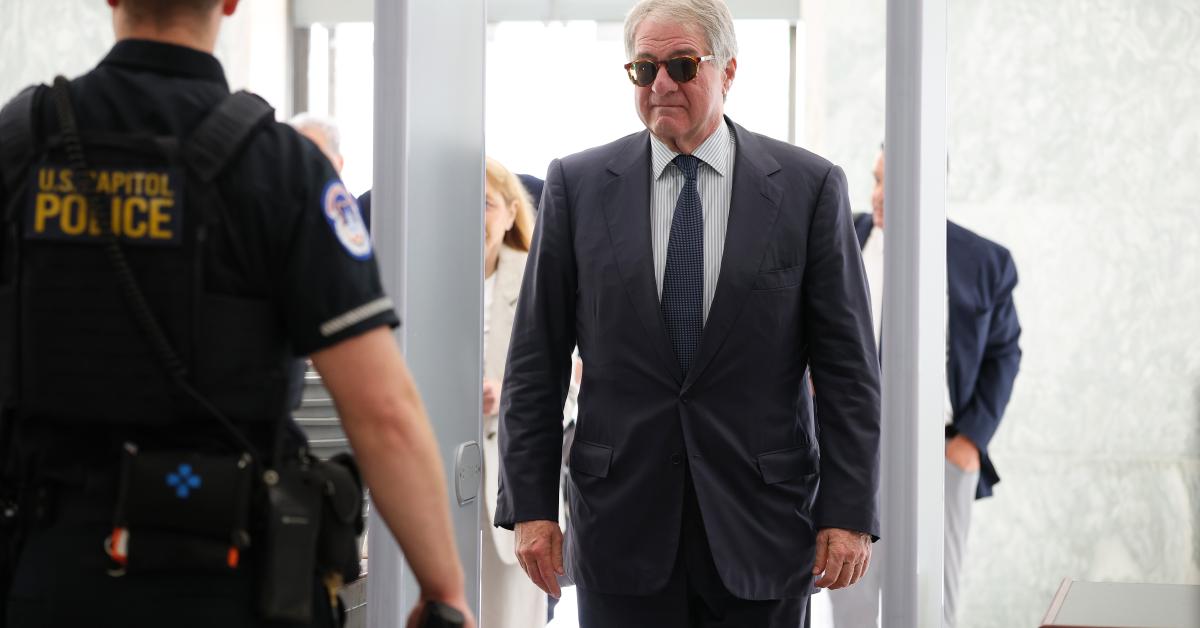
The House Oversight Committee voted unanimously Tuesday to hold billionaire investor Leon Black in contempt of Congress after he defied subpoenas and refused to testify about his financial ties to convicted sex offender Jeffrey Epstein.
The contempt vote represents a significant escalation in Congress’s ongoing investigation into Epstein’s network of financial enablers and associates. Jeffrey Epstein, who died in federal custody in 2019 while awaiting trial on sex trafficking charges, maintained relationships with numerous wealthy and powerful figures throughout his criminal activities. The congressional investigation seeks to understand how these relationships functioned and whether Epstein’s associates knew about or facilitated his abuse of victims.
Black paid Epstein over $180 million — money lawmakers believe enabled Epstein’s operations for years.
The sheer scale of these payments has raised alarm bells among investigators. To put this figure in perspective, it represents one of the largest known financial relationships between Epstein and any individual client or associate. The payments were made over several years, continuing even after Epstein’s 2008 conviction on state charges related to soliciting prostitution from a minor. This timeline is particularly troubling to lawmakers, who question why such substantial payments would continue flowing to someone with a known criminal record involving the exploitation of minors.
Now Congress wants answers. And Black is hiding behind a lawsuit instead of showing up.
“We believe that Leon Black is at the heart of the Epstein network. This is a private equity billionaire worth roughly $13 billion dollars. We need to know why Jeffrey Epstein got over 180 million dollars from Mr. Black.”
The contempt resolution advanced on a bipartisan vote — Republicans and Democrats unified in demanding Black answer questions about how his payments funded Epstein’s activities and whether they led to the abuse of women and girls.
Bipartisan cooperation on congressional investigations has become increasingly rare in recent years, making the unified front on this issue particularly noteworthy. The fact that members from both sides of the aisle agree on the need to compel Black’s testimony underscores the seriousness with which the committee views his refusal to cooperate. This unity also strengthens the committee’s legal position should the matter proceed to enforcement through the courts or the Department of Justice.
House Oversight Chairman James Comer issued the contempt charge after Black sued the committee to block subpoenas rather than comply with his scheduled deposition earlier this month.
“Mr. Black is hiding behind litigation to delay having to provide answers to the American people,” Comer said. “No one is above the law. Mr. Black will be treated the same as anyone else in this investigation, and his actions have consequences.”
Black appeared for a voluntary transcribed interview in June — but only an hour in, he began refusing to answer questions. Comer responded by issuing two subpoenas on the spot — one compelling Black to appear for a deposition, the other requiring him to produce nondisclosure agreements.
The request for nondisclosure agreements is particularly significant to the investigation. Lawmakers believe these documents may reveal the true nature of Black’s relationship with Epstein and potentially identify other individuals or activities connected to Epstein’s criminal enterprise. NDAs have been a recurring element in cases involving Epstein and his associates, often used to silence victims or conceal the nature of business relationships.
Black has defended the payments as being for tax and estate planning services. But lawmakers from both parties aren’t buying it.
Committee members have expressed skepticism about this explanation, noting that the amount paid far exceeds typical fees for such services, even for ultra-wealthy clients. Tax and estate planning services, while valuable, do not typically command payments in the hundreds of millions of dollars. This discrepancy between Black’s stated justification and the actual amounts paid forms a core part of the committee’s suspicion that the money may have served other purposes or funded activities beyond legitimate advisory services.
House Oversight Ranking Member Robert Garcia, D-Calif., said the committee has numerous unanswered questions about Black’s financial relationship with Epstein.
“We know this money enabled Epstein’s activities for years, and we need to know how and if it led to the abuse of women and girls,” Garcia said. “We need to know about Leon Black and Jeffrey Epstein’s financial dealings.”
The contempt resolution now heads to the House floor for a full vote. If the full House approves, Black could face federal prosecution for defying Congress.
Congressional contempt citations carry potential criminal penalties, including fines and imprisonment, though prosecution depends on the Department of Justice choosing to pursue charges. The last step in the process would be a referral to the U.S. Attorney for the District of Columbia. The outcome of this case could set important precedents for congressional oversight power and the ability of wealthy individuals to resist legislative subpoenas through litigation.
Comer made clear that subpoenas carry the force of law — and that billionaires don’t get a pass.
“Subpoenas are not suggestions; they carry the force of law and require full compliance,” he said.