A federal judge just handed the Trump administration a major win in its fight to reclaim control over who stays in America.
U.S. District Judge Patti Saris cleared the way Friday for the Department of Homeland Security to end temporary protected status for hundreds of South Sudanese nationals who have been living and working in the United States under Obama-era deportation shields.
The Boston-based judge rejected a last-ditch legal challenge from immigrant-rights advocates who tried to preserve the protections, issuing a 15-page order that dismantled their arguments.
“Every day these ‘administrative stays’ are in effect is a day the American people are denied what they voted for.”
DHS General Counsel James Percival celebrated the ruling in posts on X shortly after it dropped.
“Judge Patti Saris just lifted her order preventing us from terminating TPS for South Sudan,” Percival wrote. “Every day these ‘administrative stays’ are in effect is a day the American people are denied what they voted for.”
The decision follows the Supreme Court’s June ruling that allowed Trump to end similar protections for Haiti and Syria. That 6-3 conservative-majority decision stripped lower courts of their power to block DHS from terminating temporary protected status designations — and now judges are falling in line.
For those keeping score at home, here is today’s TPS update. pic.twitter.com/ea5r4kNRYl
— James Percival (@DHSGenCounsel) August 7, 2026
Percival shared a chart showing TPS has now been terminated for nine countries: Haiti, Syria, Yemen, Afghanistan, Cameroon, Nepal, Honduras, Venezuela, and South Sudan.
Three federal judges — Brian Murphy, Allison Burroughs, and Matthew Kennelly — are still blocking terminations for Ethiopia, Somalia, and Burma. But the walls are closing in.
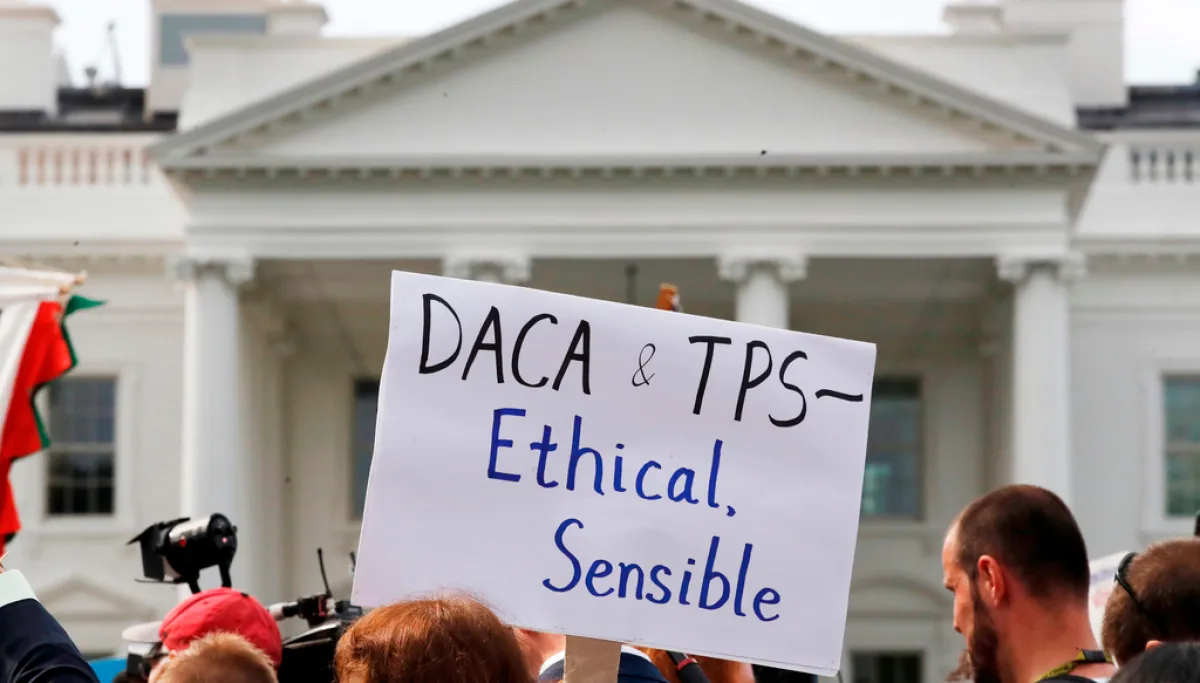
Temporary protected status was created by Congress in 1990 to allow nationals from countries facing armed conflict, natural disasters, or other crises to remain in the U.S. temporarily and receive work authorization. The program has ballooned under Democratic administrations into a backdoor path to permanent residency for hundreds of thousands.
DHS moved on Nov. 6 to terminate South Sudan’s designation, saying the country no longer met the statutory conditions. The decision affected more than 232 South Sudanese TPS beneficiaries and at least 73 people with pending applications.
Judge Saris had previously blocked the termination. But after the Supreme Court ruling, immigrant-rights lawyers returned with a new argument: the 1990 TPS statute names the attorney general — not DHS — as the official with authority to terminate protections.
Saris rejected the claim as “self-contradictory” and “self-defeating.”
She wrote that if DHS lacked the power to terminate TPS, it also would lack the power to extend it — meaning South Sudan’s original designation would be invalid by the same logic.
The ruling clears Trump to proceed with ending the deportation protections unless a higher court intervenes. With the Supreme Court already having ruled in Trump’s favor on the broader issue, that looks unlikely.
The administration is now positioned to terminate TPS for the remaining holdout countries as soon as the final judicial obstacles fall.
Judge Patti Saris just lifted her order preventing us from terminating TPS for South Sudan. Every other TPS judge must do the same! Every day these “administrative stays” are in effect is a day the American people are denied what they voted for.
— James Percival (@DHSGenCounsel) August 7, 2026