President Donald Trump just announced the U.S. government will take a 40% ownership stake in the massive new Baltimore shipyard being built to ramp up submarine production — a stunning government equity play buried inside the $6.6 billion Arsenal-2 project.
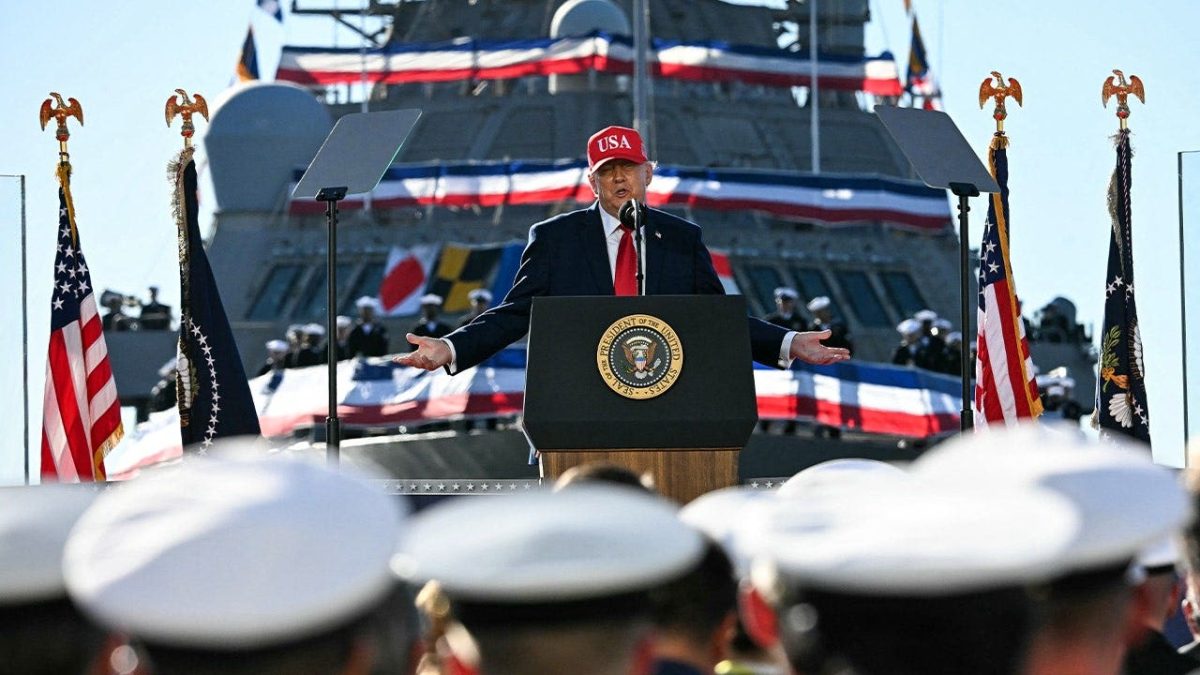
“The ultimate proof of our commitment to ensuring the shipyard’s enduring success: American taxpayers will receive a 40 percent stake in the new shipyard,” Trump told the crowd at Sparrows Point on Tuesday. “We get 40 percent.”
“American taxpayers will receive a 40 percent stake in the new shipyard. We get 40 percent.”
The arrangement marks one of the Trump administration’s boldest uses of direct government ownership in a strategic industry. The 40% stake will be in a new subsidiary Anduril is creating to operate the Arsenal-2 facility — not in the defense tech company itself — but the exact terms, rights, and potential returns haven’t been disclosed yet.
The White House and Anduril have not yet released details on what the government is providing in exchange for the equity, how the stake could generate taxpayer returns, or what governance rights come with the 40% interest.
The $6.6 billion project is aimed at closing America’s glaring submarine production gap as China’s navy rapidly outpaces U.S. shipbuilding capacity. American yards are delivering roughly 1.3 Virginia-class attack submarines per year — short of the Navy’s goal of two — and aren’t expected to hit that target until around 2032.
Anduril is putting up $3.7 billion of its own capital to build the facility and manufacturing capacity. The Navy could spend up to $2.9 billion purchasing what the yard produces once operational.
Once fully online around 2030, Arsenal-2 is expected to add roughly 9 million labor hours annually to the submarine industrial base — increasing Virginia-class production capacity by about 15%, according to a senior administration official.
The shipyard will start by manufacturing critical components like torpedo tubes, which officials described as a current “gating component” bottlenecking submarine production. Eventually, Anduril plans to build larger modules and entire submarine sections at the site.
The submarine crunch is part of a broader shipbuilding crisis. China now accounts for more than half of global commercial shipbuilding output, while the U.S. accounts for only a fraction of 1% — giving Beijing an enormous industrial base that can pivot to military ship construction on demand.
The Trump administration has increasingly taken direct equity stakes in companies and projects it considers critical to national security, including chipmaker Intel and rare-earths producer MP Materials. But the 40% Arsenal-2 stake stands out for its size and scope.
An industry official on a pre-announcement call with reporters emphasized that Anduril would finance the new production capacity itself while the government paid for the resulting submarines.
“I wouldn’t say that the government’s paying us back. We feel the government [is] buying the results of what we’re able to produce,” the official said.
Notably, the 40% government stake was not disclosed on that call — even when reporters asked how the project would be financed.
The facility spans more than 2 million square feet and is expected to create 3,100 direct jobs and roughly 11,000 indirect jobs nationwide. Operations are slated to begin around 2030.