California Republicans are putting election integrity front and center ahead of the 2026 midterms — and they’re making a voter ID ballot measure the flagship of their comeback strategy.
“Californians need to feel secure in our elections,” California GOP Chairwoman Corrin Rankin told Fox News Digital. “The way it is now, there’s so much room for uncertainty and confusion. What Proposition 39 is going to do is it’s going to sort of close the loopholes. It’s a commonsense solution that will strengthen our democracy.”
Proposition 39 — the party’s signature ballot initiative — aims to tighten election procedures in a state where ballot counting can drag on for weeks after Election Day.
“Californians need to feel like we can trust our election systems, and trust is not given. Trust is earned and this will allow Californians to feel more like they can trust our election system.”
California’s June 2 primary became a national embarrassment when results took weeks to finalize. State election officials count ballots postmarked by Election Day even if they arrive up to seven days later — and they’re permitted up to 30 days to certify results.
The Los Angeles mayoral race became the center of controversy when it took six days to call the runoff. President Trump was among those questioning the integrity of the prolonged count.
“There’s so many other states throughout our country and throughout the world actually that seem to be able to have a winner on election night,” Rankin said. “It’d be wonderful if California could do the same.”
But the voter ID push is just one piece of the GOP’s broader strategy. Rankin says kitchen-table frustrations — affordability, education, trust in government — are what will determine whether Republicans make gains in November.
Affordability is the top concern. California recently landed in the top five most expensive states, according to The Missouri Economic Research and Information Center’s quarterly Cost of Living Index.
“A lot of parents want their adult children to stay in California, to be a part of and contribute to the same California dream that was so great for our grandparents and our parents,” Rankin said. “Affordability is the top issue.”
California drivers are paying about $5.65 per gallon for regular gasoline — roughly $1.25 more, or about 28% higher, than they were at this time last year, according to AAA and federal energy data.
Gas prices, grocery bills, and the cost of living are becoming the Republican Party’s opening to win back voters who feel abandoned by one-party Democratic rule.
Rankin also pointed to education — where zip codes determine the quality of schooling students receive — as a major frustration driving the GOP’s push for school choice.
“When [candidates] keep their race focused on their district, focused on the voters in their district and the issues that matter most to those voters, stay focused on issues like affordability, children’s education, the prices of gas and groceries, things like that,” Rankin said. “That’s what voters want to hear.”
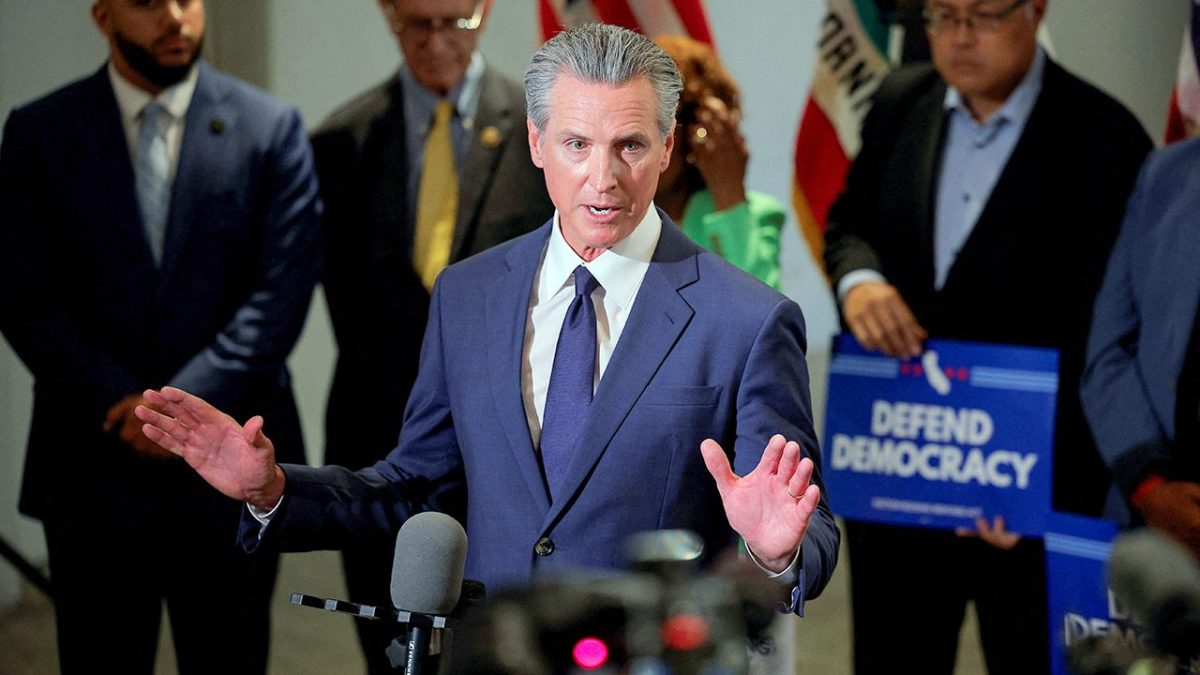
Gov. Gavin Newsom is serving his second and final term, fueling speculation about a 2028 presidential bid — and creating what Rankin believes is a golden opportunity for Republicans to flip the governor’s mansion.
She pointed to California’s troubled high-speed rail project as exhibit A of government waste under one-party rule.
“We’ve got a bullet train that he’s been funding with billions of dollars for years, yet we have no train. So where’s the money going to?”
The project was approved by voters in 2008 with an estimated $33 billion price tag. It’s now projected to cost more than $200 billion — and there’s still no operational train.
Rankin said the spending reflects a broader ideological shift within the Democratic Party — one that’s now spreading nationwide.
“I think that the Democrats have gone so far to the left that many Californians just don’t see themselves… many Democrats in California just don’t relate to the current flow of the Democrat party,” Rankin said. “They’re moving way too far into the extremism of socialism. I think a lot of people have red flags and just don’t want to be part of it.”
Republicans are betting that frustration over affordability, education, and election integrity will be enough to break the Democratic stranglehold on California — and flip the state’s top office for the first time in nearly two decades.