
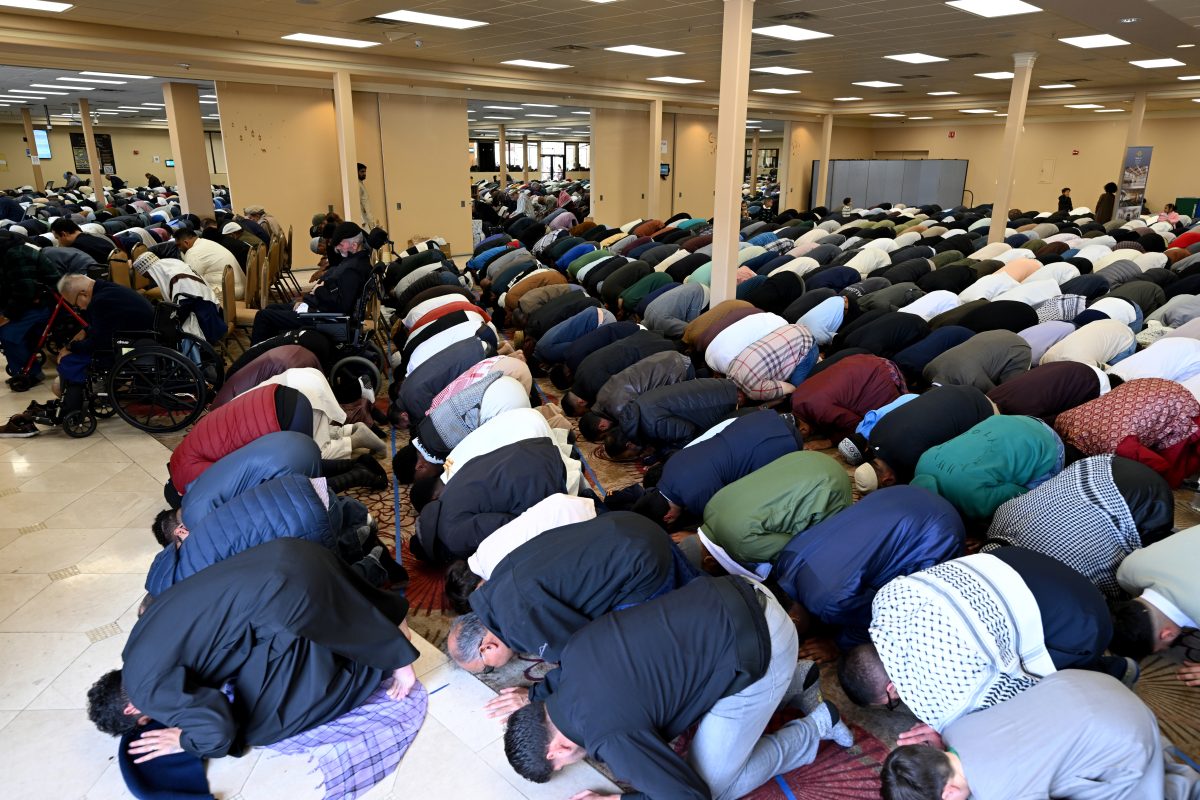
California lawmakers are on track to designate two Islamic holy days as official state holidays, with the state Senate expected to vote before the legislative session ends this week. The move would mark a significant expansion of religious and cultural recognition in the nation’s most populous state, where an estimated one million Muslims reside across diverse communities from Los Angeles to the Bay Area.
Assembly Bill 2017, authored by Assemblymember Matt Haney (D-San Francisco) and co-authored by Sen. Aisha Wahab, would add Eid al-Fitr and Eid al-Adha to California’s official state holiday calendar. Wahab, who represents parts of the South Bay, made history in 2022 as the first Muslim and Afghan American woman elected to the California State Legislature, bringing firsthand perspective to issues affecting the state’s Muslim population.
The measure allows workers to use existing paid leave to take the days off, permits public schools and community colleges to close for the observances under union agreements, and creates a mandatory excused-absence category for students who miss school to observe Eid. Importantly, the legislation does not create new paid time off or mandate workplace closures, but rather establishes a formal framework for employees and students to observe these religious holidays without penalty. This structure mirrors how other religious observances are accommodated in workplace and educational settings throughout the state.
Eid al-Adha — the “Festival of the Sacrifice” — involves the ritual slaughter of livestock, typically a sheep, goat, cow, or camel, in commemoration of Ibrahim’s willingness to sacrifice his son. The holiday, known as the greater of the two Eids, coincides with the conclusion of the Hajj pilgrimage to Mecca and is celebrated by Muslims worldwide.
The meat is customarily divided among family and the needy in a practice known as “qurbani.” This tradition emphasizes charity and community solidarity, with one-third typically going to family, one-third to friends and neighbors, and one-third to those in need.
Eid al-Fitr marks the end of Ramadan, the month in which observant Muslims abstain from food and drink between dawn and sunset. The holiday, sometimes called the “Festival of Breaking the Fast,” is characterized by communal prayers, festive meals, gift-giving, and acts of charity, serving as both a spiritual celebration and a time for family and community gathering.
“California is home to one of the largest and most vibrant Muslim communities in the country. AB 2017 is about making sure Muslim Californians are seen, valued, and treated with the same dignity as every other community in our state.”
The bill cleared the Assembly by a 64-1 vote in late May and has since moved through Senate committee review. The overwhelming bipartisan support in the lower chamber suggests broad legislative consensus on the measure’s intent, though the path through the Senate has generated more pointed debate.
But the legislation has drawn sharp opposition from religious liberty advocates over a provision authorizing the State Board of Education to develop optional curriculum for classroom activities marking the holidays. Critics contend this component of the bill raises constitutional concerns about the separation of church and state, particularly regarding the role of public schools in presenting religious content.
Greg Burt, vice president of the California Family Council, argues the provision crosses a line from teaching about religion into promoting it. The distinction between objective education about religious practices and what could be perceived as endorsement remains a central point of contention in the debate.
Burt told Fox News Digital the bill amounts to schools “encouraging the celebration of a religious holiday.”
The council — which represents thousands of constituents and more than 2,000 churches statewide — has also questioned where the state would draw the line on recognizing additional religious holidays. This slippery-slope argument reflects broader concerns about how states balance inclusive recognition of diverse religious communities with practical limitations on the number of formally acknowledged observances.
If signed by Gov. Gavin Newsom, Eid al-Fitr and Eid al-Adha would join Diwali and Lunar New Year among community-specific holidays California has formally recognized in recent years. This pattern reflects California’s ongoing effort to acknowledge its increasingly diverse population through official recognition of cultural and religious traditions beyond traditional Christian and secular American holidays.
Both Islamic holidays follow the lunar calendar, so their dates shift each year on the Western calendar. This means the observances can fall on different dates year to year, requiring flexibility in scheduling and planning for schools and employers.
The bill is expected to reach Newsom’s desk by the end of the week. The governor has not yet indicated whether he will sign the measure, though California’s pattern of expanding cultural recognition in recent legislative sessions may provide insight into how he will approach the decision.