
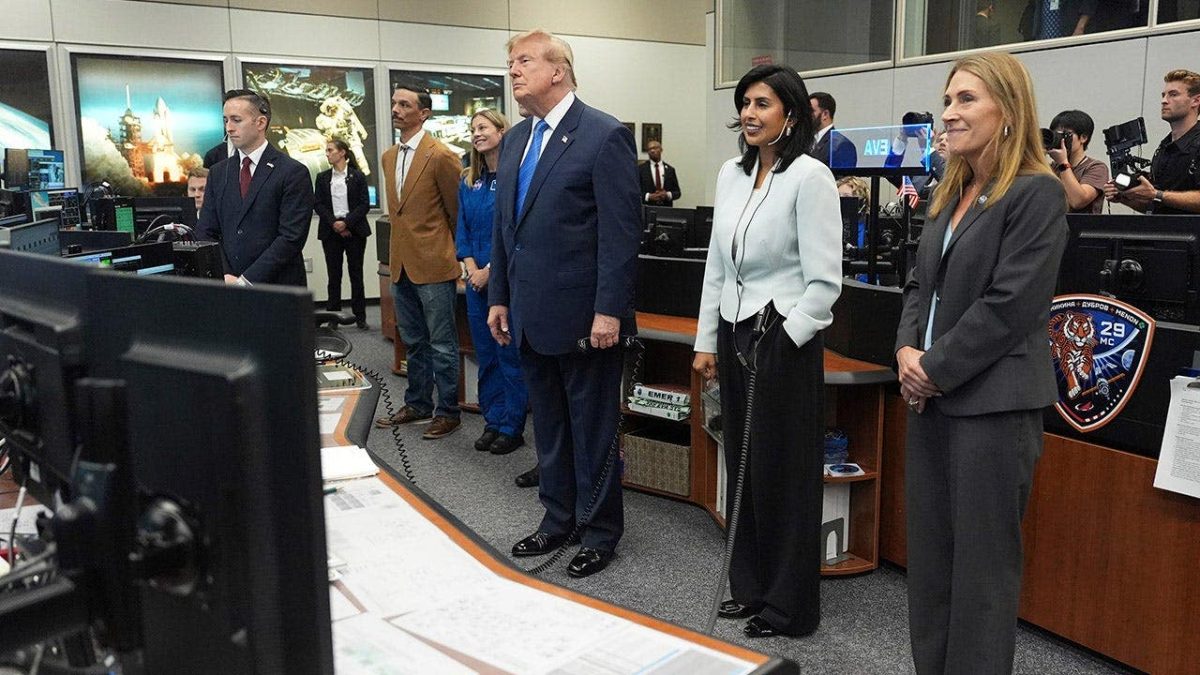
President Donald Trump on Friday spoke with American astronauts aboard the International Space Station from Houston, where he honored the Artemis II crew moments earlier.
The call to the ISS represented a continuation of a presidential tradition dating back decades, where commanders-in-chief have connected with astronauts in orbit to highlight America’s ongoing presence in space and draw public attention to the nation’s spacefaring achievements. Such calls have historically served both ceremonial and symbolic purposes, reinforcing the connection between space exploration and national leadership.
Trump joked at the beginning of the phone call that many Americans would love to travel to space.
“I wouldn’t do it,” he said from NASA’s Johnson Space Center. “I hate to admit it. I would not want to do it. But some people love it more than anything.”
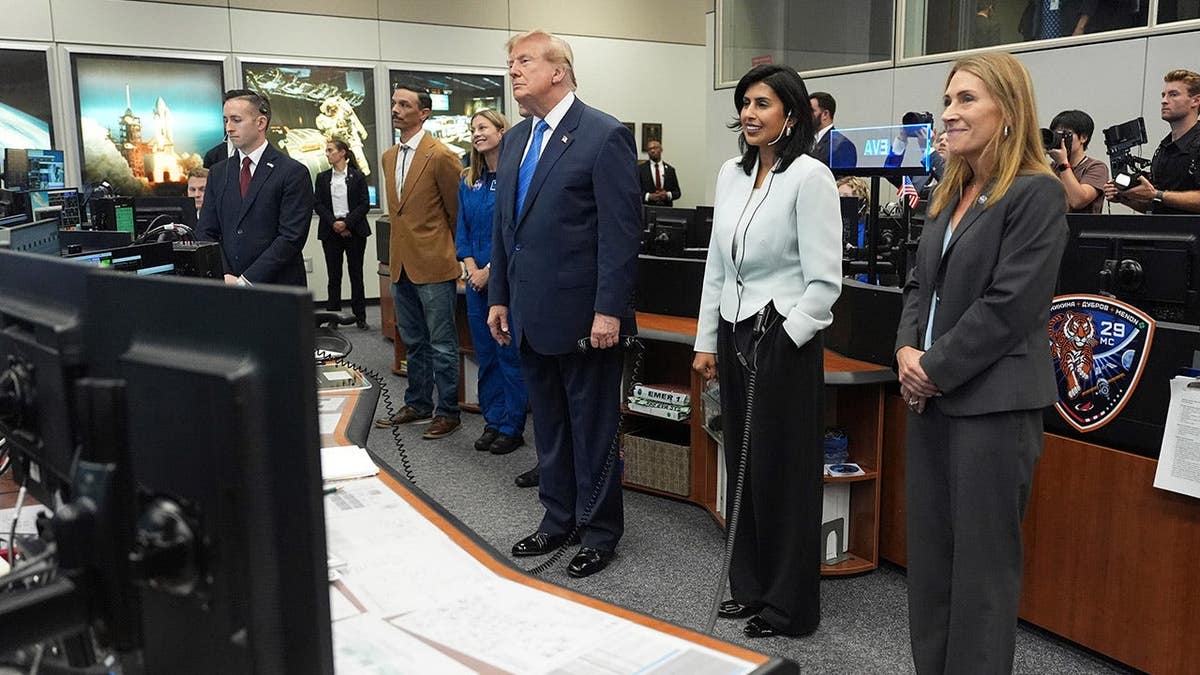
The astronauts said they were “thrilled” to speak with Trump and that they were “in the middle of several spacewalks,” with another one planned for next week.
Spacewalks, formally known as extravehicular activities, are among the most complex and dangerous operations conducted by astronauts. They require extensive preparation and serve critical functions including station maintenance, scientific experiments, and equipment upgrades. The ISS crew’s ongoing series of spacewalks underscores the continuous work required to maintain humanity’s orbiting laboratory, which has been continuously occupied for over two decades.
Trump called the crew a group of “pioneers” for their efforts in space exploration.
“We’re going to see you when you get back. In fact, if you want Oval Office time, right?”
He welcomed other officials to speak to the ISS crew and offered to welcome the astronauts to the White House when they return.
Presidential invitations to visiting astronauts at the White House have long been part of how administrations celebrate American achievements in space, dating back to the early days of the Mercury program. Such visits serve to connect the technical accomplishments of space exploration with broader public engagement and national pride.
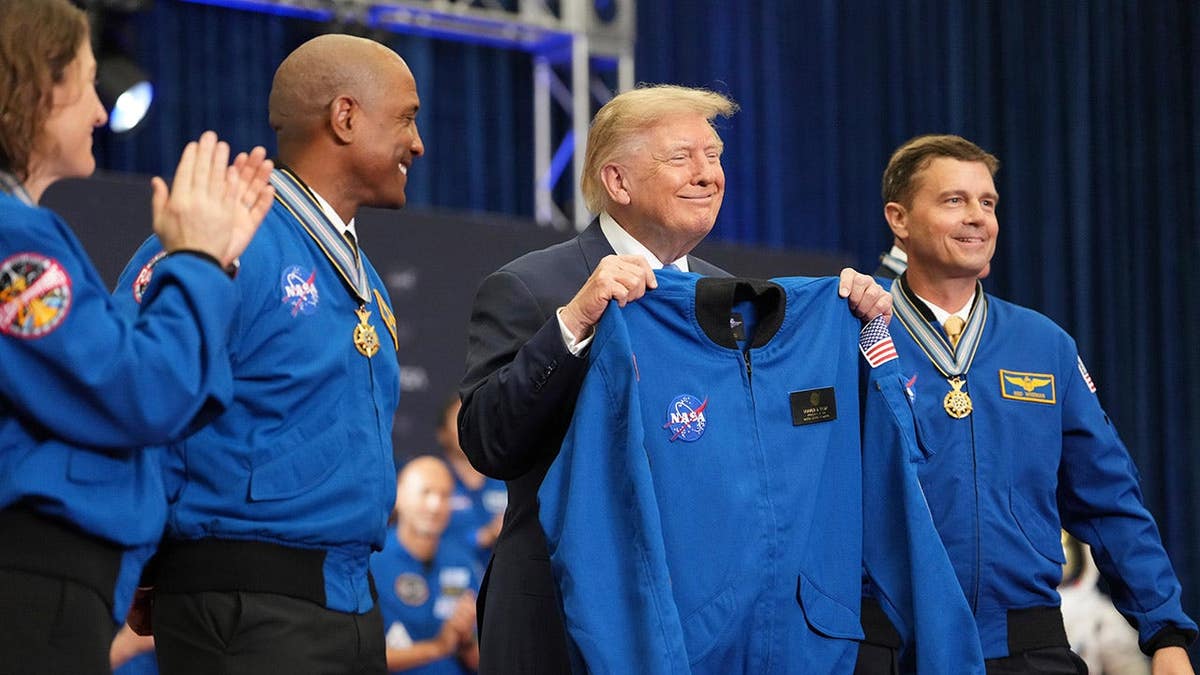
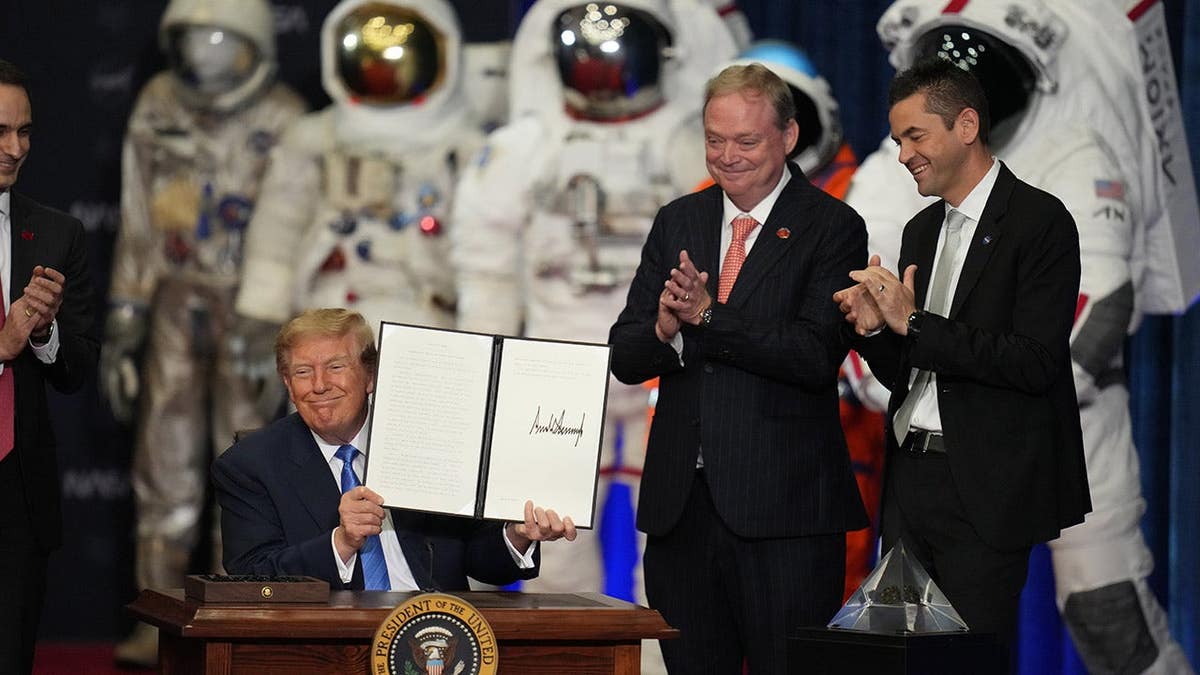
A short time earlier, Trump honored the crew of the Artemis II with the Congressional Space Medal of Honor and signed an executive order establishing the U.S. Space Force Academy.
“It will be at that same level when you serve West Point, Air Force, Coast Guard, Navy, Annapolis,” Trump said, comparing the new Space Force Academy to the other U.S. military academies. “It’s going to be at that level.”
The establishment of a dedicated Space Force Academy represents a significant institutional milestone for the newest military branch, which was created during Trump’s first term. The comparison to established service academies signals the administration’s intent to build permanent educational infrastructure for space-focused military leadership, ensuring long-term development of officers trained specifically for the unique challenges of space operations and national security in the orbital domain.
Trump’s visit to Houston’s Johnson Space Center marks the latest push in his administration’s aggressive space agenda — aiming to transform American spaceflight from a rare spectacle into daily routine.
The Artemis II crew — Christina Koch, Victor Glover, Reid Wiseman, and Jeremy Hansen — received the Congressional Space Medal of Honor, one of the nation’s highest civilian space honors.
The Congressional Space Medal of Honor has been awarded sparingly since its creation, reserved for astronauts who have demonstrated exceptional bravery or made groundbreaking contributions to space exploration. The recognition of the Artemis II crew before their historic mission reflects the significance of their upcoming journey as part of NASA’s broader effort to return humans to lunar orbit for the first time in decades, paving the way for eventual lunar surface missions.
Trump’s executive order establishing the Space Force Academy elevates the newest military branch to the same institutional standing as West Point, Annapolis, and the Air Force Academy.
The move reflects the administration’s broader vision of space as an increasingly critical domain for national security and economic competition. As more nations and private entities develop space capabilities, the United States faces growing competition for orbital supremacy and the strategic advantages that come with it. Establishing a dedicated academy signals a long-term commitment to maintaining American leadership in this contested environment for generations to come.