
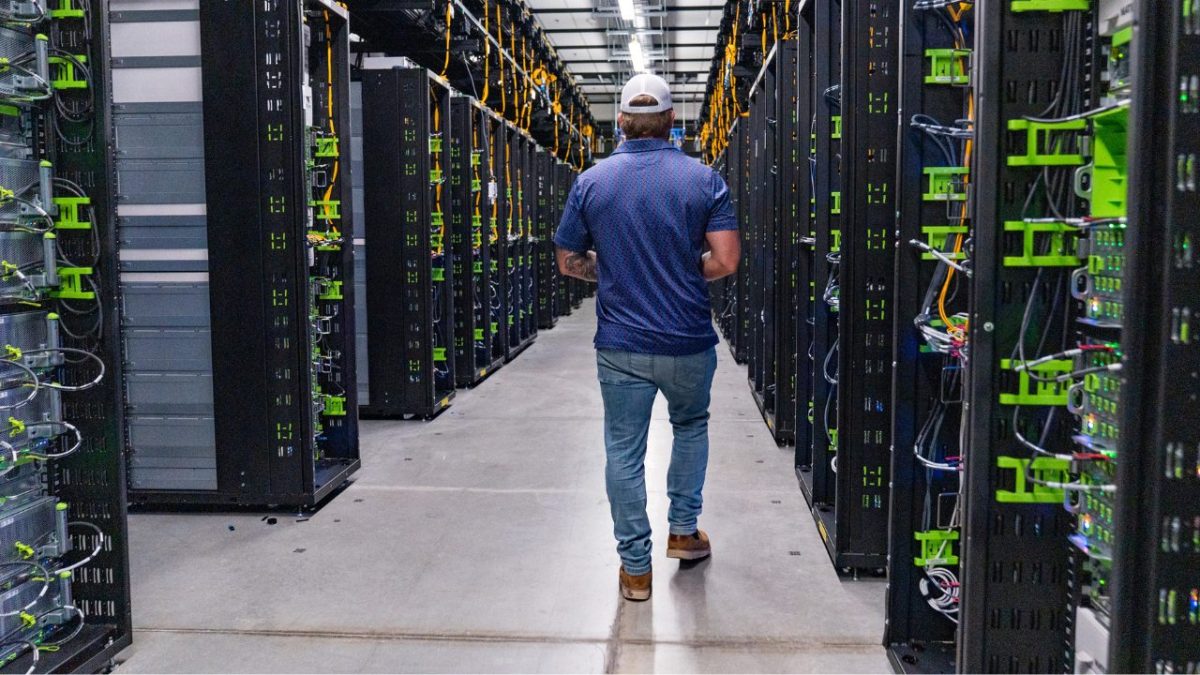
NASA Administrator Jared Isaacman is backing a once-futuristic answer to America’s fight over AI data centers: Move them into Earth orbit.
Isaacman said Wednesday that solar-powered facilities in space could tap the sun’s energy without competing for the land, water and grid capacity required by sprawling data centers proposed across the country. The proposal represents a significant shift in thinking about how to address one of the technology sector’s most pressing infrastructure challenges, as artificial intelligence’s explosive growth drives unprecedented demand for computing power.
“Let’s take our data centers, put them in Earth orbit, take advantage of that free fusion reactor that’s out there for us and use that to ensure we do win the space race for sure, but the AI race, too.”
The idea comes as voters push back on the data center boom. A Fox News poll this summer found 70% of voters oppose building AI data centers in their own area, while 79% said construction should slow to address environmental and community concerns rather than move as quickly as possible to maintain a competitive edge over China.
Half of those opposed said environmental issues, including energy and water use, pollution and noise, were their chief concern.
The growing resistance reflects mounting tensions in communities across America where tech companies have proposed massive facilities. Traditional data centers already consume vast amounts of electricity and water for cooling, straining local utilities and raising electricity costs for residents. AI-focused facilities require even more power, as machine learning processors run continuously at high intensity. Some proposed centers would draw as much electricity as a small city while using millions of gallons of water daily for temperature management.
The concept comes with engineering challenges. AI chips produce immense heat, and satellites would have to release it through large radiators. Operators would also need cheap, reliable launches, radiation-resistant hardware and laser links fast enough to connect thousands of computers spread across orbit.
Space presents a uniquely difficult environment for computing hardware. Without Earth’s atmosphere to dissipate heat through convection, satellites must rely entirely on radiative cooling, requiring expansive surface area to shed thermal energy into the vacuum of space. The orbital environment also exposes electronics to harsh radiation that can corrupt data and degrade components over time. Additionally, the physics of data transmission mean that even laser communications face latency challenges when routing information between satellites, ground stations and end users.
That has not stopped companies from trying to turn the concept into a business.
Google has called Project Suncatcher a “moonshot” to place its TPU chips on solar-powered satellites linked by lasers. It plans to launch two prototype satellites by early 2027 to test its hardware in orbit and determine whether the satellites can share data fast enough for AI workloads. The tech giant’s willingness to invest in orbital computing underscores both the severity of ground-based data center constraints and the potential long-term advantages of space-based infrastructure, where solar energy is available continuously without day-night cycles or weather interference.
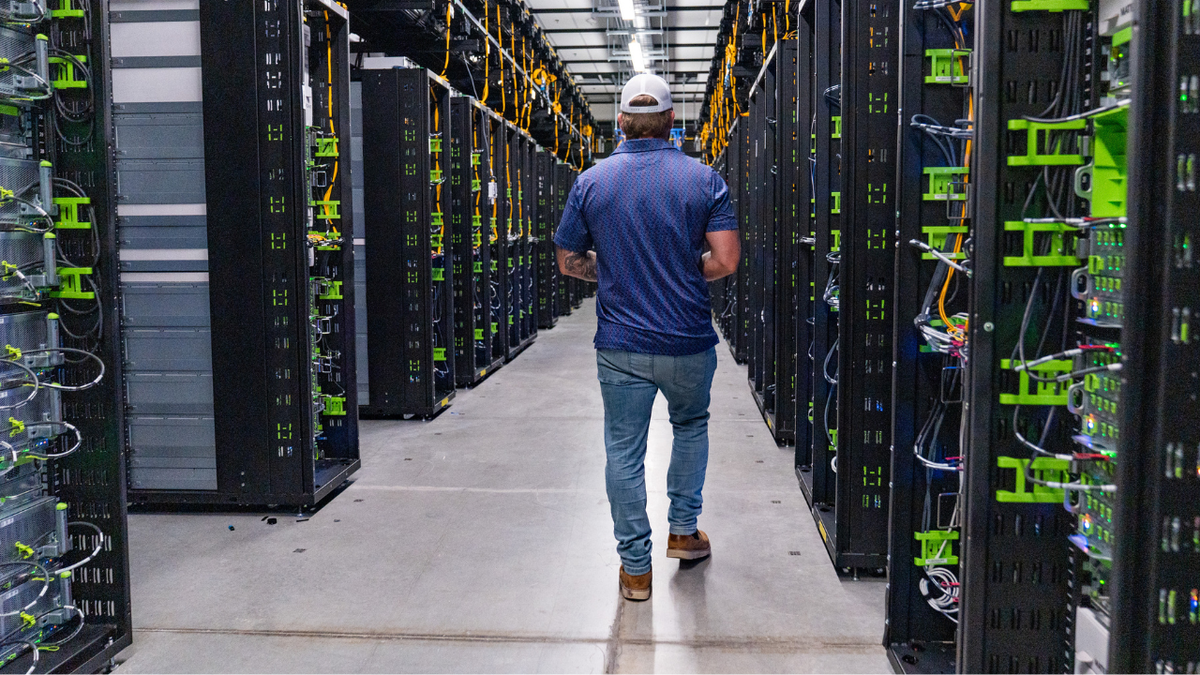
SpaceX is pursuing a more aggressive version. Its proposed AI1 satellite would stand about 98 feet tall, have a wingspan of roughly 246 feet and carry up to 175 kilowatts of average AI compute, according to the company. SpaceX says it is building a Texas factory intended to produce thousands of the satellites as early as late 2027.
The scale of SpaceX’s ambitions reflects the company’s proven manufacturing capabilities and launch cadence. With its reusable Falcon 9 and Starship rockets, SpaceX has driven down launch costs dramatically over the past decade, making large-scale satellite deployments economically feasible in ways that weren’t possible just years ago. The company’s experience operating the Starlink internet constellation, which already numbers thousands of satellites, provides operational expertise that could translate to managing orbital computing infrastructure.
Small-scale tests are already underway. Startup Starcloud launched a satellite carrying an Nvidia H100 chip in November and says it later ran a version of Google’s Gemini model and trained a small language model in space. Starcloud plans its first commercial mission, Starcloud-2, for 2027. These early demonstrations aim to prove that AI workloads can function reliably in orbit despite radiation, thermal extremes and the unique challenges of operating hardware beyond the reach of hands-on maintenance.
SpaceX has also asked the Federal Communications Commission for authority to deploy as many as 1 million orbital data-center satellites between 500 and 2,000 kilometers above Earth. The satellites would use optical links to communicate with one another and SpaceX’s Starlink network. Such a constellation would dwarf even SpaceX’s internet satellite network and would require unprecedented coordination to avoid collisions, manage orbital debris and prevent interference with astronomical observations.
The FCC has accepted the application for review but has not approved the constellation. The regulatory process will likely examine not only technical feasibility but also environmental impacts, including concerns about light pollution, radio frequency interference and the long-term sustainability of placing massive numbers of satellites in already-crowded orbital bands.