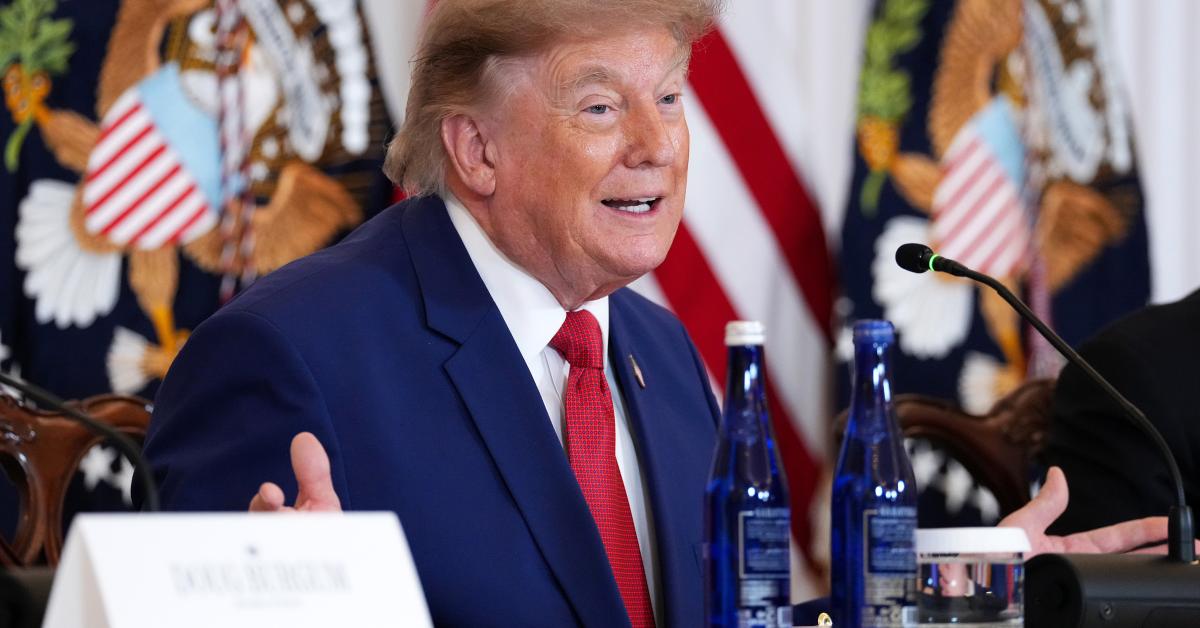
President Donald Trump signed an executive order Thursday renaming Lake Ontario to “Lake America” — a move he called “effective immediately” during the signing ceremony in the Oval Office.
The order directs Interior Secretary Doug Burgum to work with the Board on Geographic Names to reflect the new name within 30 days. The Board on Geographic Names, established in 1890, is the federal body responsible for maintaining uniform geographic name usage throughout the federal government. While the board has authority over domestic naming conventions used by U.S. agencies, its decisions do not automatically extend to international recognition or usage by other nations. It explains that the U.S. claims most of the lake’s volume, and its deepest parts lie within American waters.
“The U.S. claims most of the lake’s volume, and its deepest parts lie within the U.S.”
Trump had announced his intention to rename the lake on Monday amid escalating tensions with Canada over tariffs. The timing of the announcement reflects a calculated approach to apply pressure on multiple fronts simultaneously — combining economic measures with symbolic assertions of territorial control. The move signals the president’s broader pushback against what he frames as one-sided trade deals and concessions to America’s northern neighbor.
The executive order gives Burgum a 30-day deadline to “take all appropriate actions to rename as ‘Lake America’ the body of water currently named as Lake Ontario.” During the signing, Trump said the change would take effect immediately — though the formal implementation timeline extends to the end of the 30-day window. This distinction between political announcement and administrative reality highlights the gap between executive declaration and the practical steps required to implement such changes across federal mapping systems, navigation charts, and official documentation.
The announcement comes as the Trump administration ramps up economic pressure on Canada in response to retaliatory tariffs. The escalating trade dispute has already affected billions of dollars in cross-border commerce, with industries on both sides of the border expressing concern about long-term economic impacts. The president’s top trade negotiator warned earlier this week that the U.S. won’t sit down and take retaliation from Ottawa — setting the stage for a prolonged trade standoff.
Lake Ontario is the smallest of the five Great Lakes by surface area, but it holds strategic importance for shipping and shared water management between the U.S. and Canada. The lake spans approximately 7,340 square miles and serves as a critical link in the St. Lawrence Seaway system, which facilitates international shipping between the Great Lakes and the Atlantic Ocean. Decades of bilateral cooperation have governed pollution control, fisheries management, and water level regulation through joint commissions and treaties dating back more than a century. The renaming is expected to face pushback from Canadian officials and environmental groups that coordinate cross-border lake policies.
Trump’s move echoes his earlier symbolic territorial assertions, including the push to acquire Greenland and renaming the Gulf of Mexico the “Gulf of America.” These gestures form a pattern of challenging established geographic nomenclature as part of a nationalist rebranding effort that resonates with the president’s political base while drawing criticism from international relations experts who warn about straining diplomatic relationships over symbolic issues. The Lake America order reinforces his broader America First doctrine — reclaiming American geographic identity and asserting sovereignty over shared resources.
Whether the name change sticks beyond federal maps and documents remains to be seen. International cartographic standards are set by bodies like the International Hydrographic Organization, which typically requires consensus among affected nations for changes to internationally recognized water bodies. Canadian provinces bordering the lake, particularly Ontario, have historically maintained their own naming conventions and are unlikely to adopt the American designation. International bodies and Canadian counterparts have yet to recognize the new designation.
🚨 BREAKING: @POTUS signs an Executive Order renaming Lake Ontario as Lake America.
Here is the text of the Order:
By the authority vested in me as President by the Constitution and the laws of the United States of America, it is hereby ordered:
Section 1. Purpose and Policy.… pic.twitter.com/ggfLXiD0g7
— Rapid Response 47 (@RapidResponse47) August 27, 2026