President Donald Trump has traded bombs for a comprehensive economic blockade aimed at strangling the Iranian regime, announcing this week what he calls the “most crushing economic operation ever taken” against the Islamic Republic.
The president — frustrated with Iranian leaders’ refusal to agree to a deal ending the country’s illicit nuclear program — vowed to significantly ramp up the United States’ campaign to crush the Iranian economy by targeting any country “that allows its financial institutions, businesses, airports, or government entities to provide any type of lifeline to Iran.”
“Those countries will face TREMENDOUS Economic Consequences,” Trump said in a post to Truth Social. “Oil smuggling, swap lines, cash transfers, exchange houses, ship registries, front companies — It all needs to stop NOW. You know who you are.”
“[W]e are going to collapse this regime.”
Treasury Secretary Scott Bessent elaborated on the president’s goal in a CNBC interview Thursday.
“[W]e are going to collapse this regime,” Bessent said.
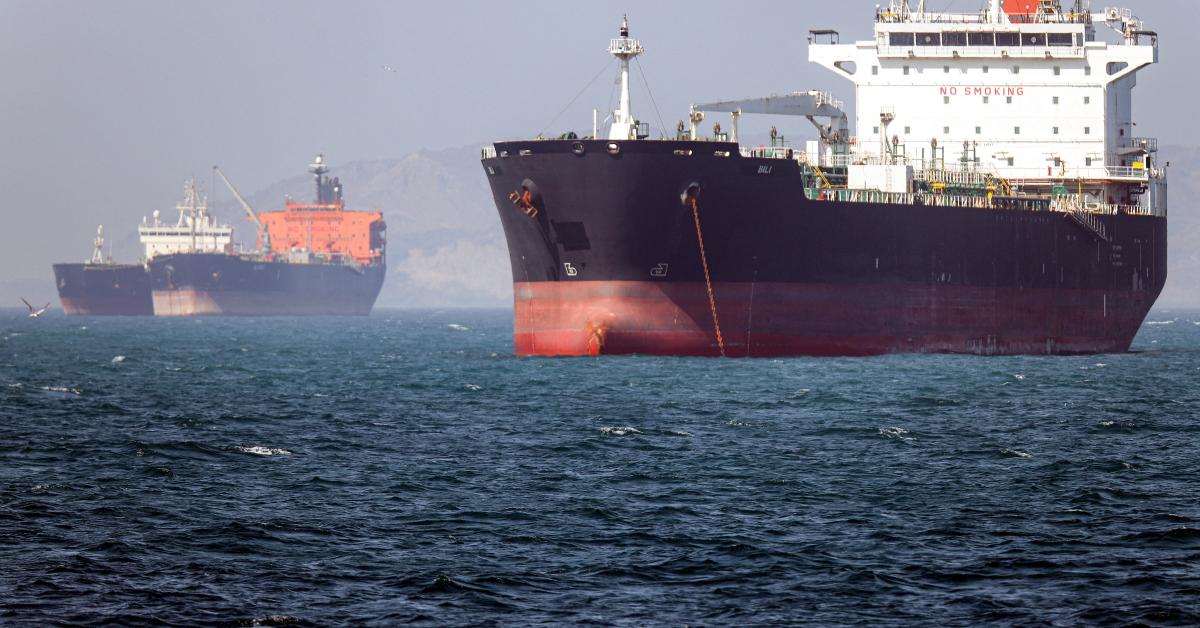
The blockade began taking shape in April when Trump first imposed a naval blockade on Iran’s ports and in the Strait of Hormuz, seeking to strip Iran of smuggled oil revenues it was using to fund its fight against the U.S. military.
Victoria Coates, Vice President of Heritage’s Kathryn and Shelby Cullom Davis Institute for National Security and Foreign Policy, told Just the News that the move caught Iran off-guard.
“There was a major shift in April when the president decided, you know what, we’re going to blockade them. We’re not going to let them hold us hostage over the Strait of Hormuz. We’re going to hold the Strait of Hormuz hostage. We’re going to see who comes in and out,” Coates said.
“And Iran wasn’t prepared for that. So, they were expecting they could still get out about 750,000 barrels [of oil] a day, they could still get in their critical imports, and that’s really important. Most people don’t appreciate this because Iran hasn’t invested anything in their own economy. They’re heavily dependent on imports. We cut all that off, and so slowly over the summer, … we’re just strangling them.”
Just a day before Trump’s announcement, the United Arab Emirates announced it would suspend all trade and financial transactions with Iran after the regime allegedly fired a missile at the UAE.
The move is huge. Tehran has long used the UAE as a conduit for financial and trading networks designed to circumvent international sanctions. The UAE has served as a major trade partner of Iran and an intermediary for Iranian exports and financial exchanges in the global market.
“The big move […]by the UAE to cut them off from Dubai, from any kind of commerce with the international financial markets, is huge, and I think that’s just going to continue on, and nature will take its course,” Coates said.
In June, the U.S. Treasury Department unveiled sanctions on the personal banker of Iran’s new Supreme Leader Mojtaba Khamenei, targeting his network of assets abroad that benefit the country’s most senior leadership. The banker, Ali Ansari, is an Iranian national who lives abroad in Dubai, where he has used his ties to the Iranian regime to embezzle government funds and amass “a global network of investment properties and financial holdings,” according to the U.S. government.
China, Iran’s largest trading partner, would also face actions from the United States if President Trump’s “Economic D-Day” is fully imposed.
China has purchased the vast majority of Iranian oil for years, even while its exports are under international sanctions. Chinese banks and front companies help Iran with oil transactions to avoid the sanctions and operate ships in a shadow fleet to transport the sanctioned oil. China has also sold Iran the technology and inputs required to construct its fleet of attack drones.
“Those countries will face TREMENDOUS Economic Consequences.”
Treasury Secretary Bessent on Thursday urged Beijing to “get with the program” and support the United States’ planned economic blockade. He cited China’s dependence on Middle East oil imports as a reason to get behind ending the conflict, indicating that the Chinese could face consequences if they continue to back Tehran.
The issue of Beijing’s support for Iran during the conflict remains sensitive ahead of Chinese President Xi Jinping’s planned visit to the United States in September.
However, Chinese foreign policy experts believe that the Trump administration’s threats are empty.
“This threat reveals how desperate the Trump administration has become on the issue of Iran,” Wu Xinbo, an American studies scholar at Fudan University in Shanghai and advisor to the Chinese Foreign Ministry, told The New York Times. “They issue this threat, not because they think it is workable, but because they have no other options.”
Chinese Foreign Ministry spokesman Lin Jian said Friday that “sanctions and pressure” will not bring the conflict to an end. “China calls on all relevant parties to take responsible measures and resolve the problem through political and diplomatic means,” he said.
“China opposes illegal unilateral sanctions that have no basis in international law and are not authorized by the UN Security Council,” Lin added.
President Trump’s plans to ramp up economic pressure on Tehran stem from the belief that Iran’s beleaguered economy cannot take many more hits before the regime’s internal system begins to break down.
Iran’s economy was already in dire straits before the initial U.S. strikes in February, suffering from persistently high inflation, the collapse of its currency, and declining agricultural production after years of drought. The economic instability fueled the largest round of anti-regime protests in recent Iranian history which brought the Islamic Republic to the brink of political collapse. Only a violent crackdown by loyal security forces ended the wave of demonstrations.
Recent reporting indicates that unemployment in the country is soaring, inflation is still running out of control, and those that do work are struggling to afford necessities like food and medicine in the midst of the conflict with the United States.
Patriots already know how Trump handles bullies — and the mullahs just handed him the perfect leverage.