
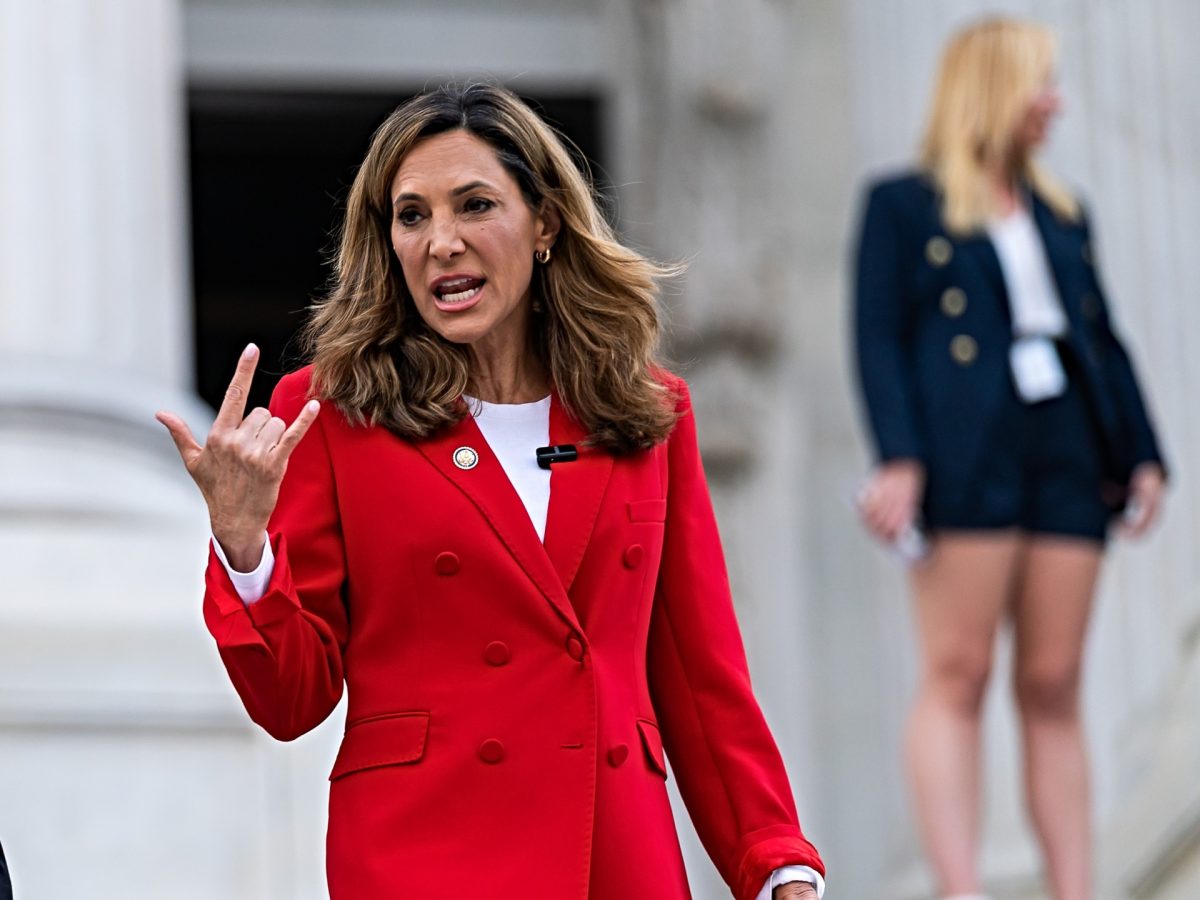
President Donald Trump fired off a series of Truth Social posts Saturday trashing Rep. Maria Salazar (R-FL) over her push to legalize potentially 17 million migrants through what critics call a corporate cheap-labor giveaway bill.
The public confrontation marks a significant break between Trump and a Republican congresswoman he previously endorsed, highlighting the ongoing tensions within the GOP over immigration policy. The dispute centers on fundamental questions about whether the party should prioritize enforcement and American workers or accommodate business interests seeking expanded access to foreign labor.
The Florida Republican is pushing her “Dignidad” bill through a discharge petition that could force a House vote during the lame-duck session after November’s election — timing that would allow retiring GOP members to hand business donors a final amnesty favor before leaving office.
Discharge petitions are a parliamentary mechanism that allows legislation to bypass committee leadership and move directly to the House floor if a majority of members sign on. The procedural tool is relatively rare and typically signals deep divisions within the majority party. The lame-duck timing is particularly controversial because lawmakers who’ve already lost their seats or announced retirements face no electoral accountability for potentially unpopular votes.
Salazar has publicly marketed the bill as providing “cheap labor” to employers.
The business-backed legislator won her August primary with 81 percent of the vote — partly because Trump endorsed her before her amnesty push went public.
The endorsement now appears to be a source of political embarrassment for Trump, who built his political brand largely on immigration enforcement and border security. The timeline suggests Salazar may have delayed publicizing the full scope of her immigration proposal until after securing Trump’s backing and winning her primary contest.
President, some of your immigration enforcement efforts have gone too far. In July, 50 percent of the 50,000 people that were detained had no criminal record. Be careful what your advisers are telling you about immigration policy. The same Hispanics who helped you get to the White House in 2024 feel betrayed today. You can be for immigration what Lincoln was for slavery and Reagan was for communism. I’m not talking about giving them amnesty. I’m talking about giving them a dignified life in this promised land, and only you can do that.
That’s what Salazar told Trump in a mid-September video — denying the amnesty provisions literally in her amnesty bill while comparing Trump to Abraham Lincoln if he’d just go along with her corporate donors’ plan.
The rhetorical approach attempts to reframe mass legalization as a humanitarian and historical imperative rather than an economic policy benefiting employers seeking lower labor costs. Critics note the comparison to Lincoln’s emancipation proclamation is particularly provocative given that it equates illegal border crossers with enslaved Americans.
Trump’s Saturday posts made clear he’s not buying the flattery.
The blunt rejection suggests the President views Salazar’s appeal as political manipulation rather than genuine policy advice. Trump’s willingness to publicly attack a member of his own party also signals how seriously his administration views the threat posed by the discharge petition strategy.
The public rebuke is likely designed to warn other GOP House members away from signing Salazar’s discharge petition. If enough Republicans join the effort, the bill could pass during the lame-duck session with support from Democrats who also back the mass-legalization plan.
The political mathematics are straightforward: with Democrats united in support, Salazar would need only a handful of Republican signatures to reach the majority threshold required for a discharge petition. Trump’s intervention appears calculated to prevent that scenario by raising the political cost for any GOP member considering signing on.
Salazar is being bankrolled by big-money GOP donor groups and Rupert Murdoch’s media empire — the Wall Street Journal and New York Post have both promoted her bill.
The involvement of major conservative media outlets highlights the split between populist and business wings of the Republican coalition. While Murdoch’s publications have historically supported immigration expansion on economic grounds, they now find themselves at odds with the party’s standard-bearer on one of his signature issues.
Some Republican House members who’ve backed the corporate amnesty push include Rep. Don Bacon (R-NE), who recently said mass amnesty is his “biggest desire” and “biggest goal.”
The bill also has backing from Democrats who promote foreign nationals above American citizens.
This unusual coalition of business-aligned Republicans and progressive Democrats reflects how immigration policy often scrambles traditional partisan divisions, creating alliances based on economic interests and ideological commitments that cut across party lines.
.@RepMariaSalazar compared rewarding illegal aliens to Lincoln's emancipation of slaves. Her bill adds 17 million permanent foreign workers through amnesty & expanded immigration.
A far cry from Booker T. Washington’s 1895 appeal to hire Americans first.https://t.co/eogP6KH9H2
— NumbersUSA (@NumbersUSA) September 21, 2026
🚨🚨🚨BREAKING AMNESTY ALERT: @RepEscobar and @RepMariaSalazar are preparing to file a discharge petition to force a floor vote in the House on Salazar’s amnesty bill (HR 4393, the “DIGNIDAD” Act). Escobar yesterday filed a House Resolution (H.Res. 1560) which allows her to file…
— Immigration Accountability Project Action (@iaproject) September 18, 2026