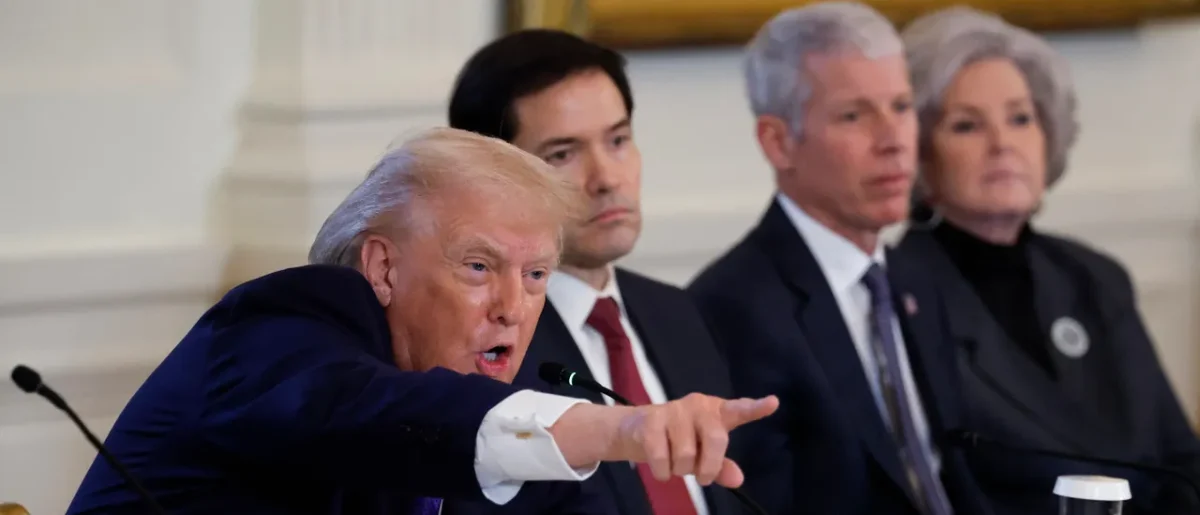
President Donald Trump announced the “biggest oil deal in the world” — 65 billion barrels of Venezuelan oil reserves that will more than double America’s Strategic Petroleum Reserve after former President Joe Biden left it nearly empty. The announcement marks a dramatic shift in both U.S.-Venezuela relations and domestic energy policy, bringing together two issues that have dominated American political discourse for years: energy independence and the depletion of strategic reserves.
The deal comes after Trump’s administration arrested Venezuelan dictator Nicolás Maduro and struck an agreement with the country’s interim president. Trump said the oil would slash future gas prices and restore America’s energy security. The scale of the agreement dwarfs previous international energy deals and represents access to one of the world’s largest proven oil reserves, which Venezuela has struggled to monetize under years of economic mismanagement and international sanctions.
Biden had depleted the SPR to its lowest level in 40 years — under 300 million barrels as of May — following a series of drawdowns that began when he took office in January 2021. The drawdowns were conducted amid rising inflation and energy costs that put political pressure on the administration to take action, though critics argued the releases were timed to influence midterm elections rather than address genuine supply emergencies.
“The ‘topping out’ process will begin very shortly and is a Gift from Venezuela to the People of the United States.”
The Strategic Petroleum Reserve was created in 1977 following the 1973 Arab oil embargo. Congress instructed the SPR to maintain a 90-day supply cushion against “severe energy supply interruption.” The reserve system was designed specifically to protect American consumers and the economy from sudden price shocks caused by geopolitical disruptions, natural disasters, or other unforeseen supply crises. For decades, it served as a critical insurance policy against energy volatility in global markets.
The reserve reached its all-time high in April 2011 at 726.5 million barrels. That peak represented the culmination of decades of strategic accumulation, storing crude oil in massive underground salt caverns along the Gulf Coast in Louisiana and Texas. The infrastructure was built to hold up to 714 million barrels across four major sites, creating the world’s largest emergency petroleum stockpile.
Then Biden took office.
Between January 2021 and June 2023, the SPR fell from 637 million barrels to 347 million barrels — a drop of nearly half the reserve in two years. This unprecedented depletion rate alarmed energy security experts who warned that America was sacrificing long-term strategic preparedness for short-term political relief. The rapid drawdown left the nation increasingly vulnerable to supply disruptions at a time of heightened global instability.
Biden authorized the first major release in September 2021 — 3.3 million barrels following Hurricane Ida. Another 50 million barrels were released in November that year to curb post-COVID gas prices ahead of the holiday season. These initial releases set a pattern that would continue throughout his presidency, using the emergency reserve as a tool for managing domestic fuel costs rather than reserving it strictly for genuine supply crises.
In March 2024, Biden announced a 180-million-barrel emergency drawdown following Russia’s invasion of Ukraine. This massive release, the largest in the SPR’s history, was framed as a response to disruptions in global oil markets caused by sanctions on Russian energy exports. However, the decision to drain such a significant portion of America’s emergency reserves sparked fierce debate about whether the geopolitical situation justified such extreme measures.
Congress compounded the depletion. Between 2015 and 2018, lawmakers authorized the sale of over 350 million barrels between Fiscal Year 2017 and Fiscal Year 2031 — using the drawdowns as a “spending offset” budgetary gimmick to buy down the cost of major spending bills and tax cuts. This bipartisan practice treated the reserve as a piggy bank rather than a strategic asset, prioritizing budget optics over energy security concerns that transcended election cycles.
Biden’s Department of Energy began restocking the reserve late in his term as refineries returned borrowed crude oil with interest. Congress canceled the future sale of about 140 million barrels. These efforts represented a recognition that the SPR had been drawn down to dangerously low levels, though the pace of refilling remained modest compared to the speed at which it had been drained.
Trump made refilling the SPR a stated policy priority during his inaugural address and continued the gradual restoration through his first year. The issue resonated with voters concerned about energy costs and national security, making it a cornerstone of his broader “energy dominance” agenda that emphasized domestic production and strategic reserves.
The Department of Energy estimated it would cost $20 billion over several years to return the SPR to near full capacity. That price tag assumed purchasing oil on the open market at prevailing prices, a slow and expensive process that would take years to complete through conventional means.
Now, with 65 billion barrels secured from Venezuela, only 0.66 percent of that haul would be needed to restore the SPR to its all-time high. The math illustrates the extraordinary scale of the Venezuelan deal and its potential to solve the reserve crisis without the anticipated multi-billion-dollar price tag.
Trump doubled down Sunday, saying much of the Venezuelan oil would refill the reserve Biden had “virtually emptied.”
The “topping out” begins shortly — a gift from Venezuela to the American people, Trump said.