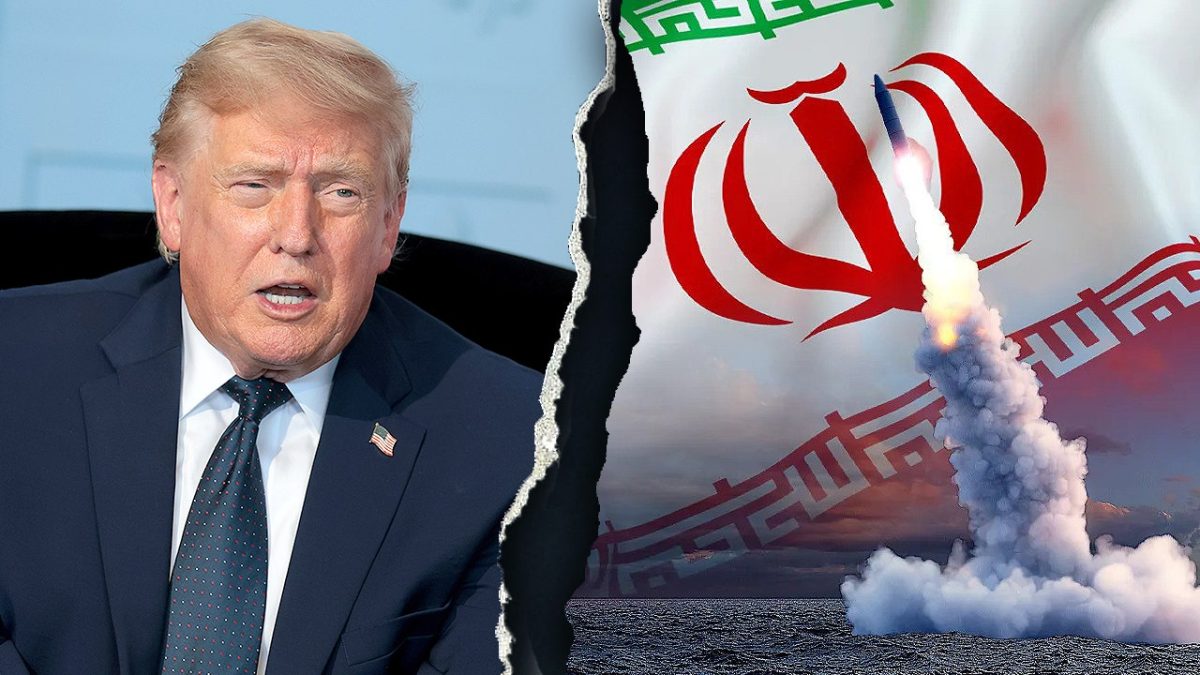
President Trump’s new Iran framework is drawing warnings from nuclear experts who say the deal could leave Tehran too much control over its uranium stockpile unless inspectors first locate, secure and verify the material.
The concern centers on language in the reported U.S.-Iran memorandum of understanding saying the two sides will resolve the fate of Iran’s enriched uranium stockpile through a still-to-be-negotiated process.
The MOU identifies on-site “downblending” — diluting enriched uranium so it is less usable for a nuclear weapon — under International Atomic Energy Agency supervision as the minimum acceptable method for dealing with the material.
“Unfettered verification is everything,” Chuck DeVore, Chief National Initiatives Officer at the Texas Public Policy Foundation, told Fox News Digital.
“There can be no denial for teams to inspect on the ground. Remote, technological means can achieve a lot, but nothing beats in-person inspections.”
The warnings come as the MOU has already been signed, while planned follow-up talks in Switzerland aimed at launching technical negotiations were postponed Friday. The delay leaves key nuclear details unresolved as the agreement begins a 60-day window for negotiating a final deal.
IAEA supervision would only be meaningful if inspectors first regain enough access to fully account for Iran’s enriched uranium stockpile and ensure Tehran does not retain unchecked control of the material, nuclear experts who spoke with Fox News Digital warned.
A recent IAEA report released this month underscored the agency’s limited visibility into Iran’s declared nuclear program after last year’s military strikes. Aside from a single inspection at an Iranian nuclear power plant, the agency “has not received information from Iran” about the status of its other declared nuclear facilities or associated nuclear material, the report noted.
A senior administration official told Fox News Digital the MOU required Iran’s regime to reaffirm that it will not procure or develop nuclear weapons, calling that a critical first step under Iran’s new Supreme Leader.
The official said the U.S. has reached understandings with Iran when it comes to its uranium stockpile, and the new deal is the first step of turning these understandings into real results, which include progress on enriched uranium stockpiles, dismantlement of nuclear sites, an enrichment ban and inspection access.
Vice President JD Vance said Thursday the deal’s benefits depend on Iran following through on its promises.
“They have promised not to enrich. They have promised that they would allow inspectors in to destroy that highly enriched stockpile. And then, of course, it’s not usable anymore. You take it somewhere else. They promised a number of things, and that’s why the deal contemplates a number of benefits if they do those things. But it doesn’t do anything if they don’t actually meet those promises.”
Andrea Stricker, deputy director of the Foundation for Defense of Democracies’ Nonproliferation Program, told Fox News Digital that any credible agreement must begin with recovering and safeguarding Iran’s enriched uranium stockpile, and not allowing Tehran to keep control of the material while it is diluted inside the country.
Iran’s enriched uranium stockpile could, if recovered and further enriched, provide enough weapons-grade material for roughly 22 nuclear weapons, she noted.
DeVore was more cautious about assigning a single number to Iran’s potential weapons capacity, saying the estimate depends heavily on the sophistication of the weapon design.
He said on-site downblending, if properly verified, would be aimed at making Iran’s roughly 1,000 pounds of 60% enriched uranium unavailable for further enrichment. DeVore cautioned that the material would still need additional processing to be turned into weapons-grade uranium and said he does not believe Tehran can currently do that because key facilities were destroyed in last year’s strikes.
Asked what would be needed to make any Iran deal enforceable, DeVore told Fox News Digital the U.S. must avoid repeating what he described as a key weakness of the Obama-era nuclear deal: allowing Tehran to restrict access or keep certain sites off limits.
DeVore said the “ultimate question” is on-site verification, warning that Washington cannot allow itself to be pushed into “an agreement for agreement’s sake.”
DeVore also said the Obama-era JCPOA gave inspectors too much notice and too little freedom to inspect suspicious locations, arguing that any new deal must avoid a system where Iran can delay, limit or steer inspections before the IAEA gets on the ground.
DeVore told Fox News Digital that his concern is informed by his experience as a young special assistant for foreign affairs in the Reagan administration, when he worked on verification issues surrounding Cold War-era nuclear agreements with the Soviet Union.
In those negotiations, DeVore said, the danger was that the minimum level of verification sought by defense and intelligence officials could become the starting point for diplomats, meaning the final deal could end up below what experts believed was necessary.
“Once you say, ‘This is the minimum we need,’ then that becomes the starting point, so anything agreed to is less than that. That’s what I fear.”