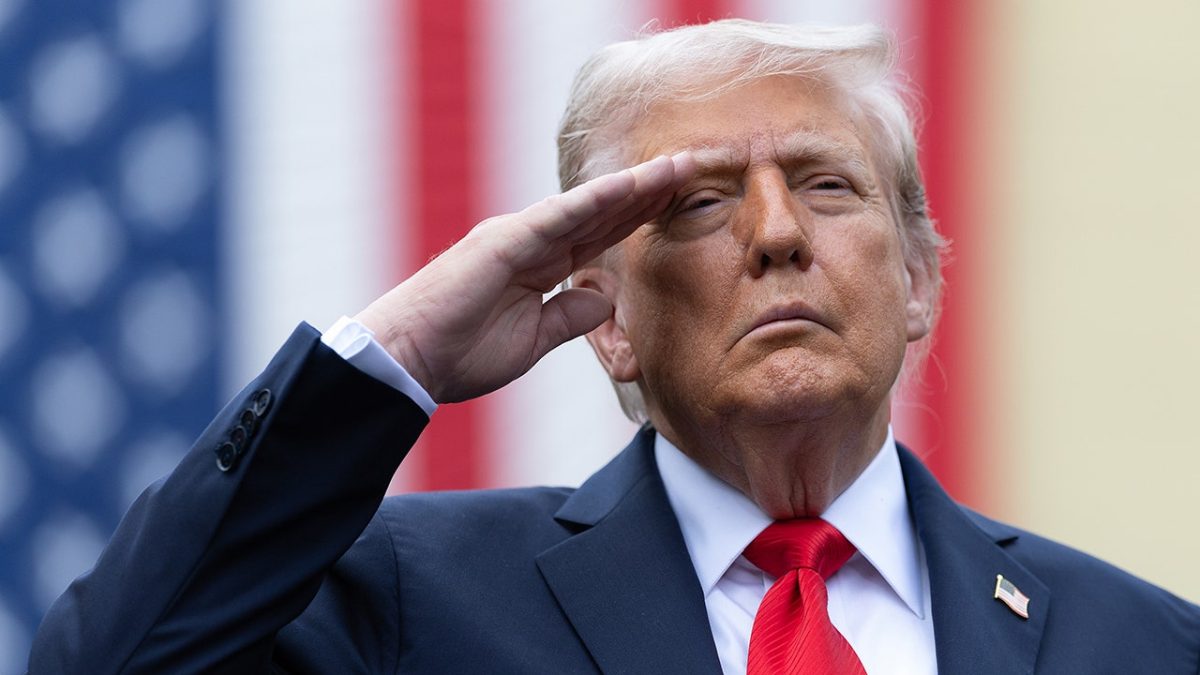
President Donald Trump signed an executive order Monday creating a new White House commission designed to put military families at the heart of military readiness.
The President’s Military Spouse Commission will give the White House a direct line to the challenges facing military spouses — childcare, employment, housing, health care, education, and the toll of repeated deployments. These issues have long been recognized as critical factors not only in the well-being of military families but also in retention rates and overall force readiness. Military leaders and advocacy groups have repeatedly emphasized that when families struggle, service members are less likely to reenlist, creating both human and strategic costs for the armed forces.
Jennifer Hegseth, wife of Defense Secretary Pete Hegseth, will chair the commission. Her appointment places a military spouse in the leadership role, reflecting the administration’s stated commitment to ensuring those with lived experience guide policy development in this area.
“In times of peace and in the crucible of conflict, they rise to meet every challenge and bear the pressures and sacrifices with relentless grace and fortitude.”
Trump signed the order Monday afternoon alongside Defense Secretary Pete Hegseth, Chairman of the Joint Chiefs of Staff Gen. Dan Caine, and several military spouses, according to a White House official. The ceremonial signing underscored the administration’s positioning of military family support as a national security priority, not merely a quality-of-life issue.
The commission will advise the president on policies affecting military spouses and families and provide annual recommendations to improve their quality of life while strengthening military readiness. This structure creates a formal mechanism for sustained attention to these issues at the highest levels of government, rather than relying on ad hoc reviews or lower-level agency initiatives.
Trump will appoint an executive director. Christie Mullin, wife of Homeland Security Secretary Markwayne Mullin, and 20 other military spouses representing the service secretaries, Joint Chiefs of Staff, and each branch’s senior enlisted leader will serve as commission members. The composition reflects an effort to capture perspectives across all service branches and rank structures, recognizing that challenges may vary significantly between families of junior enlisted personnel and senior officers.

Military spouse employment and pay are the top concerns for active-duty military families, followed by time away from family, child care, housing and housing allowances, and children’s education, according to Blue Star Families’ latest Military Family Lifestyle Survey. The employment challenge is particularly acute given that military spouses frequently must relocate across state lines, disrupting careers and professional licensing. Studies have shown military spouse unemployment rates significantly exceed national averages, with the transient nature of military life creating barriers to career advancement and economic stability.
An estimated 1 million children have at least one parent serving on active duty, according to government website Military One Source. These children face unique educational and emotional challenges, including frequent school changes, parental deployments to combat zones, and the stress of constant relocation. The scale of this population underscores why education and childcare access remain persistent policy concerns.
During his first term, Trump expanded support for military families by improving occupational license portability for military spouses, broadening access to remote and flexible work, and increasing opportunities for federal employment. These initiatives addressed some of the structural barriers that make it difficult for spouses to maintain continuous employment despite frequent moves across state and international borders.
In 2018, Trump signed legislation allowing military spouses to claim the same state of legal residence as their active-duty spouse, even when military orders require the family to move elsewhere. This legislative change simplified tax filing and voting procedures for families who might otherwise face complicated multi-state obligations.
In a Military Spouse Day proclamation signed in May, Trump said the nation’s 250 years of freedom were made possible by the Armed Forces and the “selfless spouses” who have shared in the burden of military service across generations. The proclamation connected military family support to the broader narrative of American history and national defense.
He acknowledged at the time “more work is needed” in relation to employment, quality housing, affordable childcare, accessible healthcare, and education for military families. This acknowledgment came despite previous efforts, suggesting that the complexity and scope of these challenges require sustained, high-level attention rather than one-time fixes.
The commission is designed to tackle those challenges from the ground up — giving military families a direct voice in the policies that affect their daily lives. By institutionalizing this input through annual recommendations directly to the president, the structure aims to create accountability and ensure military family concerns remain visible at the highest levels of policymaking.