
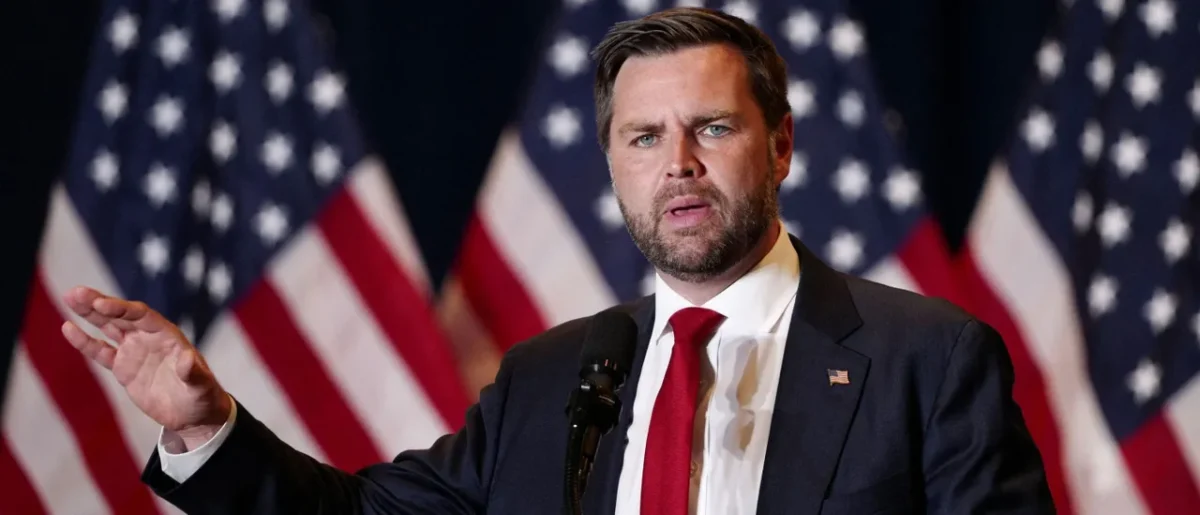
The Trump administration is drafting a rule that would let married stay-at-home parents collect federal child care subsidies — a priority of Vice President JD Vance that could redirect billions from traditional day care providers.
Officials are working on a regulatory change creating a new category called “parent-based child care.” Under the draft plan, one married parent could draw federal assistance to raise their own children at home while the other spouse works at least 35 hours a week, according to the New York Times.
The money would come from the Child Care and Development Fund, a roughly $12 billion program administered by the Department of Health and Human Services. Congress created the fund under the 1990 Child Care and Development Block Grant Act to help low-income families afford care so parents could work or attend school. States distribute the aid through vouchers or direct payments to providers, and it averages about $9,000 per child each year.
“It would be a welcome change to see equal treatment between commercial day care and the contribution stay-at-home parents provide in caring for and raising the next generation.”
The change could take effect as soon as next year and would not require a vote in Congress — though it still needs White House approval and a public comment window.
Breaking News: A Trump administration plan would direct child-care funds to married stay-at-home parents, people familiar with the plan say. https://t.co/BuG178XKbb
— The New York Times (@nytimes) September 5, 2026
The draft limits eligibility to married couples, leaving out unmarried partners and single parents who do not work. Some Health Department attorneys have questioned whether tying the benefit to marriage can survive legal challenge and warned the shift could invite fraud.
Critics worry the fund cannot stretch to cover both at-home parents and traditional child care without new appropriations. Roughly 80% of the 870,000 families now collecting the subsidy are headed by single working parents, most of them mothers, according to Health Department figures cited by the Times.
Joshua McCabe of the Niskanen Center told the New York Times that expanding eligibility without increasing funding would mean “more parents competing for the same dollars, and leaving more parents — particularly single working parents — worse off.”
Vance championed the policy when he served in the Senate. In a September 2024 post on X, he argued that federal and state policy penalizes in-home and kinship care by subsidizing only one model of child care. The draft rule also borrows from legislation Secretary of State Marco Rubio introduced when he was a senator.
Roger Severino of the Heritage Foundation, who authored the Project 2025 section on child care, defended the approach in comments to the Times.
The public comment period is expected to begin later this year.
Hi Hannah, I hope you've been doing well. A few thoughts here.
1) Many don't fully appreciate how federal (and state) policy penalizes particular family models–particularly in-home care and kinship care–over others. That's true of the Child Care Development Block Grant and the…
— JD Vance (@JDVance) September 5, 2024