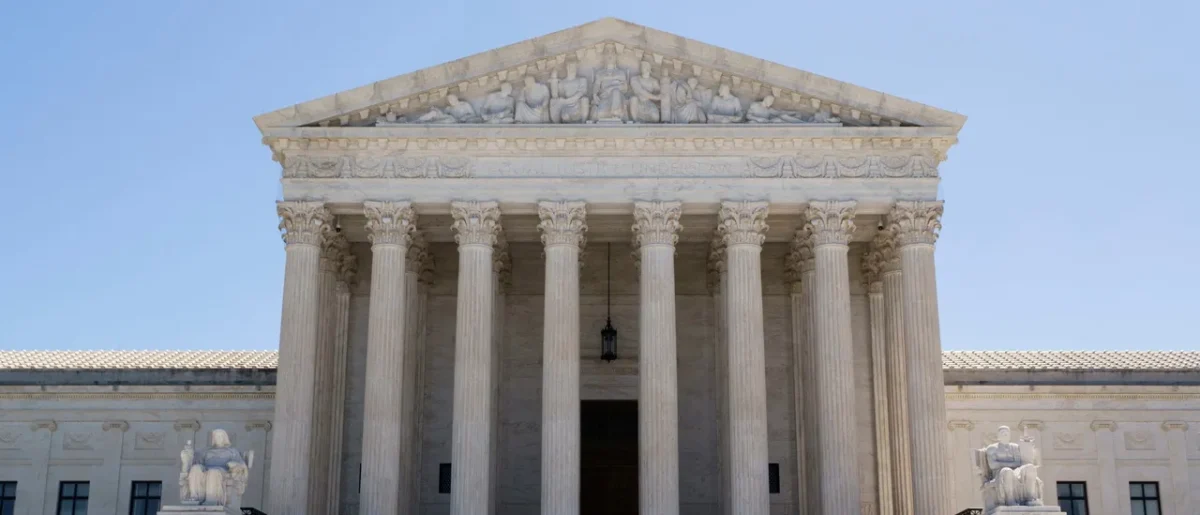
The Supreme Court declined Monday to hear a Justice Department appeal challenging a landmark gun rights ruling — leaving in place a decision that says stripping a man of his Second Amendment rights over unpaid child support violates the Constitution.
Edward Cockerham pled guilty to possessing a firearm after his Mississippi felony conviction, but appealed. Fifth Circuit Judge James Ho, a Trump appointee, ruled the lifetime gun ban for a non-violent offense violated the Second Amendment.
🚨 The Supreme Court left in place a Fifth Circuit ruling that the federal felon-in-possession firearm law cannot be applied to a Mississippi man whose only felony conviction was nonpayment of child support. pic.twitter.com/C5HjWiTnp3
— SCOTUS Wire (@scotus_wire) June 8, 2026
Ho distinguished Cockerham’s case from violent crime. The government compared failure to pay child support to theft, but Ho rejected that.
“The Government analogizes failure to pay child support to theft. But during the Founding era, thieves were treated differently from debtors. Thieves were subject to permanent disarmament. Debtors were not.”
Ho noted debtors could be imprisoned — and thus temporarily disarmed — but were released upon paying their debt. Cockerham was no longer delinquent when found with the firearm, the government acknowledged.
Assistant Attorney General for Civil Rights Harmeet Dhillon told the Daily Caller News Foundation the DOJ routinely defends laws it may not agree with.
“I understand people have policy differences with DOJ’s enforcement of federal laws, but, in my opinion, and I’ve said this to many gun groups, the appropriate place to launch those policy discussions is in Congress, not with us,” Dhillon said.
Second Amendment Foundation Director of Legal Research Konstadinos Moros said the Fifth Circuit’s decision aligns with the Supreme Court’s 2024 ruling in United States v. Rahimi.
“SAF was happy to hear the Supreme Court declined to review this case, as the Fifth Circuit reached the correct ruling: dangerousness must be the standard for disarmament, and many nonviolent felons are not dangerous,” Moros told the DCNF. “That includes Mr. Cockerham, whose crime was failing to pay child support.”
Moros cautioned the Court’s refusal to review doesn’t necessarily mean it agrees with the lower court. Still, he said, it may signal the high court is sticking to the Rahimi standard: actual dangerousness is required to strip Second Amendment rights.
The upcoming ruling in US v. Hemani — a Fifth Circuit case overturning a conviction for firearm possession by a drug user — should clarify the Court’s position further. Arguments were heard in March; the decision is pending.