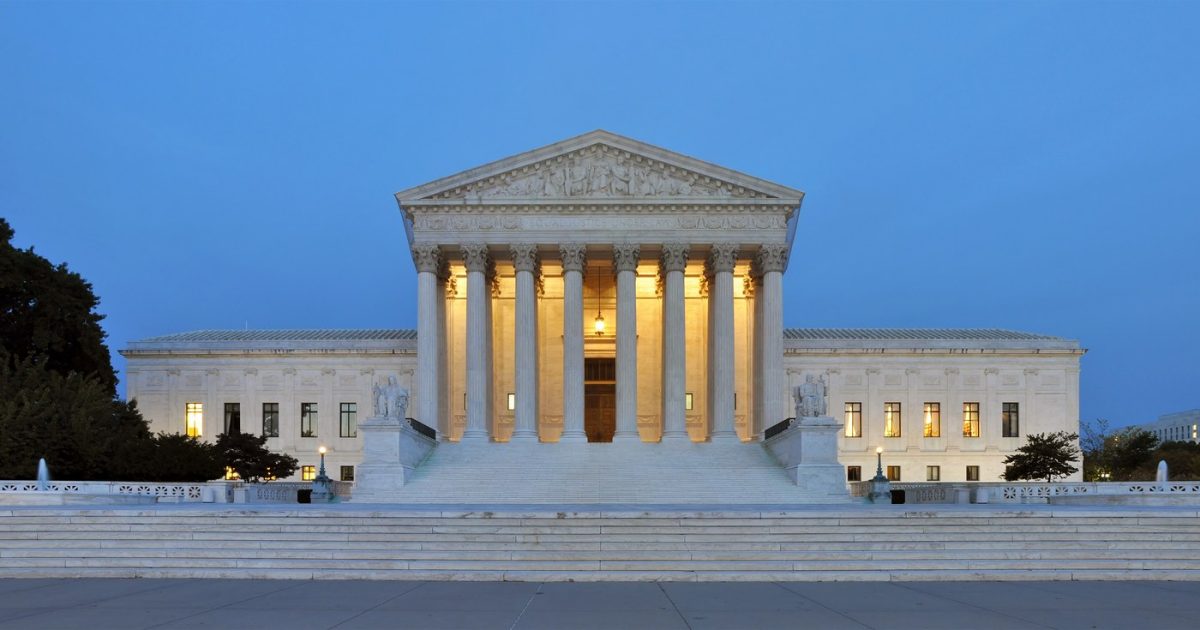
The U.S. Supreme Court just did something the Trump administration has been waiting nine months for.
In an unsigned 6-3 ruling issued Monday, the high court cleared the Trump administration to move ahead with key parts of President Trump’s executive order tightening mail-voting security ahead of the November midterms — including the piece patriots have been watching most closely.
What the Order Does
The executive order directs the Department of Homeland Security to build state-by-state citizenship lists using federal databases — including Social Security data and immigration records — and provide those lists to states so they can compare against their voter rolls. If a name on a state’s voter list doesn’t appear on the federal citizenship database, the state can flag it for review before allowing a ballot to be cast.
The order also directs the U.S. Postal Service to overhaul how it handles mail ballots. State and local election officials will be required to upload every mail-ballot recipient’s name and address to a Postal Service portal before ballots are sent, and to use standardized envelopes with unique machine-readable barcodes. The goal: end the chaos of ballots getting lost, duplicated, or sent to addresses where no eligible voter lives.
Why the Court Sided With Trump
The Court’s conservative majority did not rule on whether Trump’s directives are ultimately legal on the merits. Instead, they concluded the challenging states had sued too early — the order directs federal agencies to pursue election-related policies but does not itself force states to change their procedures.
Translation: the machinery starts turning now. If states want to challenge later, they can — but they can’t stop the citizenship-list buildout while they wait for a future case to work its way up.
The Liberal Dissent
Justice Sonia Sotomayor, joined by Justice Elena Kagan, filed the dissent. Sotomayor argued the majority sidestepped the constitutional question entirely — whether the Executive Branch has the authority to direct how states run their own elections.
“The decision does not address whether the President’s attempts to interfere with states’ administration of the November 2026 elections are lawful nor does it suggest that the Executive Branch has any constitutional or statutory authority to implement the President’s directives.”
The dissent will be quoted in future filings. For now, it’s a losing hand.
Why Patriots Should Pay Attention
Election integrity has been the number-one issue on the patriot right since 2020. The Trump administration’s answer — federal databases cross-checking state voter rolls for citizenship, plus a Postal Service overhaul of mail-ballot handling — is the most aggressive federal push in modern American history to lock down the mail-in ballot system before an election.
The Supreme Court just said: get to work.
Whether the lower courts eventually block the more controversial pieces — the majority opinion left open the question of the USPS verifying voting eligibility of individual mail-ballot recipients — remains to be seen. But DHS is now building the citizenship database. The Postal Service is standing up the tracking portal. The infrastructure the executive order calls for is going into place, right now, ahead of November.
What Happens Next
Democratic-led states are expected to file fresh challenges the moment DHS actually starts sharing citizenship lists with individual states. Pennsylvania and Michigan attorneys general have already signaled they’ll be first in court. But those cases will play out on the merits, not on emergency motions — meaning the machinery keeps running while lawyers argue.
For the Trump administration, this is exactly the win they needed. Not a final legal victory. Not a blanket approval of every piece of the order. Just enough runway to start building — and building fast — before November.
The clock started ticking Monday afternoon.