
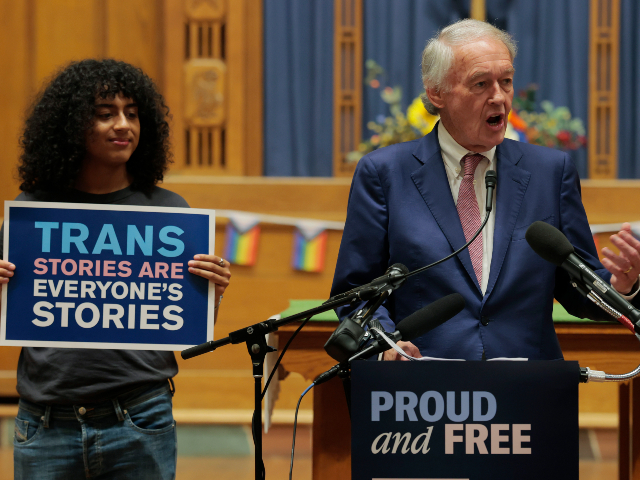
Sen. Ed Markey (D-MA) is catching heat after openly posting on social media that he wants “BIPOC” — Black, Indigenous, People of Color — LGBTQ+, and “other underrepresented candidates” to apply for a spring 2027 internship in his Boston office.
Critics say the Massachusetts Democrat just openly violated federal civil rights law on X for the world to see.
The controversy centers on longstanding federal employment law principles that generally prohibit employers from making hiring decisions based on race, color, religion, sex, or national origin. While affirmative action and diversity initiatives have long been debated in higher education and private sector employment, the explicit language used in job postings has increasingly become a flashpoint in broader cultural debates about workplace diversity efforts.
In his post, Markey wrote: “I’m hiring motivated and eager interns for the Spring 2027 semester in my Boston office. BIPOC, LGBTQ+, working class, veterans, and other underrepresented candidates with Massachusetts ties are encouraged to apply. Applications are due Monday, November 9th.”
The backlash was swift and pointed, with critics from across the conservative media landscape weighing in on what they characterized as an obvious violation of equal employment opportunity standards. The responses ranged from legal analysis to pointed political commentary, reflecting the heightened sensitivity around diversity initiatives in federal hiring practices.
“Crazy that a United States Senator can openly violate civil rights law on Twitter.”
Christopher Rufo of City Journal wrote in response: “Crazy that a United States Senator can openly violate civil rights law on Twitter.”
Rep. Brandon Gill (R-TX) had a sharper question: “Are white men allowed to apply, Senator?”
Blake Neff, co-host of The Charlie Kirk Show, framed it bluntly: “The Democratic Party as an institution is premised on despising ordinary young white men.”
Parker Thayer, an investigative researcher at the Capital Research Center, suggested legal consequences: “Harmeet Dhillon’s office is probably popping the champagne over this tweet already. Seems like Markey is catching a civil rights grenade here.”
Tom Fitton, president of Judicial Watch, said the senator “makes it clear who he will not hire.”
Conservative journalist Nick Sortor wrote: “Wouldn’t it have been easier just to say ‘straight White men need not apply’?”
The debate over Markey’s post comes at a time when diversity, equity, and inclusion programs face increasing legal scrutiny across multiple sectors. Congressional offices have traditionally enjoyed certain exemptions from employment laws that apply to private employers, though they remain subject to specific anti-discrimination provisions. The question of whether “encouraging” specific demographics to apply crosses a legal line remains a point of contention among legal observers.
According to Markey’s official job posting for the Boston office internship, the position seeks “highly motivated individuals who possess strong writing, research and interpersonal skills.”
The posting also states that backgrounds “in political science, international relations, environmental studies, liberal arts, and communications are desirable.”
These standard qualifications appear alongside the diversity-focused language that sparked the controversy, creating what critics describe as a tension between stated equal opportunity principles and actual recruitment practices. The juxtaposition has intensified questions about whether modern diversity recruitment efforts can coexist with traditional equal opportunity frameworks.
At the bottom, the listing claims Markey’s office “is an equal employment opportunity employer in accordance with the requirements of Senate Rules and Regulations and applicable federal laws.”
That claim is now being tested against the senator’s own public statements. The apparent contradiction between the boilerplate equal opportunity language and the targeted recruitment message has become the central focus of criticism, with opponents arguing that the two cannot be reconciled under current legal standards.
The incident also highlights the evolving landscape of public communication around hiring practices. What might once have been internal recruiting priorities are now broadcast to millions on social media platforms, subjecting routine personnel decisions to instant public scrutiny and potential legal challenges. Whether Markey’s office will face formal legal action or modify its public communications approach remains to be seen.
I’m hiring motivated and eager interns for the Spring 2027 semester in my Boston office. BIPOC, LGBTQ+, working class, veterans, and other underrepresented candidates with Massachusetts ties are encouraged to apply. Applications are due Monday, November 9th.
— Ed Markey (@SenMarkey) October 13, 2026
Crazy that a United States Senator can openly violate civil rights law on Twitter https://t.co/cw5r6JFmsB
— Christopher Rufo (@christopherrufo) October 13, 2026