Former President Barack Obama just told the country Washington is cleaner than it’s been in decades — the same week a record 89 percent of Americans told Gallup that government corruption is widespread.
The timing couldn’t be worse for the Democrat Party’s midterm corruption pitch.
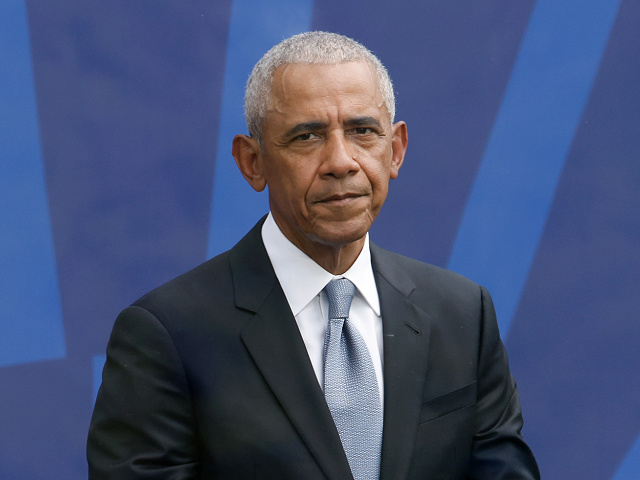
Obama made the claim Thursday during the third episode of A Great Book with Barack Obama, a six-episode series that premiered on Amazon’s Audible. Speaking with Pulitzer Prize-winning historian Jill Lepore about Robert Penn Warren’s 1946 novel All the King’s Men, the 44th president insisted the federal government has never been cleaner.
Warren’s novel, which chronicles the rise and fall of a populist Southern politician corrupted by power, has long been viewed as a meditation on American political morality. The book’s exploration of how idealism curdles into cynicism provided the backdrop for Obama’s broader claims about institutional reform and governmental ethics.
“PEOPLE ARE ALWAYS SURPRISED WHEN I TELL THEM THE FEDERAL GOVERNMENT IS SO MUCH LESS CORRUPT THAN PROBABLY IT’S EVER BEEN, IN TERMS OF JUST PURE BRIBES OR PATRONAGE OR FAVORS.”
Obama argued that post-Watergate reforms wiped out the favor-trading and patronage systems party bosses once used to assemble coalitions during the Lyndon B. Johnson era. He described the loss in mechanical terms — those tools were “some lubrication” that helped “bridge some of the ideological differences.”
His comments reflect a long-standing view among some political scientists and reform advocates who point to ethics laws, campaign finance disclosure requirements, and inspector general offices as evidence of institutional progress. The framework Obama described focuses on transactional corruption — direct quid pro quo arrangements — rather than broader perceptions of systemic dysfunction or influence peddling.
The problem? Voters aren’t buying it.
According to Gallup results released Sept. 2, 89 percent of U.S. adults now say government corruption is widespread — a ten-point jump from last year and well past the 72-79 percent range recorded between 2010 and 2025. Among Democrats specifically, the number hit 91 percent, up from just 57 percent during former President Joe Biden’s final year in office. Republicans registered 83 percent.
The dramatic shift in perception among Democratic voters is particularly striking. It suggests that partisan views on corruption shift significantly depending on which party controls the White House, raising questions about whether Americans are assessing actual malfeasance or simply expressing broader dissatisfaction with political outcomes and the party in power.
The gap between Obama’s institutional assessment and public sentiment highlights a disconnect between how political elites and ordinary Americans define corruption. While the former president focuses on measurable legal violations, voters appear to be reacting to a broader sense that the system favors insiders, special interests, and the wealthy over average citizens.
That hasn’t stopped Democrats from running on the corruption issue anyway.
Illinois Gov. JB Pritzker claimed on ABC’s This Week that President Donald Trump’s presidency is “the most corrupt presidency that we’ve seen in our lifetimes, maybe ever in the United States.”
“So that is one of the things that I think Democrats can run on in ’26,” Pritzker added.
Corruption-themed ads are now running in more than a dozen House races and in nearly every competitive Senate state, according to the Washington Sun. Republican pollster Robert Blizzard said frustration with politics-as-usual is “at a fever pitch.”
The proliferation of corruption messaging represents a calculated gamble by Democratic strategists who believe that even if voters see both parties as tainted, they can still draw distinctions that favor their candidates. The strategy depends on convincing persuadable voters that the problem is asymmetric — that one side’s corruption is qualitatively worse than the other’s.
Obama has been shaping his party’s midterm message directly. At a private fundraiser earlier this month, he urged House Minority Leader Hakeem Jeffries to put artificial intelligence oversight at the center of the Democrat agenda.
His behind-the-scenes role in Democratic strategy sessions underscores his continued influence within the party, even as his public statements sometimes complicate the messaging efforts of current officeholders and candidates trying to channel voter anger rather than dismiss it.
The podcast is the sixth release under Higher Ground’s exclusive first-look deal with Audible, and the first the former president hosts himself.
The series represents Obama’s latest effort to engage public discourse through cultural rather than overtly political channels, though the conversation with Lepore demonstrated how even literary discussions can wade into charged contemporary debates about power, ethics, and institutional legitimacy.
Former President Obama says the federal government is less corrupt than at virtually any point in U.S. history.https://t.co/eY735DRwjY
— Axios (@axios) September 24, 2026