NBC News just gave a masterclass in how legacy media shields sexual grooming of children.
In covering a federal judge’s ruling against Texas Senate Bill 12, NBC reporter Raquel Coronell Uribe mentioned “drag” five times. She mentioned children and minors zero times.
The law itself does the exact opposite — mentions drag zero times, mentions children five times.
This pattern of framing reveals how establishment media outlets approach controversial legislation that touches on both free expression and parental rights. By emphasizing one aspect of a law while systematically omitting another, news organizations shape public perception without technically lying. The NBC coverage of Texas SB12 demonstrates this technique with unusual clarity, as the discrepancy between the law’s actual text and the reporting can be measured precisely.
Texas SB12 banned sexually explicit performances in front of children. Venue owners who allowed kids into adult-oriented shows faced fines up to $10,000. Performers could be charged with a Class A misdemeanor — up to one year in jail.
The legislation emerged from broader debates in Texas and other states about age-appropriate entertainment and parental authority over what children are exposed to in public settings. Supporters argued the law simply codified existing community standards that already keep children out of strip clubs, adult theaters, and other sexually explicit venues. The bill passed with significant support in the Texas legislature, reflecting constituent concerns about the boundaries between adult entertainment and family-friendly public spaces.
Here’s how NBC described the law:
“The state law would fine business owners who were found to be in violation up to $10,000 for hosting events, while performers could be charged with a Class A misdemeanor, which could result in up to one year of jail time.”
Technically true. Also completely misleading.
NBC left out the crucial detail: the fines and jail time applied only when venues allowed children inside.
This omission transforms the law’s meaning entirely. Without the context of child protection, the penalties appear to target specific types of performances broadly. With that context included, the penalties apply only when businesses fail to maintain age restrictions — a standard already enforced at countless other venues across the country without controversy. The distinction matters because it shifts the story from “Texas bans performances” to “Texas requires age restrictions for explicit content.”
The actual law states: “A person who controls the premises of a commercial enterprise may not allow a sexually oriented performance to be presented on the premises in the presence of an individual younger than 18 years of age.”
The law targeted one thing: protecting kids. NBC framed it as targeting drag performers.
The Reagan-appointed federal judge struck down the law, claiming its definition of “sexual acts” was overly broad and could include performers like Dolly Parton, Elvis Presley, and Miley Cyrus.
The judicial reasoning raised questions about how courts balance legitimate concerns about vagueness in legislation against the practical need to establish common-sense boundaries. Laws regulating obscenity and age-appropriate content have existed for decades, often relying on community standards rather than exhaustive definitions. The judge’s examples suggested that any law attempting to restrict sexually suggestive performances might theoretically capture mainstream entertainers, though enforcement history of similar statutes shows prosecutors typically apply such laws with discretion focused on genuinely explicit material.
Miley Cyrus’s stage acts are not appropriate for children. That’s not controversial. That’s basic parenting.
The judge suggested Texans who found such performances “offensive” could “simply not go” — ignoring that the law was about protecting children who can’t consent, not offended adults.
This judicial framing mischaracterizes the legislation’s purpose. The issue was never about preventing adults from attending performances they might find offensive. Adults can and do avoid content they dislike. The law addressed a categorically different concern: whether children should be present at sexually explicit performances regardless of whether their parents consent. The distinction between adult offense and child protection represents a fundamental divide in how the law views different categories of people and their capacity for autonomous decision-making.
Texas will appeal. The state is expected to win.
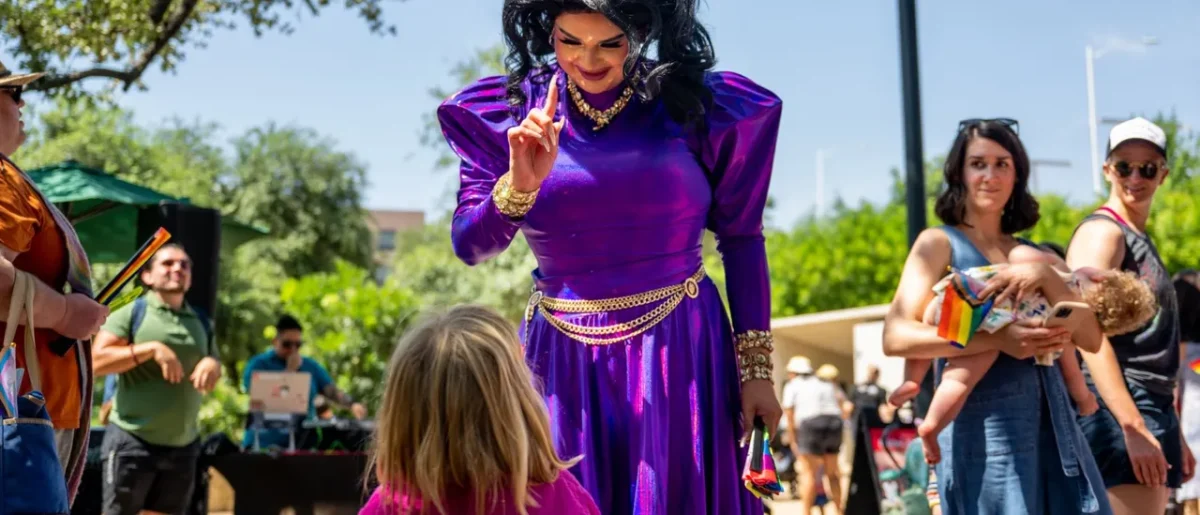
NBC refused to quote a single supporter of the law — despite hundreds of prominent voices backing child-protection measures. Instead, the outlet quoted local drag performer “Brigitte Bandit.”
The sourcing choices in journalism reveal editorial priorities. When covering a law supported by millions of Texas voters and their elected representatives, the absence of any voices defending the legislation’s rationale represents a deliberate editorial decision. News organizations routinely seek comment from both sides of controversial issues. The choice to feature only opponents of SB12 while ignoring its supporters creates a one-sided narrative that presents opposition as consensus.
Bandit recently celebrated Charlie Kirk’s assassination and claimed “kids are safer at drag story hour than at church.” Her shows include titles like “Big Tits Bigger Dreams” and “Titty Tournament.”
That’s NBC’s chosen voice on child safety.
NBC News mentioned drag five times. Mentioned children zero times. Left out that the law applied only when minors were present. And platformed a performer who mocks parents concerned about sexually explicit content in front of kids.
The charges remain allegations. The case has not been proven in court.
A judge struck down a Texas ban on drag shows today, citing Dolly Parton in his ruling and telling people offended by the performances “just don’t go.” @NBCNews https://t.co/3nMQFDh3x9
— Raquel Coronell Uribe (@raquelco15) August 26, 2026