
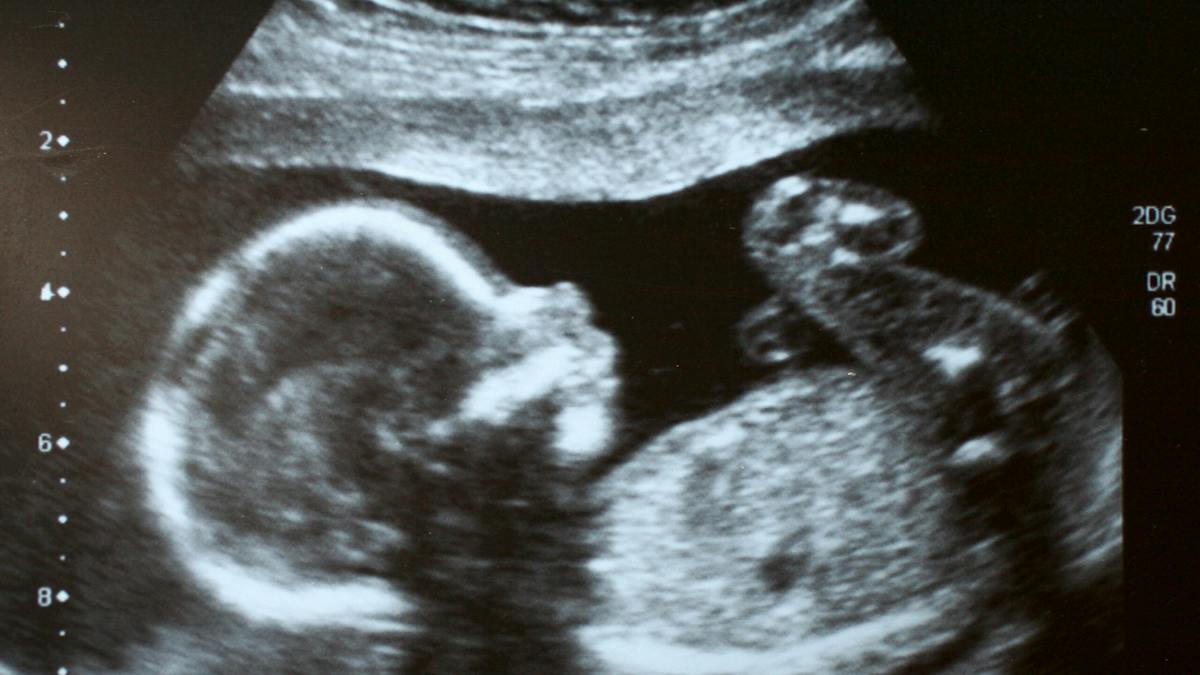
A Daily Wire columnist says she had to read one sentence from The New Yorker twice before she could believe what she was seeing: “A lot of early miscarriages happen as part of a natural process of discarding ‘errors.'”
Discarding “errors.”
Jordan Schroeder, a mother of two, says the language stopped her cold. We’re talking about unborn babies — lives created by God — and a major publication is describing them as disposable mistakes.
“At no point did I think of what was growing inside of me as some potential ‘error’ my body might need to ‘discard.’ That was my baby.”
The piece discusses anthropologist Kate Clancy’s book “Pregnancy Interrupted” and spends considerable time on the uncertainty of early pregnancy. Doctors can get gestational age wrong. Measurements differ. Standards for diagnosing a miscarriage can even vary by location.
The article itself points to research on pregnancies classified as having “unknown viability.” About one-fifth of those pregnancies eventually turned out to be viable.
So doctors don’t always know.
Yet somehow, Schroeder writes, the conversation shifts from acknowledging medical uncertainty to describing embryos as “errors” that can be “discarded.”
She calls it sick. And she’s not apologizing for saying so.
Schroeder argues something bigger is happening than just poor word choice. The more she read, the more the baby seemed to disappear altogether. Pregnancy became something happening to a woman’s body — a medical condition. Where did the baby go?
She describes what happens when a woman who desperately wants a baby sees two lines on a pregnancy test. She doesn’t wait for somebody to officially declare the pregnancy “viable” before she starts imagining a future.
Schroeder recalls her own experience: thanking God, calculating the due date, wondering if it’s a boy or a girl, thinking about names, imagining the baby’s first Christmas. Then worrying about everything she ate, drank, lifted, or touched in the past two weeks.
The relationship has already started. She is her baby’s mother.
And if a woman miscarries, nobody needs to explain to her that she lost something. She knows exactly who she lost.
“Nobody would dream of telling a grieving mother that her body successfully ‘discarded an error.’ And if you do, you are a psychopath.”
But use basically the same language inside a discussion about reproductive biology, Schroeder writes, and suddenly we’re supposed to nod along because it sounds scientific.
Words matter.
Schroeder points to another line in The New Yorker piece that disturbed her. After going through biological and environmental reasons a pregnancy might end, the author writes that pregnancy can also be interrupted “by a woman’s choice.”
Just like that — miscarriage and abortion wrapped up in the same word. “Interrupted.”
A woman losing a baby she desperately wanted did not “interrupt” her pregnancy in the same way another person intentionally ended an innocent human life, Schroeder argues. Pretending they fall under the same language doesn’t make them the same thing.
She also notes how fast the language changes depending on whether the baby is wanted. We throw baby showers. We post ultrasound pictures. We decorate nurseries. We talk to “the baby,” “my baby.”
Nobody walks up to an excited pregnant woman and says, “Actually, you’re experiencing a developing medical condition of uncertain viability.” That would be insane.
But when abortion enters the conversation, nobody wants to say “baby” anymore. It’s an embryo or a fetus. Abortion is a “choice.” Now apparently it’s an “interruption.”
Schroeder acknowledges that miscarriage is natural. Chromosomal abnormalities are a major reason miscarriages happen. There are pregnancies that, tragically, will never result in a healthy baby being born.
None of that means we have to talk about the child who passes away as if he or she were a defective product.
If doctors themselves don’t always know what’s going to happen, maybe a little humility is warranted when discussing the unborn.
Schroeder didn’t know anything about either of her children when she first found out she was pregnant. She didn’t know what they would look like, what their personalities would be, whether they would be healthy. She didn’t even know if she’d make it through the first trimester.
But here’s what she did know: they were there.
And from that moment on, she wasn’t the only person involved anymore.
That’s the part that disappears when pregnancy becomes nothing more than a condition happening to a woman’s body. The baby disappears from the language. And once the baby is gone, you can call what happens next whatever you want.
Motherhood begins with uncertainty, Schroeder writes. First you’re worried about every little thing during pregnancy. Then the baby arrives and you’ve got 10,000 new things that can terrify you. Then they’re toddlers climbing on things they absolutely should not be climbing on.
The fear changes as they get older. But they’re still your kid. Always.
That’s why the sentence about “discarding errors” makes her so angry.
An unborn child is not an error. A miscarriage is not a successful disposal of defective material. And a woman who loses her baby didn’t simply have a pregnancy that was “interrupted.”
We’re talking about an innocent human life that God created.
So start talking like it.