
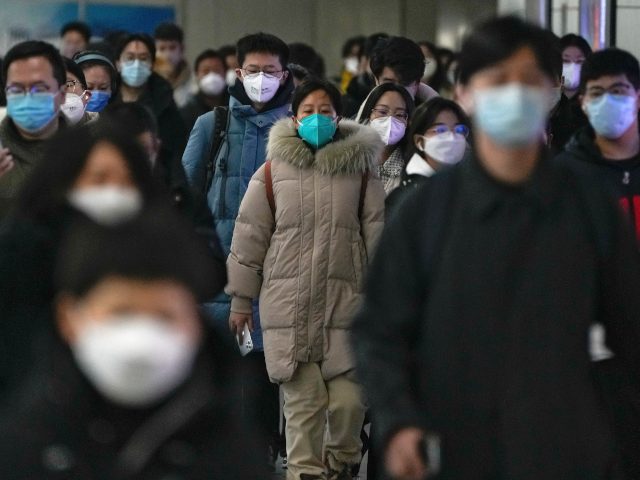
A regional disease control center in Hulunbuir, Inner Mongolia, China, issued a public health alert implementing “plague risk prevention” protocol in response to an alleged case of pneumonic plague in neighboring Siberia, Russia, Chinese state media reported Monday.
The move came days after Russia declared the situation concluded.
Hulunbuir borders Russia directly and is taking precautionary measures in the event a plague outbreak is detected in Siberia. While pneumonic plague is endemic in Siberia, Hulunbuir has allegedly not documented a single case of human plague since 1927 and seeks to maintain that streak.
The announcement was somewhat unexpected. The Russian government announced last week that it had completed all contact tracing and monitoring regarding the suspected plague scare and had identified no new cases of the infection in the affected area.
Chinese state media did not clarify why regional authorities in Inner Mongolia chose to impose public health restrictions days after the reported conclusion of contact tracing in Russia.
“Reports of the death of a staff member at Russia’s Irkutsk Plague Control and Research Institute from unexplained pneumonia have drawn widespread international attention. The exact cause of the incident has not yet received final official confirmation.”
Local reports in Irkutsk, Siberia, revealed the death of Daria Shipilova, 28, in early October. Russian authorities ultimately confirmed that the woman passed away from pneumonia of an unknown cause and, as of press time, have not offered any more explanation for what happened to her.
The case caused international concern as Shipilova was employed at the Irkutsk Anti-Plague Research Institute. Local reports claimed that she had broken a vial or test tube carrying a live pathogen shortly before her passing, but Russian government officials denied those reports, declaring most reported information on the matter to be false.
The Hulunbuir CDC did not contradict the Russian government, but did identify the Shipilova case as the trigger for its new protocol.
The city’s public health officials “rolled out targeted science-based plague prevention guidelines for residents,” among which were “disinfection” protocols in public and “strictly abiding by epidemic prevention rules in affected areas.”
Chinese state media did not indicate that the Chinese Communist Party is imposing the “epidemic prevention rules” previously implemented during the Wuhan coronavirus pandemic, however, which required the mass house arrest of millions of people in China’s major cities. Those “zero-covid” lockdown policies resulted in reports of people trapped inside without food or necessary medicines and triggered rare nationwide protests in 2022.
While Chinese authorities warned citizens to travel with caution given the recent potential plague news, they insisted that the “possibility of a local plague outbreak is low” and reminded citizens that most standard pneumonic plague cases can be treated with antibiotics.
Hulunbuir was not alone in issuing a plague warning this week. Public health officials in Hunan province, nearly 900 miles south of Inner Mongolia, also issued a public alert on Friday, highlighting the need “not to panic or spread rumors.”
The alert also reportedly “advised people traveling to natural plague-foci areas to avoid contact with potentially infected animals, take precautions against fleas and rodents, and seek prompt medical care if symptoms such as fever, swollen lymph nodes, coughing up blood, or breathing difficulties develop.”
In Hong Kong, local authorities announced they would “step up health surveillance measures,” though the report did not specify exactly what that would entail. Hong Kong authorities also emphasized they had no evidence of any cases of plague or pneumonia generally from Russia in recent memory.
The Russian government has discouraged international concern in the Shipilova case while offering no answers as to what the otherwise reportedly healthy 28-year-old passed away from.
Russian media overseeing agency Roskomnadzor issued a warning on October 8 against “spreading fake news” — a potential jail-worthy offense in authoritarian Russia — but no new information on the situation in Siberia. It directed all questions to the public health agency Rospotrebnadzor, which effectively declared the matter concluded on Thursday.
Irkutsk Governor Igor Kobzev separately issued a statement announcing the end of contact tracing for those identified as associates of Shipilova’s, with allegedly no discovery of the spread of plague.
“Comprehensive preventive and anti-epidemic measures have been implemented. There are no epidemic risks to the population of the city of Irkutsk and the Irkutsk region.”
The World Health Organization, whose global reputation took a significant blow in 2020 after its poor handling of the Wuhan coronavirus pandemic originating in China, moved rapidly to demand answers from Russia this time around.
Outgoing W.H.O. Director-General Tedros Adhanom Ghebreyesus issued a statement last week confirming that the Russian government had denied the existence of any outbreak, but concluding that due to a lack of information from Moscow the W.H.O. could not definitively ascertain whether the risk had elapsed.
Tedros stated the W.H.O. does not yet have the full picture of this event and is not able to conduct a full risk assessment.
“Timely, complete, and transparent information sharing under the International Health Regulations is essential to clarify conflicting reports and enable an accurate assessment of potential public health risks,” Tedros said.