Senate Republicans lost a critical Farm Bill vote this week because Mitch McConnell wasn’t there.
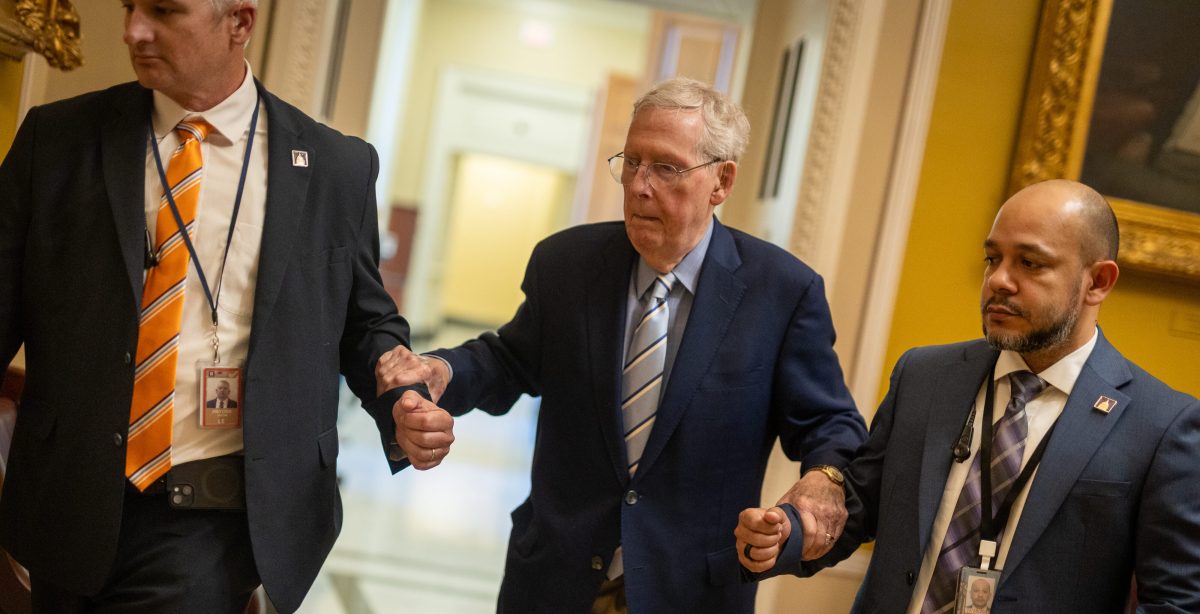
The Kentucky senator announced Thursday he’s been discharged from rehab after more than 50 days of hospitalization — a stretch that began June 14 with a fall at his Washington home that briefly left him unconscious. He later developed pneumonia during recovery, keeping him off the Senate floor for nearly two months.
The extended absence represents one of the longest continuous hospitalizations for a sitting Senate leader in recent memory, raising questions about continuity of representation and the practical challenges facing the Republican caucus as they navigate a closely divided chamber. The prolonged recovery period has tested the GOP’s ability to advance its legislative agenda during a critical period ahead of the fall legislative session.
“Earlier today, I was discharged from the rehabilitation center to continue my recovery at home,” McConnell said in a statement. “Elaine and I are grateful for the many well wishes and support from friends, colleagues, and Kentuckians, and for the attentive care I’ve received from excellent doctors, nurses, therapists, and hospital staff.”
McConnell says he’s not stepping back. Instead, he’ll work from home under doctor supervision while maintaining “an intensive regimen of physical therapy” and staying engaged with Senate business.
The arrangement reflects the modern realities of congressional work, where remote communication and digital coordination have become increasingly normalized since the pandemic era. However, the limitations of remote participation remain significant in a body where physical presence, floor votes, and in-person committee participation remain central to the legislative process. McConnell’s ability to influence outcomes from home will be tested in the coming weeks as Republicans attempt to regroup on their priority legislation.
The timing matters. McConnell’s absence cost Republicans a major vote Tuesday — the Senate Agriculture Committee failed to advance the GOP Farm Bill after Democrats voted unanimously to block it. Without McConnell’s vote, Republicans didn’t have the margin to move the measure forward.
The Farm Bill has historically been one of the few remaining areas of bipartisan cooperation in Congress, with rural and agricultural interests spanning both parties. This year’s version, however, has become entangled in broader partisan disputes over spending levels, nutrition assistance programs, and climate-related agricultural provisions. The committee vote failure represents a significant setback for rural advocates who have been pushing for reauthorization of programs set to expire this fall.
“On the advice of my doctors, I’ll maintain an intensive regimen of physical therapy from home during the state work period, and I’ll continue to engage with my staff and colleagues on important Senate business.”
Senate Republicans hold only a narrow committee margin. They can’t easily absorb missing votes on major legislation — especially when Democrats have shown zero willingness to work across the aisle during McConnell’s two-month absence.
The partisan gridlock has intensified concerns among agricultural stakeholders who depend on the Farm Bill’s safety net programs, crop insurance provisions, and rural development funding. Trade associations representing corn, soybean, wheat, and livestock producers have been lobbying both parties to find common ground, warning that continued delays could disrupt planting decisions and financial planning for the upcoming growing season.
Farmers and rural communities have been counting on the Farm Bill. Democrats blocked it anyway.
McConnell’s return, even working remotely from home, gives GOP leadership a path to revive stalled priorities like the Farm Bill. Kentucky went without full Senate representation for 50 days while he was hospitalized — a reality that drew criticism over lack of transparency about his condition and the practical impact on the state’s voice in Washington.
The lack of detailed public information about McConnell’s specific injuries, treatment timeline, and expected recovery milestones fueled ongoing debate about transparency standards for aging lawmakers and the public’s right to know about the health status of their elected representatives. Critics argued that Kentucky constituents deserved more regular updates about when their senator would return to full duties, while McConnell’s office maintained that medical privacy considerations limited what could be disclosed.
The retiring senator is now home recovering. Senate Republicans get their vote back. And the Farm Bill gets another chance.
With McConnell’s participation now available, even if remotely during the state work period, Republicans are expected to regroup and schedule another committee vote in the coming weeks. Whether Democrats will maintain their unified opposition or whether negotiations might produce a compromise version remains unclear, but the return of McConnell’s vote restores the basic arithmetic Republicans need to advance their legislative priorities through committee.
New — Mitch McConnell says he was discharged from hospital and will recover from home
Says in statement:
“Earlier today, I was discharged from the rehabilitation center to continue my recovery at home. Elaine and I are grateful for the many well wishes and support from…
— Manu Raju (@mkraju) August 6, 2026