
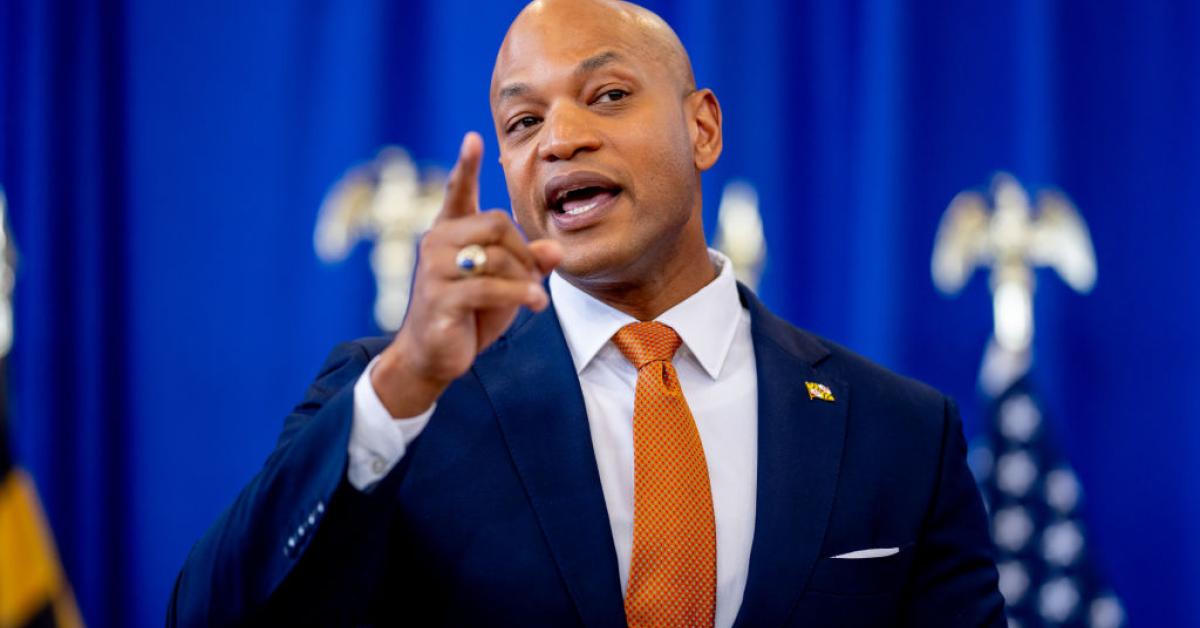
Maryland Republicans filed a lawsuit Thursday seeking to block a Democratic-backed congressional redistricting amendment from reaching voters in November — one day after Democratic Gov. Wes Moore signed the measure into law.
The legal challenge represents the latest flashpoint in a long-running partisan battle over electoral maps in Maryland, a state that has historically been at the center of national gerrymandering debates. Republicans argue the rushed legislative process violates fundamental election law protections, while Democrats maintain they are acting within their constitutional authority to set the terms of ballot referendums.
The timing of the lawsuit is no accident.
Maryland law requires statewide ballot questions to be prepared and certified by July 1 before a general election. That deadline had already passed before the Democratic-controlled General Assembly approved House Bill 2100 during a three-day special session this week.
The July 1 deadline exists to ensure adequate time for election officials to prepare materials, translate ballot language, and allow voters to review proposed constitutional changes before casting their ballots. By convening a special session well after that statutory cutoff, Democratic lawmakers created the procedural conflict now at the heart of the legal dispute.
The plaintiffs say lawmakers cannot bypass state election law by writing an exception into the legislation itself.
“The combination of statutory violations is neither accidental nor insignificant.”
The lawsuit was filed in Anne Arundel County Circuit Court by all seven members of the conservative Maryland Freedom Caucus, along with Senate Minority Leader Steve Hershey, Senate Minority Whip Justin Ready, and Mike Howell, president of the conservative advocacy group the Oversight Project.
The breadth of the plaintiff coalition signals how seriously Maryland Republicans view the threat posed by potential redistricting changes. The inclusion of both grassroots conservatives and Senate leadership suggests a unified opposition strategy rarely seen in the state’s often-fractured Republican minority.
Moore signed HB2100 on Wednesday, setting up a statewide vote for November 3. The amendment would not redraw Maryland’s congressional districts immediately or affect this year’s congressional elections. Instead, it would change the constitutional rules governing future congressional maps — including separating the standards for congressional districts from those that apply to state legislative districts.
The amendment would also allow the General Assembly to give the Maryland Supreme Court authority to hear challenges to congressional maps. If approved by voters, the measure could clear the way for Democrats to redraw Maryland’s congressional map before the 2028 election.
That distinction between immediate and future impact is central to understanding what Democrats hope to accomplish. By altering the constitutional framework now, they would gain flexibility to adjust district boundaries in response to demographic shifts or political opportunities ahead of the next redistricting cycle.
Democrats currently hold seven of the state’s eight U.S. House seats. Republican Rep. Andy Harris holds the only Republican congressional seat.
Maryland’s heavily Democratic tilt in congressional representation reflects both genuine partisan preference in much of the state and strategic map-drawing that has consolidated Republican voters into a single district on the Eastern Shore. The current configuration has made Maryland a national symbol of partisan gerrymandering, though Democrats argue their maps simply reflect the state’s political composition.
At the center of the lawsuit is timing — and whether Democrats can rewrite the rules to suit their agenda.
Maryland law requires public notice and review of proposed ballot questions under a specific timeline. The complaint says the shortened timeline prevents the state from following the normal process before the November election.
These procedural safeguards were designed to prevent precisely the kind of rushed constitutional changes the plaintiffs say are occurring here. Election law experts have long maintained that adequate public notice serves as a check against hasty alterations to fundamental governance structures.
Lawmakers tried to address those deadlines by adding language saying the amendment would go before voters “notwithstanding any other provision of law.”
The plaintiffs say that language cannot override Maryland election law.
This legal theory tests the limits of legislative authority in Maryland’s system of government. The core question is whether the General Assembly’s power to refer constitutional amendments to voters includes the power to waive statutory requirements that govern the referendum process itself.
The lawsuit also raises a separate constitutional argument. Maryland requires proposed constitutional amendments to address a single subject. The plaintiffs contend HB2100 violates that requirement because the provision overriding election laws is separate from congressional redistricting.
They also argue the proposed ballot language does not clearly tell voters what the amendment would do.
The plaintiffs are asking the court to prevent state officials from certifying or placing the amendment on the November 3 ballot. If ballots have already been printed or voting has begun, they want the court to prevent votes on the amendment from being counted or certified.