
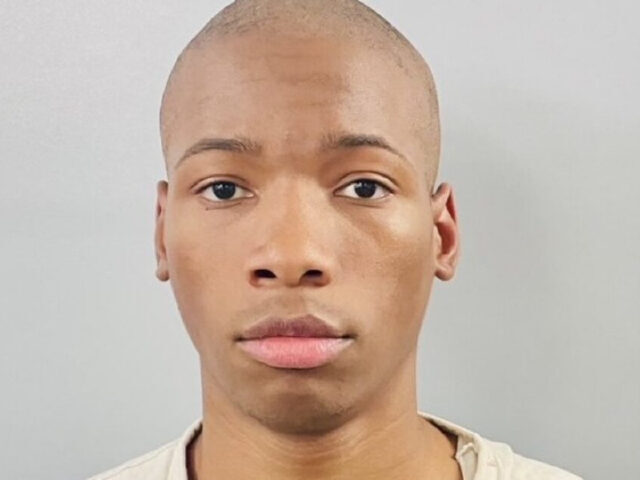
Karmelo Anthony, convicted of taking the life of 17-year-old Austin Metcalf, secured a legal victory Wednesday when a senior judge removed the original trial judge from his appeal.
Judge John Roach, who presided over Anthony’s trial, was recused after Anthony’s new legal team argued he violated judicial ethics by making public comments about the case to WFAA-TV.
The recusal motion centers on concerns about judicial impartiality and the ethical boundaries that govern how judges may discuss cases under their jurisdiction. Legal experts have long emphasized that judges must avoid any appearance of bias, particularly in cases that remain subject to appellate review. The issue of judicial commentary has become increasingly complex in the modern media environment, where interview requests and public interest in high-profile cases can create ethical minefields for presiding judges.
Following the guilty verdict, Roach told the station that Anthony seemed like a “nice young man” while affirming the jury made the right call to convict him.
“As long as I follow the law, I sleep well at night.”
Anthony’s lawyers accused Roach of offering “public comment about an impending proceeding” in violation of judicial ethics.
The defense argument rests on provisions of the Texas Code of Judicial Conduct, which restricts judges from making public statements that might reasonably be expected to affect the outcome of a proceeding or impair its fairness. With Anthony’s appeal still pending at the time of the interview, his legal team contended that any public commentary by the trial judge could prejudice the appellate process and undermine confidence in the judicial system’s neutrality.
Senior Judge Sid Harle granted the defense motion, acknowledging that recusal is a “very high bar.” According to the New York Post, Harle stated that although he personally believes Roach was capable of presiding over the case impartially, “that’s not the test.”
The distinction Harle drew reflects a fundamental principle in judicial ethics: the issue is not whether actual bias exists, but whether circumstances create a reasonable perception of partiality. Courts have consistently held that public confidence in the justice system depends not only on actual fairness but on the appearance of fairness. This standard protects both defendants’ rights and the integrity of judicial proceedings.
Prosecutor Bill Wirskye pushed back against the ruling.
“He didn’t do anything wrong. I know Judge Roach. What is important to Judge Roach is being fair,” Wirskye said, adding that social media influencers engaged in a “concerted effort” to derail the trial.
“Some of them are here today,” he said.
The prosecutor’s comments highlight growing tensions between traditional court proceedings and the influence of social media coverage on high-profile cases. The case has attracted significant attention online, with various commentators and influencers weighing in on the facts, the verdict, and the judicial process itself. This intersection of social media activism and criminal justice has raised questions about how courts should respond to external pressure while maintaining their independence.
The case stems from a 2025 incident at a track meet in Frisco, Texas, where Anthony confronted 17-year-old Austin Metcalf over a seating dispute in a team tent.
The confrontation occurred in what should have been a routine athletic event, transforming a community gathering into the scene of a tragedy that would devastate families and spark intense legal proceedings. Track meets typically bring together student athletes, coaches, and families in a competitive but celebratory atmosphere, making the violence that erupted that day particularly shocking to those present.
Anthony maintained throughout the trial that he acted in self-defense. Witnesses told a different story.
According to an arrest report obtained by Fox News, Metcalf told Anthony he needed to move out of the Memorial team’s tent. A witness told Frisco police that Anthony “grabbed his bag, opened it and reached inside it” and said, “Touch me and see what happens.”
“Austin stood up and pushed the male to get him out of the tent. In the next moment, the witness told police that Anthony reached into his bag and the male took a knife out of the bag and stabbed Austin.”
Anthony fled the scene immediately after the confrontation. Metcalf lost his life in his twin brother Hunter’s arms.
The presence of Metcalf’s twin brother at the scene added an additional layer of tragedy to an already devastating incident. The loss of a twin represents a particularly profound form of grief, as twins often share an exceptionally close bond from birth.
“I was protecting myself,” Anthony said. “He put his hands on me.”
When confronted by police, Anthony immediately confessed to the act. “I’m not alleged, I did it,” he reportedly said, asking officers if Metcalf was “going to be OK.”
Throughout the trial, witnesses repeatedly testified that Anthony had been asked to leave the tent up to 15 times, adding that he instigated the conflict with Metcalf.
The repeated requests for Anthony to leave became a central point in undermining his self-defense claim, as prosecutors argued that Anthony had ample opportunity to avoid the confrontation entirely by simply complying with reasonable requests to exit a space where he did not belong.
Anthony was sentenced to 35 years in prison. He will be eligible for parole after 17.5 years.
The charges remain allegations. The case has not been proven in court.