Vice President JD Vance is everywhere these days — and not just because he’s front and center negotiating the Trump administration’s Iran peace deal.
Vance is also promoting his new book Communion: Finding My Way Back to Faith, a deeply personal follow-up to his bestselling memoir Hillbilly Elegy. This time, the focus is his religious journey from evangelical Protestantism to atheism and ultimately to the Catholic Church.
The path wasn’t smooth.
“What paved my path to atheism wasn’t books or ideas. It was sadness and a sense of betrayal.”
Vance describes the loss of faith as a “divorce” from his upbringing. But worldly success — educational, professional, financial — left him questioning whether he was actually a good person. He wanted to be a better man and a better father.
That introspection brought him back.
Vance grounds his faith not in abstractions but in rootedness and personal connectedness. He recalls his great-grandmother Mamaw telling him God loved him — and knowing someone was listening when he prayed for stability, a permanent address, and his family’s happiness.
“When my great-grandmother lay on her deathbed, her friends and family gathered around and sang church hymns and gospel songs,” Vance writes. “I still have the tape recordings.”

Vance’s marriage to Usha Vance, a non-Christian woman of Hindu background, adds another compelling dimension to the book. Usha is clearly the most important person in his life — a valued political counsel who, along with their children, has humanized him and smoothed his rougher edges. The book is dedicated to her.
Is this a 2028 campaign book? Vance addresses political controversies head-on. He explains his conversion from Never Trumper to Trump’s sidekick, crediting the president’s “visceral, moral terms about basic fairness.” He acknowledges his infamous “childless cat ladies” remark was a mistake — both a political misstep and a failure of Christian witness.
Vance also wades into thorny debates over Catholic social teaching and Republican politics. He praises Teamsters Union President Sean O’Brien’s 2024 RNC speech, noting that “some GOP donors complained that he sounded like a socialist.”
“The president ignored these complaints. I thought Sean’s arguments echoed a lot of the themes from traditional Christian social teaching.”
On abortion, Vance is blunt. “Roe v. Wade‘s demise has revealed the political unpopularity of our position,” he writes. He recounts his unsuccessful attempts to defeat a ballot initiative enshrining legal abortion in Ohio’s state constitution.
“Given a choice between one extreme and another, the pro-life side got blown out,” Vance admits. “Prudence is the better part of virtue. If your political argument fails to persuade your fellow Americans, you have to make a better argument.”
That candor will likely ruffle some feathers among his fellow pro-lifers.

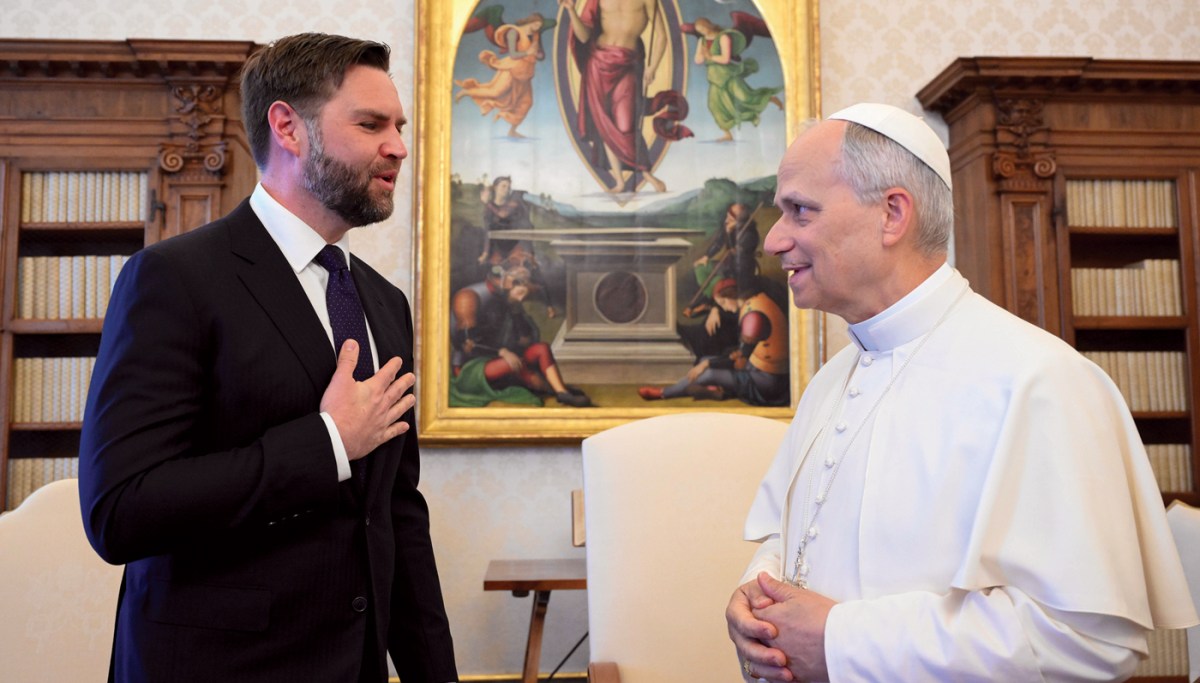
Vance has quarreled with Pope Leo XIV over the Trump administration’s handling of foreign policy and immigration — a tension that underscores new divides between Catholics and evangelicals on Israel, Gaza, and just war theory.
The book also revisits Vance’s successful 2024 campaign. Despite liberal ridicule that he was “weird” and bizarre social-media jokes, Vance proved a far more effective campaigner and debater than Tim Walz. The Vance pick coincided with Trump sweeping Pennsylvania, Michigan, and Wisconsin — the Rust Belt trifecta that delivered the White House.
Whether that sets Vance up to succeed Trump in 2028 remains to be seen. Communion is preoccupied with weightier questions — a compelling read for those looking for the permanent things in a fast-changing world.