
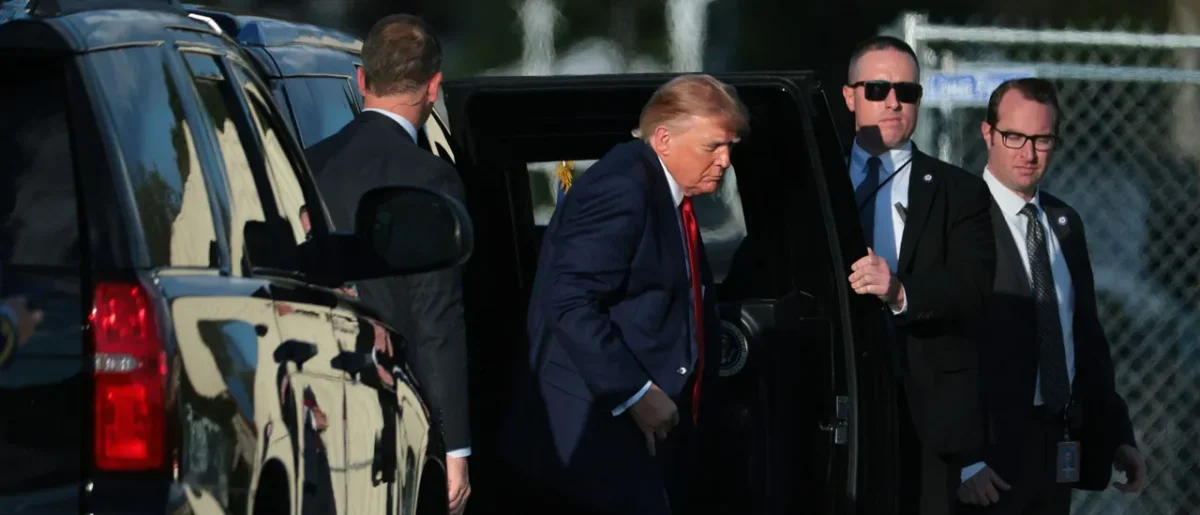
Iran-backed Houthi rebels launched a ballistic missile attack on Saudi Arabia’s capital city Saturday, forcing President Donald Trump to return to the White House a day ahead of schedule.
Trump’s weekend at Camp David was cut short as the strike on Riyadh marked the first Houthi attempt to hit the Saudi capital since the conflict intensified. The president headed back to Washington aboard Marine One Saturday evening, landing at the Ellipse with the press gathering called for 7 p.m. ET, according to a White House pool report. Official guidance had kept Trump at the Maryland retreat through Sunday afternoon.
🚁 WH pool report #1 Trump returning
The White House has updated President Trump’s schedule. He’s now set to return to the White House this evening from Camp David.
The gathering time for the pool is 7 pm ET. Trump will be returning via Marine One at the Ellipse.
Joey Garrison…
— White House Press Pool Reports (@WHPressPool) September 19, 2026
The abrupt schedule change underscored the severity with which the administration viewed the escalation. Camp David retreats are typically planned well in advance and reserved for strategic planning sessions or downtime away from the pressures of the Oval Office. A mid-retreat recall signals that national security officials determined the president needed immediate access to the full command and communications infrastructure available only at the White House.
Saudi Arabia confirmed that the Iran-aligned Houthis attempted to strike Riyadh with a ballistic missile. The Saudi-led coalition said the missile was intercepted, though some residents reported hearing a blast and spotting smoke near the airport. No injuries or damage were confirmed.
The intercept represents a test of Saudi Arabia’s air defense systems, which have been bolstered over the years with billions of dollars in American-made technology. Whether the missile was destroyed mid-flight or diverted from its intended target remains unclear, but the lack of confirmed casualties suggests the kingdom’s defensive posture functioned as designed during a critical moment.
The rebels also targeted the port city of Yanbu along with Taif, Baysh and Farasan — all attempts failed, according to NBC News. Houthi forces claimed without proof they struck sensitive locations in the capital and set Aramco facilities on fire.
Yanbu is strategically significant as a major Red Sea port and home to key oil infrastructure, making it a logical target for groups seeking to disrupt Saudi Arabia’s economic engine. The simultaneous targeting of multiple cities across different regions suggests a coordinated campaign designed to overwhelm defenses and maximize psychological impact, even if the physical damage remained limited.
The Houthi attempt on Riyadh was the first aimed at the capital since fighting intensified — a major escalation that brought Trump back to crisis-management mode.
The U.S. Mission in Iraq issued a security alert Saturday warning Americans across the region. The notice said Iranian-supported Houthis had carried out attacks against Saudi Arabia, including strikes on civilian airports, and cautioned the conflict could widen quickly. Travelers were advised to brace for flight cancellations, airspace shutdowns and other disruptions.
Identical warnings went out the same day from U.S. diplomatic posts in Saudi Arabia and Jerusalem. The State Department urged Americans worldwide to stay on guard, sign up for the government’s traveler enrollment program, and keep a low profile.
The coordinated issuance of security alerts across multiple embassies reflects standard protocol when threats escalate regionally rather than remaining isolated to a single country. By warning Americans in Iraq, Saudi Arabia, and Jerusalem simultaneously, the State Department acknowledged that Iranian proxy networks operate across borders and that retaliation or further attacks could materialize anywhere within Iran’s sphere of influence.
Washington has held back from direct combat despite the escalation. Saudi Crown Prince Mohammed bin Salman pressed Trump to strike the Houthis, but the president declined. Trump agreed instead to share intelligence and dispatch advisers to help the kingdom identify targets, The Hill reported.
The decision to provide intelligence and advisory support rather than kinetic military action represents a careful calibration of American involvement. It allows the United States to demonstrate solidarity with a key regional ally while avoiding the entanglements and potential casualties that come with direct intervention. This support model also places the burden of execution—and the associated risks—squarely on Saudi shoulders.
The Houthis remain one of Iran’s most aggressive proxy forces in the Middle East, regularly attacking shipping lanes and now escalating strikes into Saudi territory. Trump’s handling of the crisis — refusing direct U.S. military involvement while supporting Saudi defenses — mirrors his broader approach to Middle East conflicts: let regional partners fight their own battles with American support, not American troops.
This philosophy carries both strategic advantages and potential pitfalls. It conserves American military resources and lives while empowering allies to take ownership of regional security. However, critics argue that restraint can embolden adversaries and leave critical American interests vulnerable if proxy partners prove unable or unwilling to effectively counter threats on their own. The coming days will test whether Trump’s approach can contain the Houthi escalation without requiring a deeper American commitment.