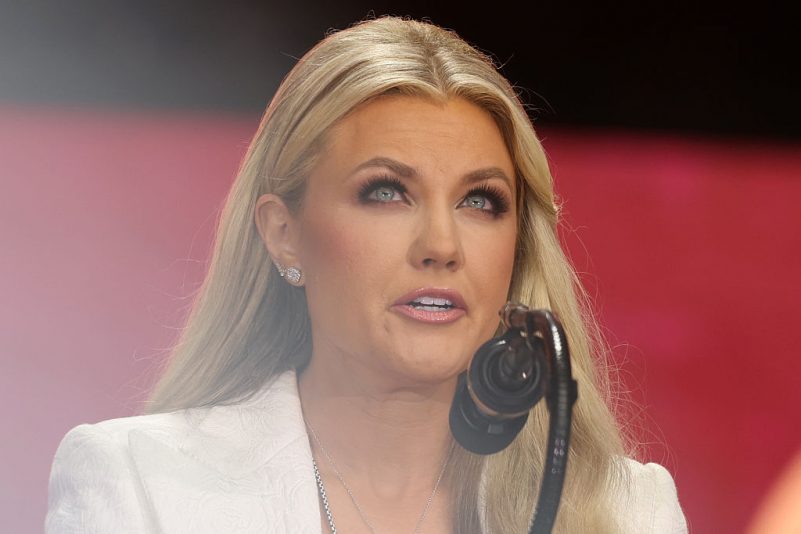
Erika Kirk, widow of Turning Point USA founder Charlie Kirk and the organization’s current CEO, shared her deeply personal grief journey in a New York Times essay published Monday as the one-year anniversary of her husband’s attack approaches.
The essay marks a significant moment of public reflection from Erika, who has largely maintained privacy around her family’s loss while simultaneously stepping into leadership of one of the nation’s most influential conservative youth organizations. Turning Point USA, which Charlie founded in 2012 as a college student, has grown to reach millions of young Americans and operates chapters on thousands of campuses nationwide.
Charlie Kirk was fatally attacked during a speaking event at Utah Valley University in Orem, Utah, on September 10, 2025. He was 31.
The tragedy shocked the conservative movement and the broader political world. Charlie had been at the height of his influence, regularly hosting his podcast, speaking to packed audiences across the country, and serving as a prominent voice in American politics. His sudden death left a leadership vacuum at the organization he had spent more than a decade building from the ground up.
Nearly one year later, Erika offered her perspective on navigating profound loss while raising their two children and continuing the work her husband built.
The decision to share her story publicly through the Times represents a rare glimpse into the personal toll of such a high-profile loss. Erika’s dual role as grieving widow and organizational leader has required her to balance private mourning with public responsibility, managing her own healing while ensuring Charlie’s mission and vision continue to guide Turning Point USA’s work.
“Grief is strange. Time continues even when every part of you wants it to pause or, better yet, rewind.”
In her 1,000-word essay, Erika described the hardship of celebrating milestones without Charlie — their children’s birthdays, family moments that should have included him as the center of their world.
These ordinary moments, she explained, carry extraordinary weight for those left behind. Each holiday, each developmental milestone for their young children, serves as both a celebration and a reminder of absence. The passage of time, while necessary for healing, also means moving further from the last moments shared together.
“To the world, he was Charlie Kirk. But to me, he was the love of my life. To our children, he was the center of their world.”
This distinction between public figure and private person runs throughout Erika’s reflection. While millions knew Charlie through his media presence and activism, she knew him in the intimate moments away from cameras and crowds — as a husband, a father, a partner in building their life together.
Tyler Robinson, the man accused in the attack, is set to go to trial. The Kirk family has called the case an important step in their pursuit of justice.
The legal proceedings represent another layer of complexity in the family’s grieving process, requiring them to engage with the criminal justice system while still processing their personal loss. The upcoming trial will inevitably bring renewed public attention to the circumstances of Charlie’s death, potentially reopening wounds as the family approaches what is already a difficult anniversary.
Despite the immense loss, Erika explained that faith has carried her family forward. She wrote of witnessing extraordinary good emerge from tragedy — people returning to faith, families reconciling, old wounds healed because of Charlie’s legacy.
These testimonies from strangers and friends alike have provided unexpected comfort, Erika suggested, showing that Charlie’s impact extended beyond politics into the deeply personal realm of faith and family healing. The ripple effects of his life and death continue to unfold in ways both large and small.
“I know my husband is in heaven, but I ache for him to be here. Still, I can stand and say without a shadow of a doubt that God is good.”
As the September 10 anniversary nears, Erika noted that grief has taken on a different form.
A year ago, she wondered if the weight of it would swallow her completely. Now, she recognizes it — and sometimes even welcomes it.
The evolution of grief, she revealed, has surprised her. What once felt overwhelming and unbearable has transformed into something she can acknowledge and even find meaning within, though the pain remains real and present.
“For a moment the grief makes Charlie feel impossibly close.”
She described grief’s dual nature: the sadness exists alongside moments of beauty, laughter with her children, and the gift of life itself.
This paradox — holding sorrow and joy simultaneously — has become central to how Erika understands her path forward. Rather than waiting for grief to end before embracing life again, she has learned they must coexist, each informing and shaping the other in unexpected ways.
“I am learning that grieving Charlie and living life at the same time are part of the rhythm of grief. I can miss him with every part of me and still laugh with our children. I can have a broken heart and still experience joy.”
Erika closed her essay with a simple truth she’s discovered in the hardest year of her life.
“The grief is there, always, but so is the beautiful gift of life.”