The much-beloved Queen of Country just proved something modern music desperately needs to hear — you don’t need filth to win.
Throughout Dolly Parton’s decades-long career, the recently deceased legend graced the airwares with tunes the littlest cowgirl could enjoy. Her catalog spans generations, from the heartfelt “Coat of Many Colors” to the empowering “9 to 5,” each song crafted with care for audiences of all ages. While America’s culture became coarser and explicit-symbol warnings became the norm on top charts, Parton stood firm in refraining from vulgar language in public. This wasn’t just a marketing strategy or carefully constructed public image — it was a core principle that guided every decision she made throughout her storied career.
Rather than engage in the profane, Parton imbued her music with themes of love, family, and her Christian faith. Her songwriting tackled complex emotions and real-world struggles without resorting to crude language or shock value. This approach allowed her music to resonate across demographic lines, building a fan base that included everyone from young children to their great-grandparents.
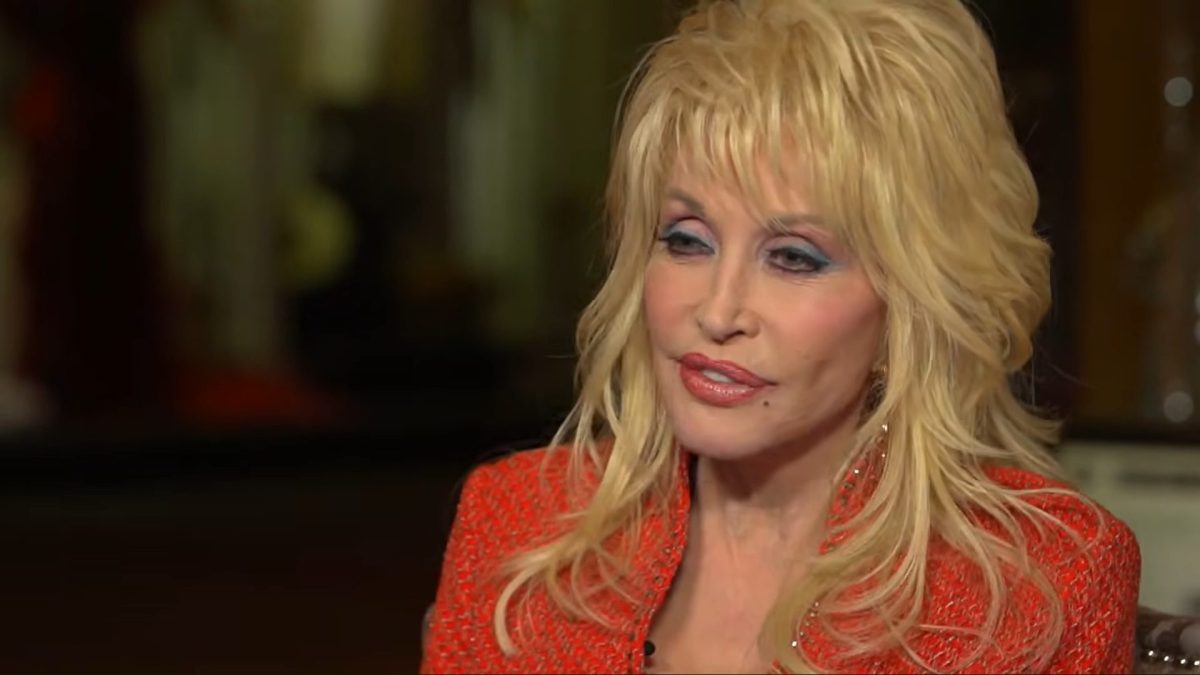
“I don’t cuss. I don’t make fun of Jesus. I don’t talk bad about God, and I don’t say dirty words on camera.”
When risqué pop singer Sabrina Carpenter asked Parton to feature on a re-released version of her song “Please, Please, Please” — which uses a profane phrase in its original chorus — the country legend said she’d join if the profane lyric was changed.
It ultimately was.
The collaboration itself speaks volumes about Parton’s influence in the industry. Here was a younger artist from an entirely different genre willing to modify her own work to accommodate Parton’s values. That kind of respect and deference is rarely seen in today’s music landscape, where established artists often bend to fit contemporary trends rather than the other way around.
“I told her, I said, ‘Now, I don’t cuss,'” Parton said in a 2025 interview. “‘I don’t make fun of Jesus. I don’t talk bad about God, and I don’t say dirty words on camera, but known to if I get mad enough.'”
That final caveat — acknowledging her own human imperfection — only makes her commitment more authentic. Parton never claimed to be perfect, just intentional about what she presented to the world and to her fans who looked up to her.
Parton’s emphasis on the family-friendly — whether through her music or charitable work — was reflective of the culture and time she grew up in. It’s a deeply held value intrinsic to her Eastern Tennessee roots, where basic manners and public decency are the expected norm. The Smoky Mountains region where she was raised instilled in her a sense of propriety that never left, even as she became one of the biggest stars on the planet. Her work with Dollywood and the Imagination Library further demonstrated how these values extended beyond just her music into every aspect of her public work.
The proof is in the career. Parton built one of the most successful music legacies in American history without compromise. She amassed countless awards, sold millions of records, and became a cultural icon recognized worldwide — all while maintaining her standards. Her success challenges the modern entertainment industry’s assumption that edginess and explicit content are necessary ingredients for commercial viability.
While Parton may be gone, there’s still reason to be hopeful that the modest qualities she embodied will live on. Up-and-coming country stars like Ella Langley are finding great success with catchy, clean tunes like “Choosin’ Texas,” a song that’s continuing to break records left and right across all genres. The success of artists like Langley suggests that audiences are hungry for music that doesn’t rely on shock value or crude language to make an impact.
And similar to Parton, Langley has used her platform to glorify Jesus Christ at her concerts and award shows. This new generation of artists appears to be learning from Parton’s example, recognizing that authenticity and faith can coexist with mainstream success.
Parton’s life and career is proof that artists don’t need to engage in the vulgar and explicit to build successful music careers. Her legacy stands as a challenge to the prevailing wisdom in Nashville, Los Angeles, and New York that clean content can’t compete in today’s market.
If the storytelling is real and honest, the fans will follow. Parton proved this truth over and over again for more than fifty years, and her enduring popularity even after her passing confirms that quality and integrity have a timeless appeal that transcends fleeting trends.