
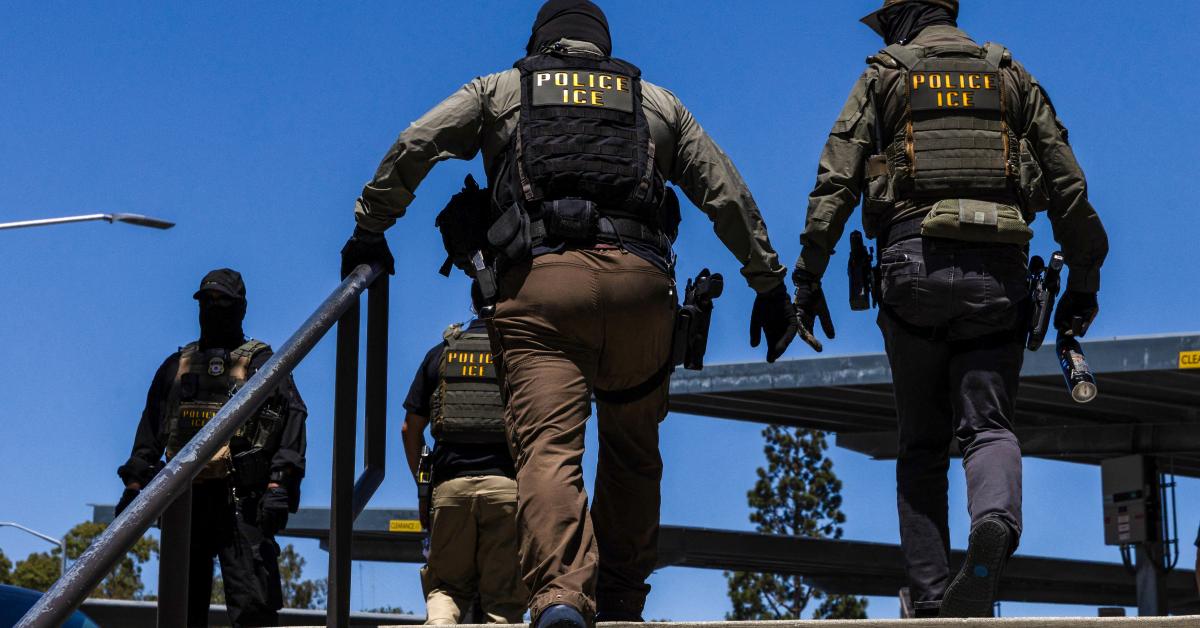
A Dallas man learned the hard way that threatening federal agents on social media isn’t protected speech — it’s a federal crime.
Robert Wilson King, 36, was sentenced to 17 months in federal prison for posting multiple threats against Immigration and Customs Enforcement agents online. His social media posts escalated from bad to worse, with one declaring: “If I see ICE agents in my neighborhood I’m opening fire. It’s time to stop being p****** and put the Second Amendment to work. ICE are not real cops, they are a secret police force with no real legal authority. Take them out.”
King didn’t stop there.
He posted again to “double down,” telling followers to “shoot them and end them” if ICE came to their neighborhoods. Then he “tripled down” — calling on people to take ICE agents out “on sight.” In yet another post, King suggested someone harm President Donald Trump, falsely claiming the president is “a traitor to our country and interests.”
“There is no place for political violence in this country, and that includes hiding behind a keyboard to threaten the lives of the men and women who serve in federal law enforcement.”
U.S. Attorney for the Northern District of Texas, Ryan Raybould, announced King had pleaded guilty in June to transmitting an interstate threat via social media. U.S. District Judge Brantley Starr handed down the sentence: 17 months behind bars, followed by two years of supervised release.
“Immigration and Customs Enforcement agents perform critical duties for our nation, and they should never have to fear for their own lives or the safety of their families simply for doing their jobs,” Raybould said. “Those who attempt to intimidate, harass or threaten federal officials will be tracked down and prosecuted to the fullest extent of the law.”
Homeland Security Investigations Dallas Deputy Special Agent in Charge Antwoine Jones made it clear that online threats have real-world consequences: “Threats of violence against federal law enforcement officers are not protected speech; it is a criminal act that will be taken seriously and investigated thoroughly. This sentence sends a clear message that those who threaten officers or attempt to intimidate them from performing their lawful responsibilities will be held accountable.”
King isn’t alone.
He’s the latest in a growing string of prosecutions targeting those who threaten federal agents online. In August, Logan Christopher Murfin, 26, of Skiatook, Oklahoma, was sentenced to 21 months in federal prison after a jury found him guilty of threatening to harm federal agents. Murfin posted on X about “gunning down” ICE agents, falsely claiming the Second Amendment gave people the right to target federal officers.
Murfin received the longest sentence of anyone convicted in 2026 for threatening federal agents. Christopher Ray Plyler, 43, of Grand Haven, Michigan, received 12 months. Joseph Rocco Giancola, 73, of Cape Coral, Florida, received 6 months. All were sentenced this year.
The charges remain allegations in pending cases. The convictions referenced here have been finalized in court.
Federal law has prohibited threatening the president since 1917. Penalties for threatening other federal officials were expanded under the Comprehensive Crime Control Act of 1984. The Supreme Court has previously weighed whether certain threats cross the line from political speech into criminal conduct, distinguishing between “crude political hyperbole” and credible threats that carry real intent to harm.
The DOJ is making it clear: calling for violence against federal agents online will land you in federal prison.