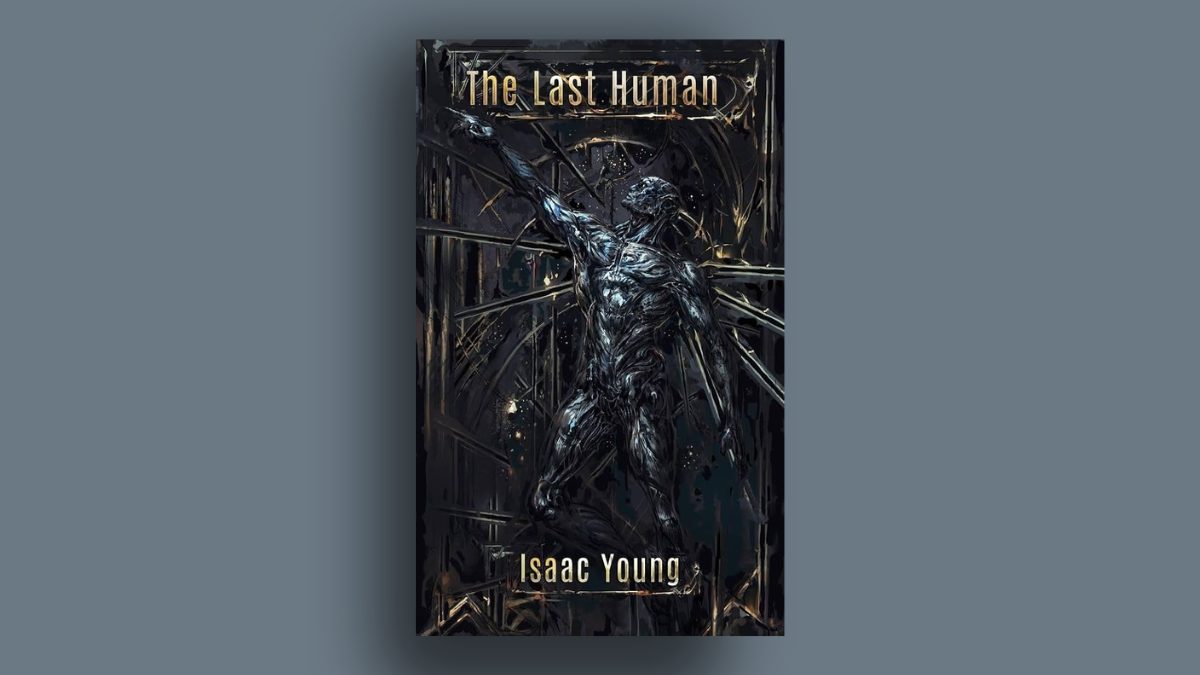
Isaac Young’s debut science fiction novel The Last Human does what the woke publishing industry refuses to allow — it celebrates humanity without apology, tells a compelling story without DEI propaganda, and builds an original universe that doesn’t preach leftist ideology.
Young was shut out of traditional publishing for refusing to inject diversity quotas and progressive messaging into his work. So he raised the money himself, wrote the book, and released it independently — becoming exactly the kind of trailblazer his protagonist represents.
The novel follows Vas du’Kaal, a 14-year-old slave working for an insect-like alien race called the Mantza. Vas is one of the last living humans in the universe after war and cultural decay wiped out most of the species. Humanity had once been godlike — capable of thousand-year lifespans, interstellar conquest, and seeding intelligence across the cosmos.
A mysterious bounty hunter named Amon Russ rescues Vas from toxic slavery and becomes his father figure. Russ’s telepathic fox-like alien partner Ingrish plays the maternal role as Vas spends his formative years aboard their ramshackle spaceship, the Aphelion.
“Far from making a few accurate predictions about technology or events in the future, the prophecy of science fiction requires constructing a whole universe based on countless predictions that all follow consistent logic.”
The book builds a post-colonial interstellar Dark Age where a once-dominant civilization has retreated, leaving younger alien races fighting to replace them. Young avoids the tired sci-fi trope of projecting Roman Empire or Medieval Europe patterns into space — his universe feels authentically fresh.
What sets The Last Human apart from woke sci-fi garbage is its treatment of identity and consciousness. Most modern science fiction treats humans as biological machines — complex enough structures produce intelligence, consciousness can be uploaded, all species are equal. Young flips that arrangement entirely.
Humanity is special. Even divine. Vas and Amon endure traumatic experiences that disrupt their physical and mental integrity, yet neither loses his humanity. Their identity traces to an immaterial soul, not just a sophisticated brain.
The novel also skips the cheap gimmicks poisoning modern publishing — no forced racial oppression narratives, no cringe LGBT romances like the critically acclaimed garbage in N.K. Jemisin’s The Fifth Season. Young tells a story about meaning, morality, and what makes us human.
Vas’s journey from helpless slave to galactic warlord unfolds across the series. The first book establishes the foundations — his rescue, rehabilitation, and early maturity within his adopted family. Future volumes will answer the bigger questions: When does he truly enter adulthood? What allows him to break out of troubled beginnings and become a great conqueror? Does he fall in love?
For the series to continue, readers must buy the book. Young has been forced to fund, write, and promote his work entirely on his own after woke gatekeepers rejected him for not being adequately diverse and progressive.
He’s one of many talented writers cruelly overlooked because the publishing world demands leftist propaganda over good storytelling. The Last Human deserves support not just for its quality — which is real — but because backing it means backing authors who refuse to bow to the woke agenda.
Isaac Young is fighting to triumph in a literary world that’s fallen into disarray — a lot like his protagonist Vas du’Kaal.