China has detained American scientist Youlin Chen for nearly two years on espionage charges — and patriots need to know what his expertise reveals about Beijing’s nuclear ambitions.
Chen, a 54-year-old naturalized U.S. citizen, is a seismologist who specializes in detecting underground nuclear tests. His crime? Publishing a technical report for the U.S. government in December 2020 analyzing North Korea’s six known nuclear detonations between 2006 and 2017.
The report used publicly available seismic data collected in China. It remains accessible on the Defense Technical Information Center website. It contains no classified information.
Chinese state security arrested Chen at Beijing Capital International Airport on November 5, 2024 as he prepared to return home after a family visit and academic lectures.
The regime waited nearly seven months to formally charge him with espionage — an offense that carries life imprisonment or the death penalty in China’s judicial system.
Chen has not stood trial and remains detained. Chinese national security cases are conducted behind closed doors with minimal public evidence. The conviction rate is 99 percent — any trial is a formality.
“He has lost 30 to 50 pounds” from prolonged sitting on a hard stool, denial of diabetes medication, and insufficient protein, according to his wife Yufang Rong.
Chinese authorities have barred direct family contact. During U.S. consular visits, Chinese officials are always present, preventing private conversations.
Chen’s family and U.S. officials suspect the espionage charges are pretextual. Rong revealed Chinese interrogators have questioned Chen over 100 times about his expertise in nuclear seismology — knowledge China likely seeks to improve its ability to conceal future underground tests and circumvent international monitoring.
The detention unfolds as China rapidly accelerates its nuclear arsenal expansion.
According to the Pentagon’s 2025 Chinese Military Power Report, Beijing’s stockpile has surpassed 600 warheads — more than tripled since 2020 — and is on track to surpass 1,000 by 2030.
In early February, the New Strategic Arms Reduction Treaty between the United States and Russia expired without a replacement. Washington insists any future nuclear arms control talks must include Beijing, the world’s fastest-growing nuclear power.
Beijing has resisted while claiming adherence to the 1996 Comprehensive Nuclear-Test-Ban Treaty, which prohibits all nuclear explosions. The Trump administration has challenged this, alleging China conducted low-yield tests in 2020 using chamber techniques to suppress seismic signatures.
Beijing denies it.
In this context, Chen’s detention sends a chilling message: China’s hostage diplomacy has evolved. Besides targeting political dissidents with foreign passports to extract diplomatic concessions, Beijing is now weaponizing its justice system against foreign scholars whose expertise threatens its strategic ambitions.
As U.S.-China competition heats up, Beijing has demonstrated more willingness to go after American citizens.
The pattern is familiar.
Just last month, U Min Zin, a U.S. citizen and UC Berkeley doctoral candidate specializing in Myanmar politics, was arrested in Kunming on similar espionage charges while attending an academic conference he was invited to speak at.
The Trump administration clearly recognizes the seriousness of Chen’s case. Secretary Rubio has designated Chen as being “wrongfully detained,” making his release a priority.
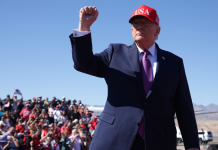
During his state visit to China in May, President Trump reportedly raised Chen’s case to Chinese leader Xi. Yet Xi remains unyielding.
Quiet diplomacy is insufficient.
As long as China continues this practice, American scholars — especially those of Chinese descent — should exercise extreme caution when considering travel to China.
The United States should recognize the systematic abduction of American citizens as a deliberate tactic of Chinese statecraft that warrants a decisive response. Washington must adopt a more assertive strategy: linking high-level summits and economic negotiations to tangible progress on behalf of detained Americans, implementing targeted sanctions against officials involved in hostage diplomacy, and publicly naming every case of wrongful detention.
This approach is essential to safeguard our citizens’ safety and our national security.