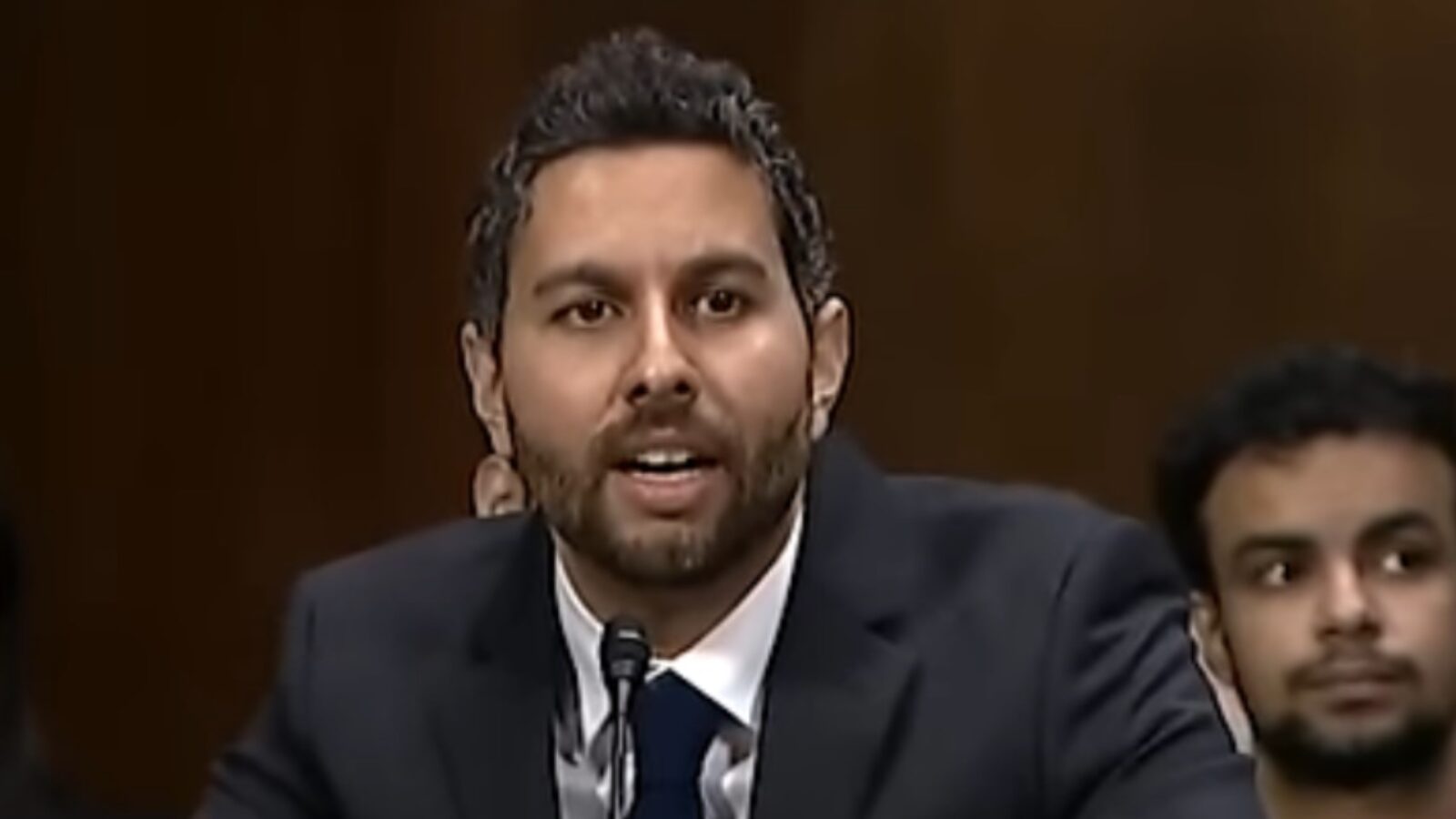

The Supreme Court has delivered a narrow 5-4 ruling, denying the Trump Administration’s urgent plea to overturn Judge Amir Ali’s temporary restraining order (TRO), which has forced the administration to disburse $2 billion in foreign contracts.
Yet, the saga continues. The judge, appointed by President Biden, harshly criticized Department of Justice lawyers regarding USAID funds, mandating the Trump Administration to comply with the payment deadline by 11:59 pm last Wednesday.
Following this, the administration swiftly filed an emergency appeal to the Supreme Court seeking intervention. Initially, the high court paused the order but then refused to annul Judge Ali’s decision.
Conservative stalwarts Justices Samuel Alito, Clarence Thomas, Neil Gorsuch, and Brett Kavanaugh stood in dissent.
“Does a single district-court judge who likely lacks jurisdiction have the unchecked power to compel the Government of the United States to pay out (and probably lose forever) 2 billion taxpayer dollars? The answer to that question should be an emphatic “No,” but a majority of this Court apparently thinks otherwise. I am stunned,”
— Justice Samuel Alito
Alito expressed his astonishment at the judge’s directive to pay such a hefty sum, critiquing the treatment of the TRO as if it were a preliminary injunction, which typically is not subject to appeal.
“To start, it is clear that the District Court’s enforcement order should be construed as an appealable preliminary injunction, not a mere TRO. A TRO, as its name suggests, is temporary,” Alito added.
The Justice further argued that given the TRO’s functioning as a mandatory injunction, the Appeals Court possessed the jurisdiction to entertain the government’s appeal. He affirmed the Supreme Court’s authority to scrutinize and overturn the district court’s ruling.
In simpler terms, Alito and his fellow conservative justices were poised to reassess the order.
Ed Whelan, a previous clerk for Justice Scalia, noted the suspicious nature of Judge Ali classifying the order to enforce a TRO, which might have been a tactical move given that TROs are generally immune to appeals.
Very fishy that district judge Amir Ali labeled his order an order to enforce a temporary restraining order. Seems clearly designed to take advantage of fact that TROs are generally not appealable. 4/
— Ed Whelan (@EdWhelanEPPC)
March 5, 2025
Whelan added that upon remand, Judge Ali must ensure clarity regarding the government’s obligations for TRO compliance, with special attention to feasible timelines. He also hinted at potential DOJ efforts to stay the order.
I don’t think that this is the end of this matter. On remand, Judge Ali will need to comply with directive to “clarify what obligations the Government must fulfill to ensure compliance with the temporary restraining order, with due regard for the feasibility of any compliance…
— Ed Whelan (@EdWhelanEPPC)
March 5, 2025
The contention over this substantial foreign contract funding remains unresolved. Judge Ali has enacted a minute order following the Supreme Court’s rejection of the appeal to void his directive.
BREAKING: Judge Ali enters minute order following Supreme Court’s denial of Trump Administration’s Application to stay/vacate. pic.twitter.com/J9HKDoJsK4
— Margot Cleveland (@ProfMJCleveland)
March 5, 2025
Constitutional expert Jonathan Turley commented on the Supreme Court’s decision, emphasizing the controversy in revisiting a typically non-reviewable TRO. Turley implied that with four justices ready to grant a review, the upcoming March 6th hearing on the preliminary injunction could become pivotal.
There is more than meets the eye in this 5-4, unsigned opinion. After the March 6 hearing on the preliminary injunction, the case can be appealed to these awaiting justices. Only four are needed to grant review, so you do the math.
— Jonathan Turley (@JonathanTurley)
March 5, 2025