
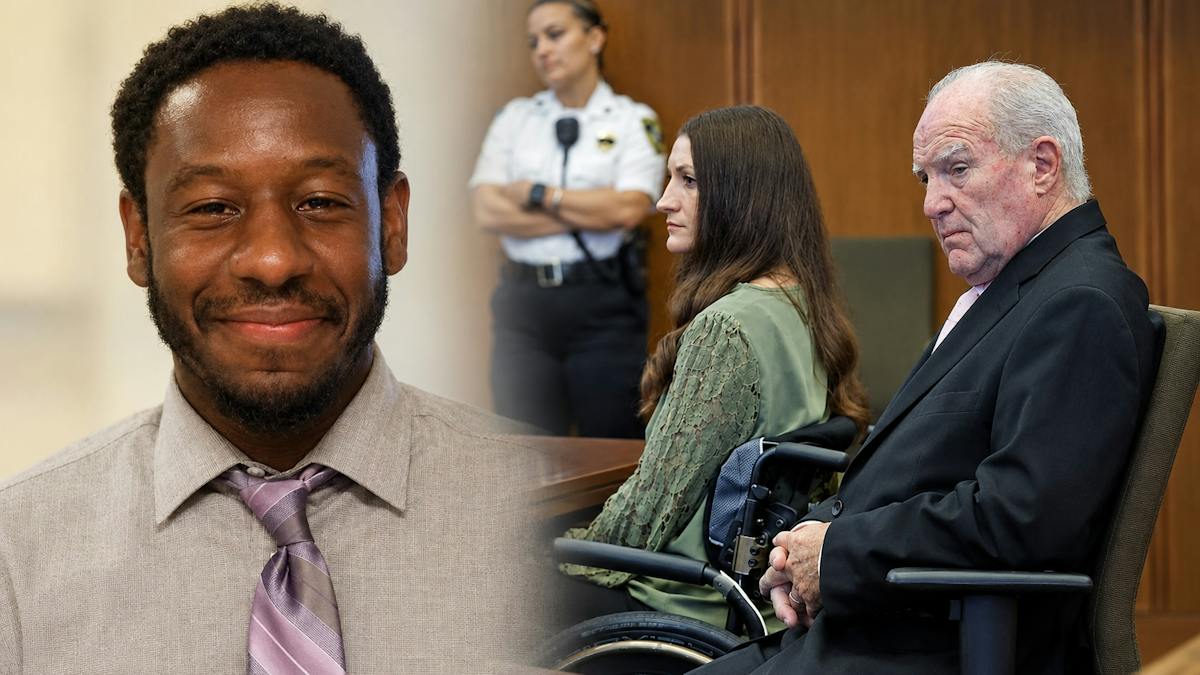
The attorney representing the lone holdout juror in the Lindsay Clancy mistrial announced he plans to file a bar complaint against Clancy’s defense attorney, Kevin Reddington, accusing him of unconstitutional actions that threaten the American jury system.
Edward Paltzik, who represents Michael Péguy Desronvil, blasted Reddington for what he called setting a “nightmarish precedent” by attacking a juror who simply refused to cave to pressure from other panelists. The dispute raises fundamental questions about the sanctity of jury deliberations and whether defense attorneys can publicly challenge jurors whose verdicts they disagree with—issues that strike at the heart of the constitutional right to trial by jury.
“If the new normal is that jurors are going to face brutal reprisals for disagreeing with a defense attorney, you can kiss the Sixth Amendment goodbye.”
Desronvil was revealed as the holdout who refused to find Clancy not guilty by reason of insanity. Reddington has publicly accused Desronvil of being an “obstructionist juror” who refused to follow the law — a characterization Desronvil rejects entirely. The public nature of Reddington’s criticism has drawn attention from legal experts nationwide, many of whom express concern about the potential impact on future jury service.
Paltzik called Reddington’s claim that Desronvil broke the law “the most outrageous thing I have ever heard in almost 20 years of practicing law.” The statement underscores the extraordinary nature of the post-trial conflict, which has escalated beyond typical legal disputes.
“You can’t investigate a juror because the juror followed the law and the evidence and came to a different conclusion than the one that you wanted, Kevin Reddington,” Paltzik said. His position reflects longstanding legal protections designed to shield jurors from external pressure and allow them to deliberate freely without fear of retaliation.
Reddington has filed a motion asking Judge William Sullivan to grant him access to Desronvil’s phone records, courthouse surveillance footage, juror questionnaire, probation records, and any entries in the state’s domestic violence registry. The sweeping nature of the request—seeking deeply personal information about a private citizen who served on a jury—has raised eyebrows throughout the legal community.
Paltzik, a defense lawyer with nearly 20 years of experience, said he would never publicly criticize a juror or file a post-trial motion seeking to investigate one. His unwillingness to employ similar tactics, despite working in the same field as Reddington, highlights the controversial nature of the defense attorney’s approach.
“Kevin Reddington was doing his job but the problem is it’s off the rails now,” Paltzik said. “Kevin Reddington wanted this for his legacy. He wanted so desperately to win this trial.” The suggestion that personal motivations may have driven the post-trial actions adds another layer to the mounting criticism.
Legal analyst and law professor Jonathan Turley has also sharply criticized Reddington’s efforts. Turley called the request for phone records, surveillance footage, and criminal history “highly unusual,” and argued that the public criticism followed by an investigation could send a “chilling” message to future jurors in high-profile cases. Turley’s concerns reflect broader anxieties within the legal profession about maintaining the integrity and independence of jury service, particularly in cases that attract significant media attention.
Sources familiar with the situation first told TMZ on September 24 that Desronvil and his legal team planned to file a complaint arguing Reddington should be “suspended, disciplined, or even disbarred” for targeting the juror following the September 4 mistrial. Paltzik confirmed the planned complaint in comments on Monday. The formal bar complaint, when filed, will be reviewed by the state’s attorney disciplinary board, which has the authority to impose sanctions ranging from private reprimands to permanent disbarment depending on the severity of any ethical violations found.
Clancy admitted to taking the lives of her three children — Cora, 5, Dawson, 3, and Callan, 8 months — in January 2023 by strangling them with exercise bands after she sent her husband, Patrick, out to run two errands. She pleaded not guilty and claimed she was suffering from postpartum psychosis and was not criminally responsible. The case has drawn national attention not only for its tragic circumstances but also for the complex legal and medical questions surrounding postpartum mental health conditions and criminal culpability.
Desronvil has said he has no doubts about Clancy’s guilt based on the evidence and simply refused to cave to pressure from other jurors who wanted an insanity verdict. His steadfast position, regardless of one’s view of the merits, represents exactly the kind of independent judgment the jury system was designed to protect.