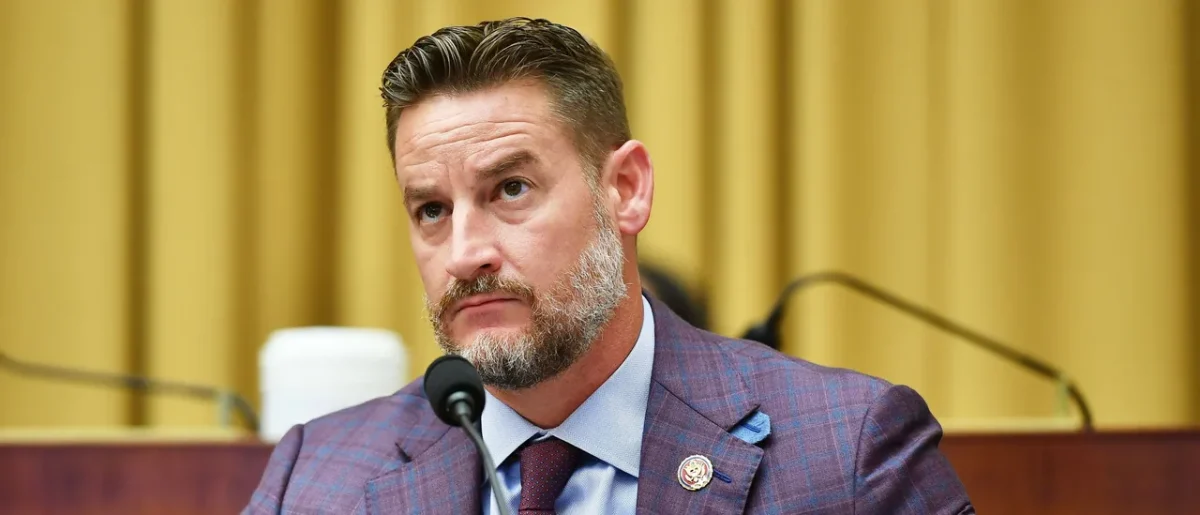
Florida Rep. Greg Steube just introduced legislation to stop the federal government from using Flock Safety surveillance cameras without a warrant — and to force local police departments receiving DOJ grants to adopt the same privacy protections.
The bill is called the Facilitating Liberty and Accountability for Flock Observations Act — the FLAFO Act.
It targets automated license plate readers (ALPRs) like Flock Safety cameras, which critics say have morphed from narrow law enforcement tools into a nationwide mass surveillance network tracking everyday Americans.
The emergence of this legislation comes at a moment when concerns about digital surveillance and privacy rights have moved from the fringes of political debate into the mainstream of conservative policy priorities. What was once accepted as routine police technology is now being reexamined through a constitutional lens, with lawmakers from both parties beginning to question whether modern surveillance capabilities have outpaced the legal frameworks designed to constrain government power.
“The Fourth Amendment is not optional. Americans should not be tracked everywhere they drive without a warrant.”
Steube told the Daily Caller the surveillance network is “too expansive” and has been abused across the country.
“The government has no business tracking law-abiding Americans,” Steube said.
His comments reflect a growing recognition that the cumulative effect of these cameras — deployed in thousands of locations across the country — creates a fundamentally different privacy threat than earlier generations of law enforcement technology. The concern is not just about individual cameras, but about the comprehensive picture they create when networked together and analyzed by sophisticated software.
THIS is the problem with Flock cameras!!
A Sarasota police officer was just arrested and fired following an investigation into the alleged misuse of Flock and other law enforcement databases.
When you give the government the ability to track people, someone WILL abuse it.
Our…
— Congressman Greg Steube (@RepGregSteube) August 20, 2026
ALPRs started as simple tools for cops to scan plates against local databases. Now systems like Flock Safety use artificial intelligence and machine learning to analyze vehicle data in real time, enabling detailed tracking across entire regions.
This technological evolution represents a quantum leap in surveillance capability. Where older systems required manual review and could only check plates against limited lists of stolen vehicles or outstanding warrants, modern ALPR networks can automatically log the location and movement of every vehicle they capture, building massive databases that retain this information for extended periods. The shift from reactive tool to proactive mass surveillance system has occurred largely without public debate or updated legal standards.
The technology has produced false arrests and abuse. A Sarasota police officer was recently arrested and fired for allegedly misusing Flock and other law enforcement databases — the exact scenario Steube warned about.
In another case, a Florida woman named Lindsey Isaacs was wrongfully jailed based on faulty Flock Safety data. The cameras falsely linked her vehicle to a deadly car crash.
Isaacs spent over two weeks in jail — three days in solitary confinement — facing the possibility of life in prison for a crash she had nothing to do with.
Her case highlights the human cost of over-reliance on automated systems. When law enforcement treats algorithmic outputs as infallible evidence rather than leads requiring verification, innocent people can find themselves caught in nightmarish scenarios with devastating personal consequences. The fact that such errors can lead to extended incarceration and serious charges demonstrates the stakes involved in the surveillance technology debate.
“I was terrified. I was facing the possibility of spending the rest of my life in prison for a crash I knew that I had not been involved in. At my lowest point, I didn’t want to be alive.”
She testified before the Senate on Wednesday, describing the nightmare in emotional detail.
Her testimony brings a critical human dimension to what might otherwise remain an abstract policy discussion about technology and constitutional rights. Personal stories of surveillance system failures are increasingly shaping the legislative response to these technologies.
The FLAFO Act would make DOJ grants to local police contingent on agencies adopting similar warrant requirements for ALPR use — a federal leverage play to enforce Fourth Amendment protections nationwide.
This approach mirrors previous successful federal efforts to shape local law enforcement practices through funding conditions. By tying compliance to federal grant money — funding that many police departments rely on for equipment, training, and staffing — the legislation could have broad practical impact even in jurisdictions whose local officials might otherwise resist warrant requirements for surveillance technology.
Steube’s bill is the latest conservative pushback against Flock Safety, a company now facing Senate scrutiny over its surveillance reach and faulty tech.
The bipartisan nature of concerns about this technology suggests that privacy protections and limits on government surveillance may represent one of the few areas where meaningful consensus legislation remains possible in an otherwise polarized political environment.