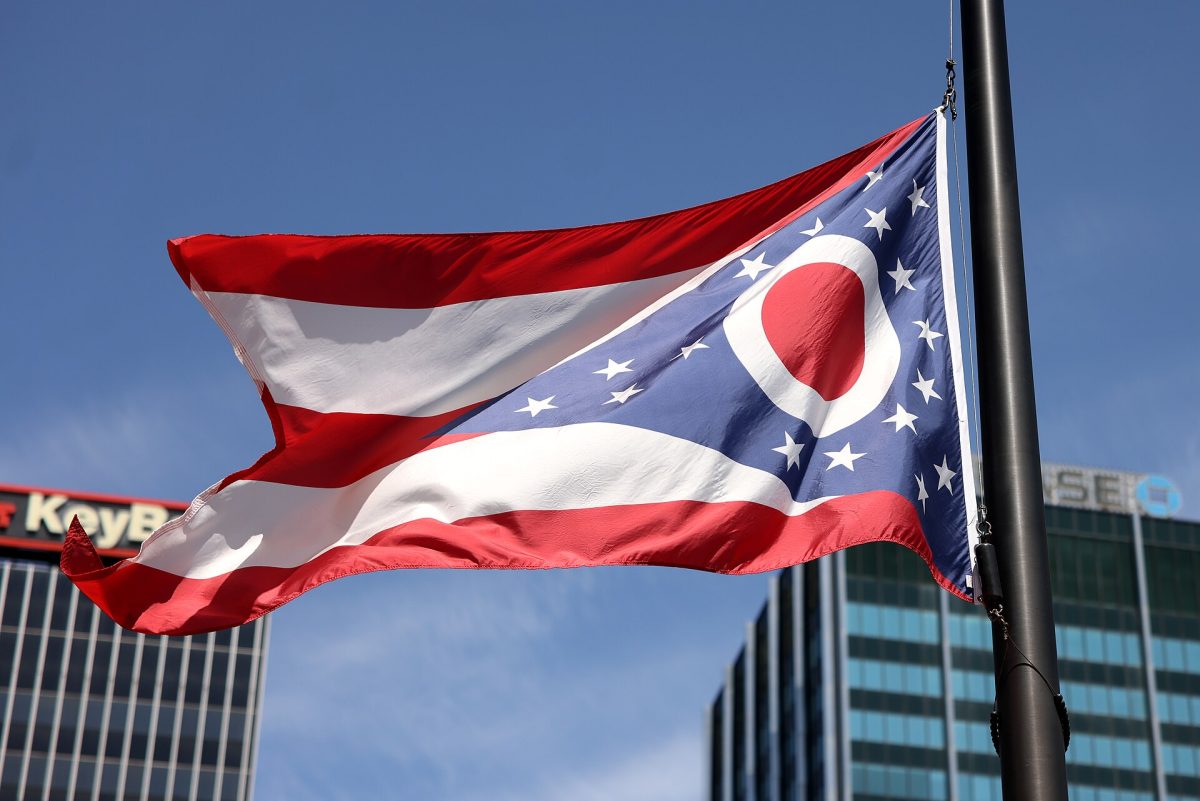
Two conservative election integrity organizations are demanding a federal appeals court overturn a Clinton-appointed judge’s blockade of Ohio’s proof-of-citizenship voting law.
The Honest Elections Project and Center for Election Confidence filed an amicus brief Wednesday urging the 6th Circuit Court of Appeals to lift Senior District Judge Solomon Oliver Jr.’s preliminary injunction halting Ohio’s requirement that voters prove citizenship when registering.
The law in question, House Bill 54, passed the Republican-controlled Ohio legislature earlier this year as part of a broader effort by GOP lawmakers to tighten voting requirements they say will prevent ineligible voters from casting ballots. Democrats and voting rights advocates have characterized such measures as unnecessary barriers that disproportionately affect eligible voters who lack ready access to citizenship documentation.
Oliver’s August ruling claimed the state law is “preempted by the National Voter Registration Act and increases the likelihood that U.S. citizens fail to register for elections.” The injunction suspends the documentation requirement ahead of the Oct. 5 registration deadline for the midterm election.
The National Voter Registration Act, commonly known as the “Motor Voter” law, was enacted in 1993 to make voter registration more accessible by allowing citizens to register when obtaining driver’s licenses and limiting the documentation states can require. The tension between this federal statute and state-level citizenship verification requirements has generated litigation in multiple jurisdictions over the past decade.
“Ohio is right to require proof of citizenship when registering to vote. This case is yet another baseless attempt by left-wing activist litigants to create chaos in elections and to fight any reasonable steps states make to ensure that only citizens are registered to vote.”
That’s Honest Elections Project Executive Director Jason Snead, who gave The Federalist exclusive details of the brief.
The groups argue Oliver lacked jurisdiction to issue the injunction because the left-wing plaintiffs who filed the lawsuit have since obtained Ohio driver’s licenses and registered to vote. Those individuals “now have Bureau of Motor Vehicle records reflecting citizenship” and “can now vote or update their registrations without ever again being subject to H.B. 54, as the district court acknowledged.”
In other words — their claims are now moot.
The legal doctrine of mootness holds that federal courts cannot hear cases unless an actual controversy exists between the parties. When plaintiffs obtain the relief they seek through other means, defendants frequently argue the case should be dismissed. However, courts have recognized exceptions to mootness, including for issues “capable of repetition yet evading review” — a standard that could potentially apply to election-related disputes given their time-sensitive nature.
The brief also contends Ohio is likely to succeed on the merits because the U.S. Constitution’s qualifications, electors, and elections clauses “give States exclusive authority to set and enforce voter qualifications in federal elections.” Ohio’s law complies with that authority, and “Congress lacks power to preempt it,” the organizations argue.
This constitutional argument represents a core element of the ongoing debate over federalism and elections. States have historically exercised significant control over their election procedures, but that authority has been constrained by federal legislation like the Voting Rights Act and the National Voter Registration Act. The Supreme Court has addressed these competing claims of authority in several cases, though the specific question of citizenship documentation requirements remains an evolving area of election law.
“CEC is honored to support Ohio’s common-sense protection for the integrity of its elections,” Center for Election Confidence Executive Director Lisa Dixon told The Federalist. “Like millions of other Ohioans, the voters challenging the law offered proof of citizenship and registered to vote successfully, so this lawsuit should end now.”
At least 12 states have enacted laws requiring proof-of-citizenship in order to vote in elections, according to Ballotpedia.
These state-level requirements vary in their specific documentation standards and enforcement mechanisms. Some accept a range of documents including birth certificates, passports, and naturalization papers, while others have more restrictive lists. The practical impact of such laws depends largely on what percentage of eligible voters possess the required documents and how difficult it is to obtain them.
The case represents the latest battle between states trying to secure elections and left-wing groups fighting those efforts in court. Ohio’s law mirrors similar measures conservatives have pushed in Arizona, Georgia, and other battleground states where election integrity remains a flashpoint heading into the midterms.
Arizona’s proof-of-citizenship requirement, enacted through Proposition 200 in 2004, has faced its own lengthy legal challenges that reached the U.S. Supreme Court. The ongoing litigation in multiple states suggests this fundamental question about the balance between ballot access and election security will continue generating courtroom conflicts regardless of how the 6th Circuit rules in Ohio’s case.
The 6th Circuit has not yet ruled on the state’s request to lift the injunction.