
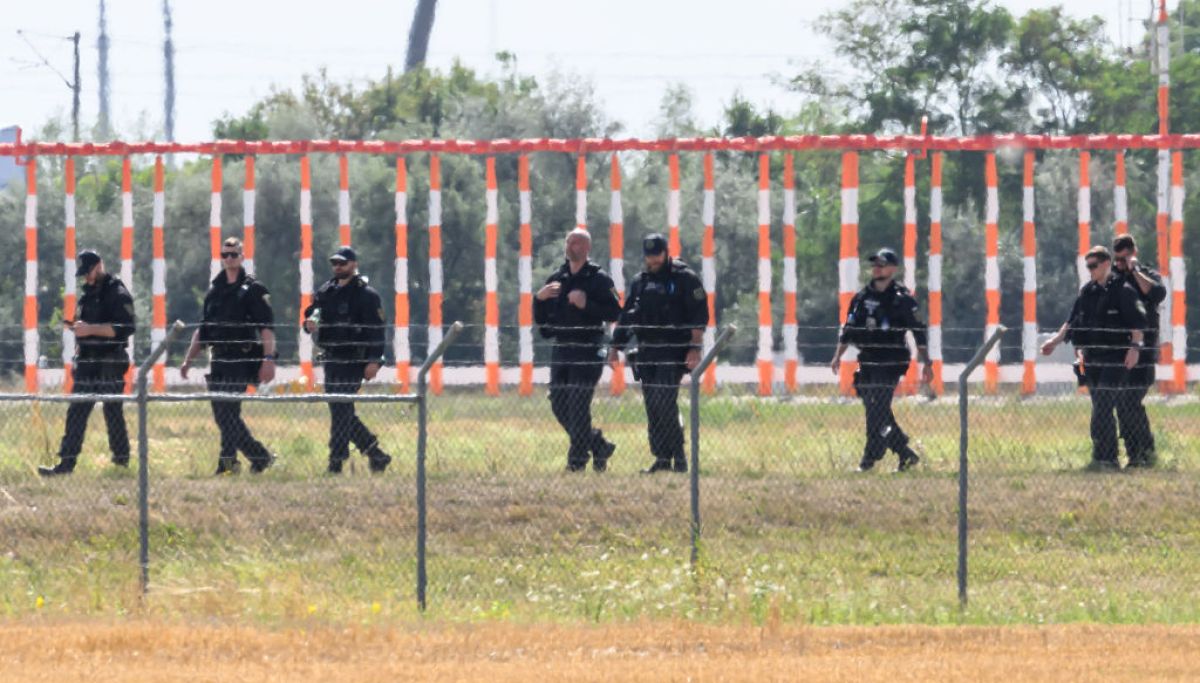
A drone loaded with explosives was discovered at Germany’s Leipzig/Halle Airport last month, forcing closures and grounding flights while bomb squads neutralized the device. This week, Berlin pinned the attack directly on Russia — and European leaders are scrambling to prepare for what comes next.
“It is clear that it has all the hallmarks of state-sponsored terrorism,” EU foreign policy chief Kaja Kallas said at a Tuesday press conference.
The question security officials are now asking: What happens when Russia’s shadow war crosses the line into open conflict?
Germany’s Interior Minister Alexander Dobrindt called the Leipzig incident a “new quality of danger” compared to previous Russian hybrid attacks. Unlike disinformation campaigns, cyberwarfare, or drone surveillance — all well-documented threats from Moscow — placing explosives inside a major European airport represents an escalation that defense planners can’t ignore.
“That a drone armed with explosives is at an airport is a new threat scenario.”
Jan Techau, a senior fellow with the Transatlantic Defense and Security program at the Center for European Policy Analysis, told the Washington Examiner that Europe is now in an “defend, defend, defend” posture against hybrid threats while racing to prepare for potential hot conflict.
Russia’s invasion of Ukraine was supposed to end in days. More than four years later, Moscow remains bogged down in a grinding war with no clear victory. Yet despite that costly failure, European leaders remain intensely focused on the threat Putin’s regime poses to NATO territory — and recent events suggest their paranoia isn’t unfounded.
The continent’s worst-case scenario centers on the Suwalki Gap — a 40-mile stretch of land between Lithuania and Poland bordered by Belarus and Russia. If Russian forces blitzed that corridor, they could effectively cut off the Baltic states from the rest of NATO.
“A crisis in the Baltics would immediately test European resolve, particularly if Russia combines massive force at the front with sabotage, hacking, and information operations in Europe’s rear,” a report from Harvard Kennedy School’s Belfer Center for Science and International Affairs warned in February.
Such a scenario would force NATO into a brutal decision: commit massive military resources to reclaim small member states like Lithuania, Estonia, and Latvia — or risk the alliance fracturing under pressure. Moscow’s goal wouldn’t be defeating NATO militarily, but dividing and discrediting it.
“The method to grab a little piece of land and then build the fences very, very quickly so that NATO would have to use an excessive amount of military force to gain it back — and then turn that into a nuclear issue by saying, ‘This is now our territory. If you attack back, we could threaten you with nuclear arms.’ This is kind of the scenario that military planners in Europe and in the U.S. have been thinking about for a long time,” Techau said.
European leaders are especially worried they can’t count on the United States to back them up. Days before Germany blamed Russia for the airport incident, President Trump told reporters he was confident Moscow would never attack a NATO country.
“I’ve had good talks with Putin. He’s not going to be attacking a NATO territory.”
Trump has repeatedly threatened to leave NATO entirely. The U.S. military is currently focused on operations against Iran — a conflict multiple NATO members actively opposed. The combination has frayed transatlantic trust at exactly the moment Europe faces its most serious Russian threat in decades.
“The Europeans are not quite sure whether the Americans would be a reliable partner,” Techau added.
Russia’s hybrid warfare — disinformation, cyberattacks, sabotage, drone incursions — remains the most likely long-term threat. But the Leipzig airport incident crossed a threshold. If Moscow’s gray-zone campaign escalates further, hot conflict between Russia and NATO may no longer seem far-fetched.
NATO was built for this scenario. The question is whether the alliance will hold together when Putin tests it.