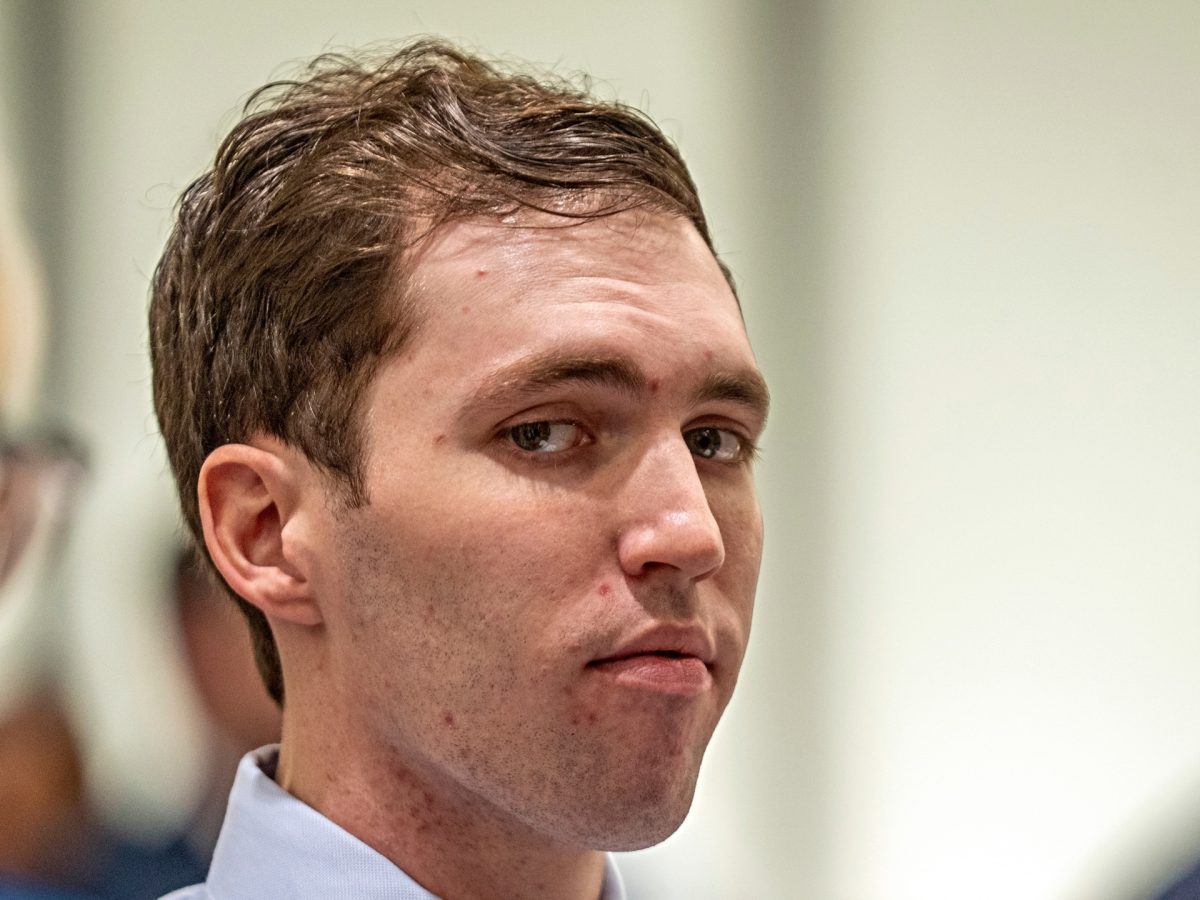
A Utah judge ruled Tuesday that Tyler Robinson, the 23-year-old man charged with the targeted attack on Charlie Kirk last September, will stand trial. If convicted, Robinson could face the death penalty.
Utah District Judge Tony Graf sided with prosecutors who said they had “a mountain of evidence” that Robinson fatally wounded the conservative activist as he addressed thousands at Utah Valley University on September 10, 2025.
The preliminary hearing, which lasted several hours, featured testimony from law enforcement officials and forensic experts who walked the court through the evidence gathered in the months following the incident. Judge Graf’s decision to move forward with the prosecution came after careful consideration of both the defense’s motions to dismiss and the state’s presentation of its case against Robinson.
Robinson denies aggravated murder — a capital offense in Utah — and six other charges in connection with the campus attack.
Prosecutors said Robinson attacked Kirk from a rooftop more than 400 feet away, knowing he could have missed and harmed others at the open-air event.
The defendant turned himself in a day after the incident. His lawyers have not offered alternative theories for Kirk’s death, according to AP reporting.
Defense attorneys tried to block a trial or remove the death penalty as a possible sentence, arguing prosecutors failed to show Kirk’s attack placed others around him at risk of death — an aggravating factor under state law that makes Robinson eligible for capital punishment.
Under Utah law, aggravated murder carries the possibility of capital punishment only when certain qualifying factors are present. The state contends that the circumstances of this attack — particularly the location and method used — created a danger to multiple people beyond the intended target. This legal distinction is critical, as without proving these aggravating circumstances, prosecutors would be unable to seek the death penalty even if Robinson is convicted of murder.
Judge Graf rejected those arguments and bound the case over for trial.
Kirk’s family called the ruling “an important step in our family’s pursuit of justice.”
“Every step in this process carries the weight of all that Charlie’s loss has taken from his family, especially his children who will grow up without their father,” they said in a statement.
The family has remained largely out of the public eye since Kirk’s death, issuing only occasional statements through their legal counsel. Their presence in the courtroom Tuesday marked one of the few times they have appeared publicly in connection with the proceedings.
Prosecutors allege Robinson targeted Kirk for his conservative activism. A bullet found in the rifle was engraved with “Hey Facist! CATCH!” — evidence the attack was motivated by how Robinson perceived Kirk’s politics, according to prosecutors.
The question of political motivation has become central to the prosecution’s case. Establishing motive, while not strictly required for a murder conviction, often plays a significant role in helping juries understand the defendant’s intent and state of mind. In capital cases like this one, demonstrating premeditation and deliberation is essential to securing a conviction on the most serious charges.
They also presented a text message Robinson allegedly wrote about Kirk: “I had enough of his hatred. Some hate can’t be negotiated out.”
Defense attorneys counter that prosecutors lacked strong enough evidence to prove a political motivation.
The defense team’s strategy appears focused on challenging the strength of the evidence linking their client to a politically motivated attack, rather than disputing the basic facts of what occurred. Legal experts following the case have noted this approach leaves open questions about what defense will ultimately be presented at trial.
Before his death, Charlie Kirk and Turning Point USA together harnessed the conservative youth vote to help underpin President Donald Trump’s efforts to win a second term and triumphant return to the White House.
Kirk had become one of the most recognizable faces in conservative youth activism, regularly drawing large crowds at college campuses across the country. His organization, Turning Point USA, had grown substantially in influence over the years, making him a prominent — and sometimes polarizing — figure in American political discourse.
Trump has since publicly honored Kirk and his efforts at events including the State of the Union, where he called Kirk a “martyr” and denounced political violence.
Robinson is next due in court on October 23, when a trial date is expected to be set.
The trial, when it begins, is expected to draw significant media attention and could last several weeks given the complexity of the evidence and the severity of the charges. Capital cases typically involve lengthy jury selection processes and extensive presentations from both prosecution and defense.
The charges remain allegations. The case has not been proven in court.