
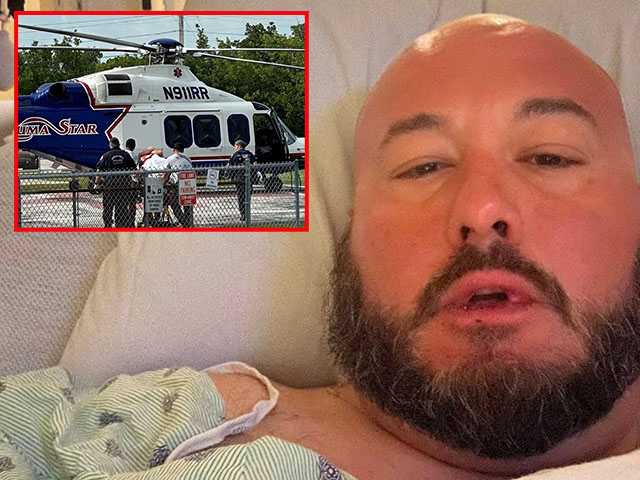
A Florida man attacked by a shark in shallow water off Key West credits several strangers—who turned out to be nurses and medical personnel—with saving his life.
David Daniel of Silver Springs was walking in shallow water after fishing on August 23 when he spotted a shark swimming along the coastline. The encounter, which took place in an area typically considered safe for wading, quickly escalated from a cautionary sighting to a life-threatening emergency. What happened next felt like a scene from a movie.
“I turned around and saw it swimming along the coastline of a sandbar. Then he turned and just beelined right for me like a movie.”
Daniel believes the shark was six or seven feet long. “We were looking eyeball to eyeball,” he recalled, as the creature attacked and took a chunk out of his foot. The sudden, direct nature of the attack left him little time to react or attempt an escape, a pattern that differs from many shark encounters where the animal investigates before retreating.
But the people nearby weren’t just bystanders—they were nurses and medics who knew exactly how to stop Daniel from bleeding out by applying a tourniquet. Their quick thinking and professional training proved to be the difference between life and death in those critical first minutes following the attack.
“By the grace of God, I was lucky enough the boat next to us docked up and was full of nurses and medics,” Daniel said. The coincidence of having trained medical professionals in immediate proximity during such a remote and sudden emergency is extraordinarily rare. He was later flown to a hospital in Miami-Dade County, where trauma specialists could provide the advanced care his injuries required.
According to the Key West Police Department, the shark’s jaws caused an arterial bleed—a life-threatening injury that requires immediate pressure to prevent fatal blood loss. Arterial bleeding is one of the most dangerous complications of shark attacks, as victims can lose consciousness within minutes and succumb to their injuries before emergency services arrive. The application of a tourniquet in the field is a critical intervention that has become standard training for first responders and military medics, but remains relatively uncommon knowledge among the general public.
Daniel has undergone two surgeries and is now recovering. He’s expected to be unable to walk for six to eight weeks and will need extensive physical therapy. The long recovery period reflects the severity of the tissue damage and the complex nature of reconstructive procedures required after such traumatic injuries. His ability to return to full mobility will depend heavily on his commitment to rehabilitation and the success of the surgical interventions.
“Dave, originally from Glenside, PA, has called Silver Springs, FL home for the past 10 years. He works hard as an exterminator and is the kind of person who supports himself and those around him,” a GoFundMe created to help with medical expenses reads. The fundraising effort highlights the broader challenge many working Americans face when medical emergencies strike unexpectedly.
Because Daniel does not have health insurance, the sudden emergency has created an overwhelming financial burden on top of the physical and emotional toll. The cost of emergency helicopter transport, trauma surgery, hospital stays, and months of physical therapy can easily exceed hundreds of thousands of dollars. Donations will help cover medical expenses, physical therapy, living expenses, and other costs while he is unable to work. For a self-employed worker like Daniel, the inability to perform his job for nearly two months compounds an already dire financial situation.
Daniel said the nurses who rushed to his aid “were like angels coming out of nowhere.” His gratitude reflects not only the life-saving intervention itself, but the remarkable timing and presence of individuals with exactly the right skills at exactly the right moment.
Florida man attacked by 7-foot shark said he'd '100% be dead' without help of nearby boaters https://t.co/esxQyu9iQj pic.twitter.com/SaHUy9oEEF
— New York Post (@nypost) August 30, 2026