U.S. forces struck two Iranian rocket launchers Sunday after observing Islamic Revolutionary Guard Corps troops preparing to fire rockets carrying sea mines into the Strait of Hormuz — the first American strike inside Iran since late July.
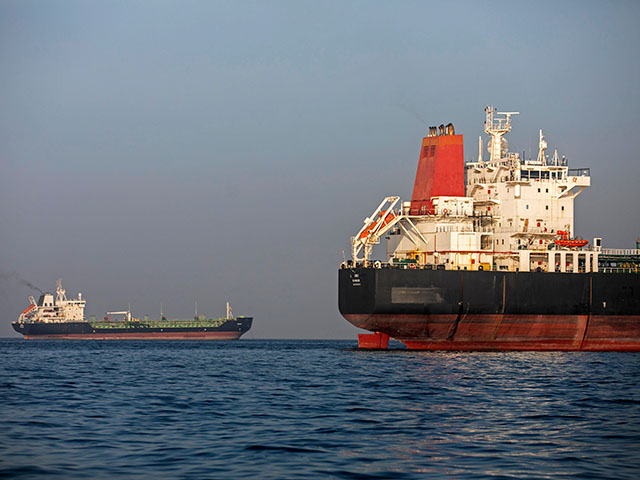
The operation hit IRGC launchers on Larak Island, an Iranian-controlled position near the strategic waterway that handles a fifth of the world’s oil and liquefied natural gas shipments.
“Earlier today U.S. forces struck two Iranian launchers on Larak Island. Islamic Revolutionary Guard Corps forces were observed preparing to launch rockets with sea mines into Strait of Hormuz.”
American forces remain on high alert, monitoring every movement in the strait and standing ready to protect the free flow of commerce through the waterway.
The IRGC acknowledged the attack within hours, claiming Iranian forces and civilians were killed or wounded. Iran’s Tasnim news agency — affiliated with the Guards — cited preliminary reports of two people killed and two others wounded.
“The terrorist enemy’s aggression on Larak Island will be met with punishment for the aggressor,” the IRGC said in a statement carried by Iran’s official IRNA news agency.
IRGC spokesman Brig. Gen. Hossein Mohebi escalated the threat, calling the strike a “strategic and fatal error” by the Trump administration that would carry “severe repercussions.”
“The adversary will face the ramifications of this faulty calculus across both the economic and military arenas,” Mohebi said.
Iranian lawmaker Ebrahim Azizi issued his own warning in the hours following the attack.
“Undoubtedly, no crime, at any level, goes unanswered; a response that is devastating, more painful, and instructive, which will complete the chain of your failures. Wait in fear and terror!”
A spokesman for Iran’s armed forces separately declared that Tehran’s response to the attack would be “definitive.”
Sunday’s strike came days after President Donald Trump warned Iran against attempting to place new mines in Hormuz after U.S. forces cleared Iranian mines from the strait’s international shipping lanes.
Writing on Truth Social last week, Trump announced that the U.S. Navy had removed or detonated the mines in international waters before warning Tehran: “Iran has been notified that any ship or boat placing new mines will be immediately and systematically destroyed.”
The president said U.S. forces were monitoring “every square inch” of the strait and declared a “Zero Tolerance policy on mine placement in full force and effect.”
U.S. Central Command announced Thursday that American forces had cleared Iranian sea mines from the internationally recognized Traffic Separation Scheme through Hormuz — a watershed moment in the months-long effort to restore freedom of navigation through the waterway.
CENTCOM said the shipping lanes were “free of Iranian sea mines” following an operation involving Navy divers, SEALs and U.S. airpower.
“International shipping lanes are open and momentum is building,” CENTCOM commander Adm. Brad Cooper said.
The U.S. has meanwhile continued enforcing its naval blockade of Iran while allowing commercial traffic from other Gulf states to move through the waterway.
In an update issued after reports of Sunday’s strike emerged, CENTCOM said its forces had now redirected 83 commercial vessels, disabled three and boarded two to ensure compliance with the blockade.
The update came two days after Trump declared the Strait of Hormuz open, saying Friday of the strategic waterway: “That sucker is open.”
Iran, however, has continued to insist the strait remains closed and that vessels cannot pass without Tehran’s authorization.
Iranian Deputy Foreign Minister Kazem Gharibabadi said over the weekend that Tehran considers itself to remain at war and would not reopen Hormuz until the United States fulfills what Iran considers its commitments under an earlier memorandum of understanding.
“The Strait of Hormuz is closed,” Gharibabadi said, while also warning that Iran could act militarily before coming under attack.
“Why should we always wait for America to attack?” he asked. “We can take preemptive action.”
The Trump administration paused its last sustained campaign of strikes inside Iran in late July after two weeks of U.S. military operations, shifting much of its pressure campaign toward the naval blockade and an escalating effort to economically isolate Tehran.
Sunday’s attack marked the first known U.S. strike inside Iran since that pause — and came just days after Trump warned that any renewed attempt to mine the Strait of Hormuz would be met with immediate U.S. military action.
The IRGC gave no indication Sunday of when or how it intended to carry out its threatened response.
Islamic Revolution Guards Corps (IRGC): The terrorist enemy's aggression on Larak Island will be met with punishment for the aggressor
The American-Zionist adversary, once more acting out of frustration over its domestic challenges and waning influence in the region, aims to… pic.twitter.com/rW5O8e7FFa
— IRNA News Agency ☫ (@IrnaEnglish) August 30, 2026
Brigadier General Hossein Mohebi, the spokesperson for the IRGC: This action, the terrorist enemy's incursion on Larak Island, constitutes a strategic and fatal error by the Trump administration amid its ongoing economic warfare.
It is an error that will tip the balance against… pic.twitter.com/DRHcq4s11U
— IRNA News Agency ☫ (@IrnaEnglish) August 30, 2026