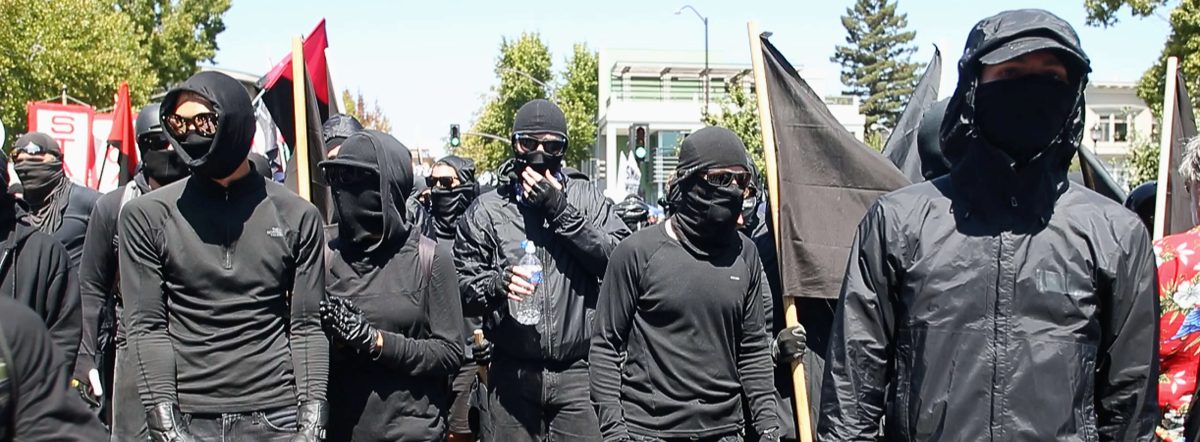
The U.S. State Department has sanctioned multiple transnational far-left militant networks, including an Italy-based group that supplies the digital infrastructure for Antifa cells operating inside the United States. The move represents one of the most significant federal actions taken against organized far-left networks in recent years, marking a notable expansion of how the U.S. government applies counterterrorism tools to address domestic and international extremist threats.
The sanctions target the Autistici/Inventati Collective, described in a State Department press statement as a digital services operation specifically built to provide far-left militant groups with the means to organize, recruit, communicate, and carry out violent actions — all while remaining beyond the reach of the law. The collective, which has operated for more than two decades, provides encrypted email, messaging, and hosting services that have been used by activist groups across Europe and North America. U.S. officials now assert that these privacy-focused tools have been weaponized to shield illegal coordination and planning.
Far-left terrorism poses a profound threat to the United States and the broader West. Today, the United States sanctioned several transnational far-left terrorist networks, including Autistici/Inventati – a major far-left tech collective whose services are used by the most active…
— Secretary Marco Rubio (@SecRubio) August 26, 2026
Secretary of State Marco Rubio announced the action as part of a broader crackdown on far-left extremist networks operating across borders. Rubio, who has made countering what he characterizes as rising left-wing political violence a priority since taking office, framed the sanctions as necessary to protect national security and maintain public order in the face of what his office describes as an evolving and increasingly coordinated threat.
The sanctions also hit Palestine Action, a United Kingdom-based organization involved in pro-Palestinian direct actions, and Masar Badil, a transnational network with branches in Europe and Canada that the State Department says operates as a front for the Popular Front for the Liberation of Palestine. Palestine Action has been involved in protests and property damage targeting facilities tied to defense contractors, while Masar Badil describes itself as a grassroots Palestinian organization focused on advocacy and mobilization. The inclusion of these groups alongside tech infrastructure providers signals a wide-ranging approach to disrupting what the administration views as interconnected militant ecosystems.
According to the State Department, the targeted groups allegedly support violent political extremism or act as fronts for designated militant organizations. The designations rely on executive authority granted under several federal statutes that allow the government to impose economic penalties on entities determined to threaten U.S. national security, foreign policy, or economic interests.
State Department spokesperson Thomas Pigott issued a statement Wednesday:
“Violent far-left terrorist networks, such those targeted today, pose a threat to the United States and our foreign partners. There will be no refuge for violent extremists who wage war on our civilization and plot to undermine law and order, destroy critical infrastructure, assault political opponents, or conceal their crimes from authorities. We will use all the tools and authorities at our disposal to fight terrorism and protect our way of life.”
Under the new sanctions, all property and interests of the designated groups that fall under U.S. jurisdiction are now blocked. All U.S. persons are generally prohibited from engaging in any transactions with the sanctioned entities. This means that any individual or organization within the United States that provides material support, financial assistance, or services to the designated groups could face civil or criminal penalties. The practical effect is intended to isolate the targeted networks from the global financial system and limit their operational capacity.
Last month, Rubio met with delegates from dozens of countries to address what he described as a “resurgence of transnational far-left terrorism” — driven by a globally networked group of far-left extremists turning to violence to advance their political agenda. That diplomatic effort was aimed at building international consensus around shared definitions of extremism and coordinating enforcement actions across allied nations. The sanctions announced this week appear to be a direct follow-up to those discussions, reflecting a coordinated policy shift within the administration.
The Treasury Department joined the State Department in coordinating the sanctions action. This interagency collaboration underscores the seriousness with which the administration is treating the issue and ensures that financial enforcement mechanisms are fully deployed alongside diplomatic measures.