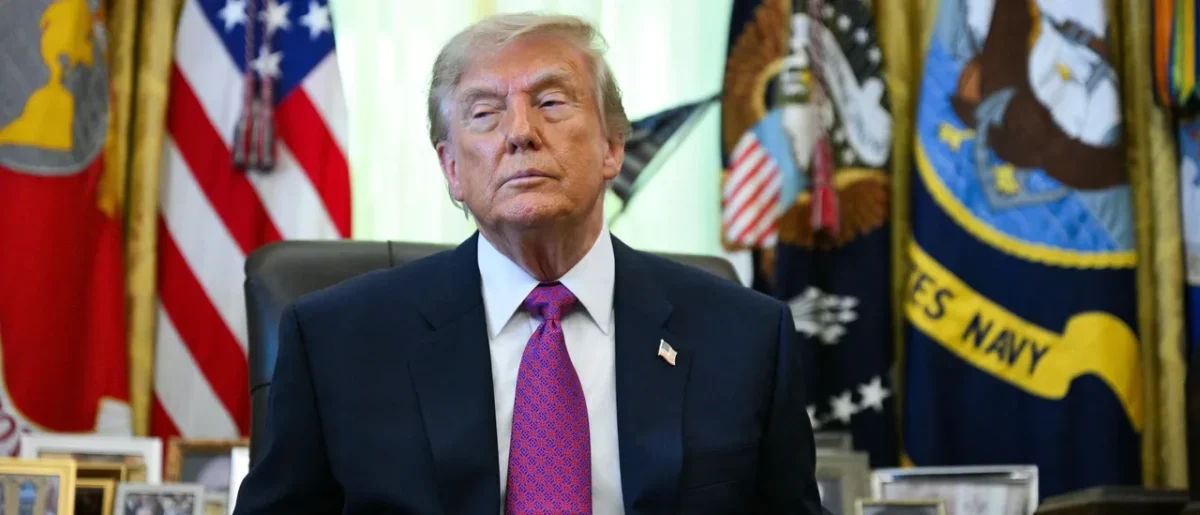
President Donald Trump told the Daily Caller that Republican Texas Sen. Ted Cruz is “very talented” and could mount a 2028 presidential bid — adding fuel to the wide-open race to succeed him.
The public endorsement marks a striking evolution in the relationship between Trump and Cruz, who were bitter rivals during the contentious 2016 Republican primary. Their past feud included personal attacks on each other’s families and Cruz’s dramatic refusal to endorse Trump at the 2016 Republican National Convention. The fact that Trump now calls Cruz “a very good friend of mine” and praises his political talents underscores how thoroughly the Texas senator has aligned himself with Trump’s political movement over the past eight years. Cruz became one of Trump’s most vocal defenders in the Senate, particularly during impeachment proceedings and legislative battles over the America First agenda.
The comments came after Cruz teased a White House run during an MSNow interview, saying the GOP had NOT settled on Vice President JD Vance as the 2028 nominee. A day later, Cruz confirmed on a podcast that he wants to be president.
Cruz’s timing is strategic. With Trump term-limited and unable to seek reelection, the Republican Party faces its first truly open presidential primary since 2016. The 2028 race represents a pivotal moment for the GOP as it determines whether to continue Trump’s populist approach or shift toward a different governing philosophy. For Cruz, who ran unsuccessfully in 2016 and has maintained a high profile in the Senate, this may represent his final realistic opportunity to capture the nomination. At 58 years old by the 2028 election, Cruz would be in the prime age range for presidential candidates, and his conservative credentials remain strong with the Republican base.
When the Daily Caller asked Trump about Cruz’s ambitions during an Oval Office press conference Thursday, the president didn’t hold back.
“I would say that he’s very talented. He’s a very good friend of mine. I think he might do that. He’s a talented guy.”
The response signals Trump is keeping his options open — despite reports he’s already leaning toward Vance.
Trump’s willingness to publicly praise multiple potential successors rather than immediately consolidating support behind a single candidate reflects his continued influence over Republican politics. Unlike previous two-term presidents who typically worked to ensure their vice presidents or chosen successors secured the nomination, Trump appears to be enjoying the role of kingmaker without yet picking his heir. This approach keeps all potential candidates competing for his favor while maximizing his own political leverage. It also reflects Trump’s unpredictable political style — he has rarely telegraphed major decisions far in advance, preferring to maintain suspense and keep allies and adversaries alike guessing about his intentions.
Trump weighs in on Sen. Ted Cruz teasing a 2028 presidential run, telling me: “He’s very talented. I think he might do that.” pic.twitter.com/MjrHmIBDnz
— Reagan Reese (@reaganreese_) August 27, 2026
Trump has polled advisors and donors — both publicly and privately — about who should carry the America First banner in 2028. The two names that surface most often: Vance and Secretary of State Marco Rubio.
The America First movement has become the defining ideological framework for the modern Republican Party, emphasizing border security, skepticism of international institutions, trade protectionism, and a populist economic message. The question of who can most effectively carry this banner forward represents more than just a personnel decision — it will shape the future direction of conservative politics in America. Both Vance and Rubio have demonstrated loyalty to Trump’s vision, but they bring different strengths and potential vulnerabilities to a presidential campaign.
A recent Washington Post report claimed Trump told donors in a private Oval Office meeting, “At the end of the day, we need to elect JD.”
But when the Daily Caller confronted the president about the report, he denied it outright.
“No… I think he’s great, but we’re way too early to even be thinking about that,” Trump said.
One source close to the administration told the Caller that Trump consistently praises Vance behind the scenes — but no one will know his final pick until he officially says so. Just like with his vice presidential selection, the only person who really knows what Trump is thinking is Trump.
This pattern of public ambiguity and private encouragement is characteristic of how Trump has managed internal party dynamics throughout his political career. By keeping multiple candidates viable, he ensures continued attention and deference from ambitious Republicans while avoiding the political costs of backing a candidate who might ultimately prove unpopular or unsuccessful.
The Post also reported that after the donor comment, Trump polled guests on Marine One about whether Vance or Rubio should run.
“Anyone assuming it’s a lock is just getting way ahead of themselves, or just doesn’t know the president very well,” one official told the Post.
Cruz’s entry into the conversation sets up a potential three-way fight among three of Trump’s closest allies — and ensures 2028 will be the most competitive GOP primary since 2016.
The prospect of a contested primary among Trump loyalists raises fascinating questions about how the Republican electorate will evaluate candidates who all claim the Trump mantle. Unlike 2016, when Trump ran as an insurgent against the party establishment, the 2028 race may feature multiple candidates arguing they can best continue his legacy. This dynamic could lead to a primary focused less on ideology and more on questions of electability, executive competence, and personal connection with voters. The race also has the potential to reveal whether Trumpism can survive and thrive as a political movement beyond Trump himself, or whether it remains fundamentally tied to his unique personality and political brand.